

You are planning a first trip to Spain and wondering which regions to focus on, which cities to visit, and what itinerary to put together depending on the length of your stay. Between Andalusia, Barcelona, Madrid, the Basque Country, Valencia, or the islands, Spain is so diverse that it's easy to feel a bit lost when it comes to choosing.
After several trips to the country, I really fell in love with Andalusia and especially with Seville, which to me is still the most beautiful city in Spain, but it's not necessarily the best choice for everyone or for every season.
In this guide, I'll help you decide where to go for a first trip to Spain based on how long you're staying, what you're looking for (culture, beach, food, nature), and your travel style. The idea is not to see everything, but to put together a realistic itinerary that gives you time to really enjoy the places you visit, whether you're going for a long weekend, one week, or two weeks and more.
- For a first trip to Spain, focus on just one large region or one major city with a few day trips, instead of stringing together long journeys.
- If I had to recommend only one region for a first visit, it would be Andalusia (Seville, Cordoba, Granada), simply avoiding July–August if you don't tolerate heat well.
- Barcelona is ideal for a city break combining architecture, culture, and the Mediterranean, while Madrid is perfect as a base for exploring Toledo, Segovia, or Salamanca by train.
- For a greener Spain with a strong food focus, head to the Spanish Basque Country (San Sebastián, Bilbao), or to Valencia if you're looking for a good balance between beaches, old town, and contemporary architecture.
- High-speed trains (AVE and other fast services) make it easy to connect major cities without renting a car, especially on the Madrid–Seville, Madrid–Barcelona, and Madrid–Valencia routes.
- In 2026, plan on €15 to €30 per person (about $16–$32 or £13–£26) for major monuments and museums (cathedrals, palaces, national museums).
- Which regions to choose for a first trip to Spain?
- Why choose Andalusia for a first trip to Spain?
- When to choose Barcelona and Catalonia to discover Spain?
- Why choose Madrid when you are going to Spain for the first time?
- Why choose the Spanish Basque Country for a first trip to Spain?
- Why choose Valencia for a first trip to Spain?
- Which itinerary should you choose for a first trip to Spain?
- The traveler's memo for planning a first trip to Spain
Which regions to choose for a first trip to Spain?
For a first trip to Spain, the simplest and most enjoyable option is to focus on a single large region or on a major city with good transport connections, with a few day trips to the surrounding area.
In practice, that might mean planning a week in Andalusia around Seville, Cordoba, and Granada, or basing yourself in Barcelona and exploring part of Catalonia. Madrid is also an excellent base for a first trip if you like major cultural capitals: thanks to the train, you can easily reach Toledo, Segovia, or even Salamanca without having to pack up and move every two days.
For a two-week stay or longer, you can consider combining two regions (for example Andalusia + Madrid, or Catalonia + Valencia), while keeping in mind the idea of limiting the number of accommodation changes so you preserve time for sightseeing and relaxation.
Quick comparison of the main regions for a first trip
To help you choose where to go in Spain for the first time, here is a comparison table of the main regions and cities.
| When to choose this destination? | Destination | Main advantages | Ideal length of stay |
|---|---|---|---|
| You want a concentrated mix of heritage, atmosphere, and food, without multiplying transfers. | Andalusia | Moorish palaces, historic cities, warm atmosphere, excellent tapas, sunny weather for most of the year. | 7 to 10 days |
| You enjoy large creative cities, architecture, and the Mediterranean, for a city break or a week. | Barcelona & Catalonia | Works by Gaudí, city beaches, lively neighborhoods, easy day trips (Montserrat, Girona, Costa Brava). | 4 to 7 days |
| You are a museum lover and you want to do several day trips without changing hotels. | Madrid | Major museums, nightlife, numerous high-speed train connections to Toledo, Segovia, Salamanca. | 3 to 5 days |
| You are looking for a greener side of Spain, focused on food and coastal landscapes, with fewer crowds than in Andalusia or Barcelona. | Spanish Basque Country | San Sebastián and its bay, Bilbao and the Guggenheim, rugged coastline, pintxos culture. | 4 to 7 days |
| You are hesitating between an urban and a beach stay, and you prefer a slightly more relaxed atmosphere than in Barcelona. | Valencia | Pleasant old town, City of Arts and Sciences, large beaches accessible by tram or bus, good food. | 3 to 5 days |
| You are passionate about medieval history and monumental cities listed as UNESCO World Heritage sites. | Castile and León | Burgos, Segovia, Salamanca, numerous remarkable cathedrals and historic centers. | 2 to 5 days (often as an addition to Madrid) |

How to organize your travel in Spain?
For a first trip to Spain, the train is often the simplest and most comfortable option for getting between major cities or planning day trips.
High-speed trains (AVE and other fast connections) link Madrid especially well with Seville, Córdoba, Barcelona, Valencia, and Málaga, which makes it an excellent starting point if you want to take lots of excursions without renting a car. You can book them online on the Renfe website.
On some routes, you will also find private companies (OUIGO España, Iryo) that complement the Renfe offer and sometimes let you get attractive fares by booking in advance. From Madrid, Toledo, Segovia, and Salamanca are easy to reach by train for a day trip; from Seville, you can do the same with Córdoba.
Why choose Andalusia for a first trip to Spain?
For a first trip to Spain, Andalusia is in my view the best condensed version of what the country has that is most appealing: historic cities, Moorish palaces, warm atmosphere, and generous food.
If you enjoy large cities with rich heritage, visiting palaces and gardens, evenings that stretch on over tapas, there is a good chance you will be won over by Andalusia.
For a first stay, I would suggest you plan 7 to 10 days for a Seville–Córdoba–Granada triangle, which gives you time to visit without rushing. The only real nuance to keep in mind concerns the weather: in July and August, temperatures often exceed 40 °C (about 104 °F) inland, with sometimes stifling days. If you do not cope well with heat, it would be better to opt for spring (April–May) or autumn (late September–October).
Seville, the unmissable city
To me, Seville is still the most beautiful city in Spain, and probably one of the most enjoyable to discover on a first trip.
Its vast historic center, streets lined with orange trees, shaded squares, and flower-filled patios invite you to wander as much as to sightsee. You can't miss Seville Cathedral, one of the largest Gothic churches in the world: its monumental interior and the climb up the Giralda offer a great introduction to the city's history, with a panoramic view over the rooftops and roof terraces.
Just a few streets away, the Santa Cruz neighborhood, the former Jewish quarter, is perfect for a walk, with its narrow lanes, small squares, and colorful facades. Further south, the Plaza de España impresses with its size, its canals, and its azulejos: it's the kind of place where you can easily spend a long time watching local life go by.
At the end of the day, I suggest setting aside an evening for a flamenco show in a well-known tablao. Seville is still one of the best places in Spain to discover this art, with venues of all sizes, from the most intimate to the most tourist-oriented. During my trips to Andalusia, I really had the feeling that the city transformed in the evening: packed terraces, lively conversations, and this very Sevillian way of stretching the night out.

Cordoba, between flower-filled patios and mosque-cathedral
Cordoba is a real gem, easily accessible by train from Seville, and I strongly recommend including it in your first trip to Spain.
As soon as you arrive, the vast Roman bridge spanning the Guadalquivir sets the tone: you're in a city where history is everywhere, from the gardens of the Alcazar to the white streets of the Jewish quarter. The mosque-cathedral (Mezquita), with its forest of columns and two-tone arches, is one of those places that leaves a lasting impression. As you walk through the center, you'll pass many white houses decorated with flowerpots, hidden patios, and small, quiet squares just steps away from the busiest streets.
Cordoba is very easy to explore on foot. In a single day, you can visit the mosque-cathedral, wander through the old town, and stroll along the river. However, spending a night there lets you enjoy a much more peaceful atmosphere once the groups have left, especially near the Roman bridge at sunset. If you're traveling in spring, the Festival of the Patios, when residents open their carefully flower-decorated patios to the public, adds another dimension to the visit.

Granada, to discover the Alhambra
Granada is almost inseparable from a first trip to Andalusia, as the Alhambra is one of those major sights you visit at least once in your life.
This vast fortified complex, with its Nasrid palaces adorned with delicate decor, its patios, pools, and the Generalife gardens, offers an impressive testament to the Muslim heritage in Spain. The visit is dense and very structured, with specific time slots to access certain areas, particularly the Nasrid palaces. I would recommend booking your tickets several weeks in advance, especially in spring and autumn: it is not the kind of visit you can decide on at the last minute.
Beyond the Alhambra, Granada is really best explored on foot. The Albaicín district, with its narrow streets and white houses, offers beautiful viewpoints over the palace, especially from the Mirador de San Nicolás at sunset, where you see the Alhambra standing out against the backdrop of the Sierra Nevada. In the evening, the atmosphere in the tapas bars is very friendly: it is still common for a drink to come with a small complimentary plate, which makes the early part of the evening particularly pleasant.
- Visit the Alhambra in Granada, to be booked several weeks in advance if possible.
- Attend a flamenco show in Seville, ideal for a first Andalusian evening.
- Discover the Alcázar and Seville Cathedral, two major visits if you are staying for only a short time.

And if you have more time in Andalusia... A few extra days allow you to add a coastal touch or more spectacular landscapes to your itinerary.
- Cádiz has a very beautiful historic center surrounded by the sea and long beaches appreciated by both locals and travelers.
- Ronda impresses with its monumental bridge spanning the Tajo Gorge, with spectacular viewpoints over the Andalusian countryside.
- Málaga is a good entry or exit point, with a pleasant historic center, interesting museums, and direct access to the Costa del Sol.
When to choose Barcelona and Catalonia to discover Spain?
Barcelona and Catalonia are the best choice to discover Spain if you want to combine a large cosmopolitan city, remarkable architecture, and the Mediterranean, in a 4- to 7-day format.
The atmosphere there is quite different from that of Andalusia: more urban, more creative, with a strong Catalan identity that is very present in the language, gastronomy, and local traditions. For a first stay, Barcelona is an excellent base, from which it is easy to reach Montserrat, Girona, or the Costa Brava by train or bus. It is a destination I particularly recommend for an extended city break, especially outside the busiest summer periods when the city can be very crowded.
Barcelona, between architecture and the Mediterranean
Barcelona is one of those cities where, in a single day, you can visit a major monument, wander through the city, do some shopping, and end with your feet in the sand.
Gaudí's works are one of the main themes of a first visit: the Sagrada Família, with its sculpted facades and an interior bathed in colored light, is still the highlight, but Park Güell, Casa Batlló, and La Pedrera also deserve plenty of attention. For the most popular sights, booking online has become almost essential if you want to avoid standing in line and choose a time slot that suits you.
Beyond these major classics, Barcelona is also discovered neighborhood by neighborhood: the Barri Gòtic with its medieval alleyways, El Born and its shops, Gràcia and its more local atmosphere.
Even though La Rambla is often the first image that comes to mind, I recommend walking along it without making it the focus of your stay. The urban beaches, easily accessible by metro or on foot depending on where you're staying, let you alternate between relaxing moments and sightseeing. In the evening, tapas bars, terraces, and neighborhood restaurants offer a wide range of options, from very simple places to more creative spots.

Montserrat, a spectacular day trip
Less than an hour from Barcelona, Montserrat is the ideal excursion if you want to see something beyond the city while still keeping it to a single day.
This monastery, perched in the heart of a rocky massif with dramatic shapes, offers truly impressive views, especially if you take the time to follow one of the hiking trails that start from the site. You get there by combining train and cable car or cogwheel train, which makes the journey itself quite enjoyable.
Montserrat appeals just as much to hiking enthusiasts as to travelers curious to discover an emblematic place in Catalonia, where the landscape contributes just as much to the experience as the monastery itself.
Girona, one of the most beautiful cities in Catalonia
Girona is an excellent addition to Barcelona for a first trip to Catalonia.
Its historic center, perched on a hill, stands out for its ramparts, imposing cathedral, cobbled alleys, and its former Jewish quarter, which is particularly well preserved. From the bridges that cross the Onyar River, you get lovely views of the colorful houses lined up along the water, which give the city a lot of character. Girona is easy to reach by train from Barcelona, with fast connections that make it perfectly suitable for a day trip without changing hotels.
And if you have more time in Catalonia... You can add a seaside stop or explore the coast in more depth.
- Sitges, a charming seaside resort with whitewashed streets, appreciated for its seafront promenade and its rather relaxed atmosphere.
- The Costa Brava, if you enjoy coves, fishing villages, and coastal paths with views of the Mediterranean.
- Cadaqués, long associated with Salvador Dalí, which appeals with its seafront, its white houses, and its slightly out-of-the-way setting.
- Visit the Sagrada Família, Barcelona's major must-see site.
- Discover Park Güell, which you should book online so you can choose your time slot.
- Take a trip to Montserrat, perfect if you want to see another side of Catalonia.
Why choose Madrid when you are going to Spain for the first time?
Madrid is an excellent choice for a first trip if you enjoy large European capitals packed with museums and nightlife, with the option of taking several day trips without changing where you're staying.
I would recommend planning 3 to 5 days for a first visit. Even if it is not the city in Spain that left the strongest impression on me, it has one major asset: its rail network. From Madrid, it is extremely easy to reach Toledo, Segovia, or Salamanca by high-speed train, which allows you to discover several facets of historic Spain while staying based in the same place. It is a very comfortable way to travel, especially if you do not want to rent a car.
Madrid, Spain's cultural capital
Madrid is home to some of the most important museums in Europe, which makes it a particularly interesting city if you enjoy art.
The Prado, the Thyssen-Bornemisza Museum, and the Reina Sofía Museum form a cultural triangle that alone could keep you busy for several days, especially if you take the time to explore their flagship collections. But Madrid is not limited to its museums: the Royal Palace, with its vast square and reception rooms, the Plaza Mayor, the Puerta del Sol, and the Retiro Park are all places that shape a first visit. At the end of the day, the La Latina or Malasaña neighborhoods take over, with their bars, terraces, and lively little streets.
During my stay in Madrid, I enjoyed this contrast between the major thoroughfares and the more intimate neighborhoods, where you find a very strong sense of local life, far from the sometimes very institutional image associated with a capital city.

Toledo, a real journey back in time
About thirty minutes from Madrid by train, Toledo is, of all the possible excursions, the one I would recommend first for a first trip.
A former capital of Spain, the city stands on a promontory surrounded by a meander of the Tagus River, which gives it a very distinctive appearance. Its ramparts, medieval alleys, monumental gates, and cathedral form a particularly striking ensemble.
Toledo is also known for the blend of cultures that has shaped it over the centuries, with a coexistence of Christian, Muslim, and Jewish influences that you can see in its heritage. A day there is already enough to visit the main sites and get lost in the sloping streets, with some beautiful viewpoints over the city from higher up.
Segovia, the impressive Roman aqueduct
Another unmissable excursion from Madrid, Segovia is first and foremost known for its Roman aqueduct, one of the best preserved in Europe.
Arriving from the station, you very quickly find yourself in front of this impressive stone structure, which towers over the square and immediately gives you a sense of the scale of the construction. But the city is far from limited to this aqueduct: its Alcázar, perched on a rocky spur, its ramparts, its cathedral, and its historic center, listed as a UNESCO World Heritage site, together form a beautiful ensemble to explore on foot. Segovia is also renowned for its gastronomy, especially roast suckling pig, often served in traditional restaurants in the center.

And if you have more time around Madrid... You can explore more of Castile and León, a region particularly rich in historic towns.
- Salamanca, with its famous university, golden stone facades, and Plaza Mayor, considered one of the most beautiful in Spain.
- Burgos, home to a spectacular Gothic cathedral listed as a UNESCO World Heritage site.
- Ávila, surrounded by remarkably well-preserved medieval ramparts that make for an impressive sight at sunset.

- Visit Madrid's major museums, especially the Prado and the Reina Sofía.
- Discover Toledo from Madrid, one of the best day trips.
- Explore Segovia and its Roman aqueduct, a very convenient option as an organized excursion.
Why choose the Spanish Basque Country for a first trip to Spain?
The Spanish Basque Country is a very appealing option for a first trip if you are looking for a greener Spain, with a strong focus on gastronomy and coastal scenery, and slightly fewer visitors than the major destinations in the south and on the Mediterranean.
I especially recommend it to travelers who enjoy spending time on terraces, discovering local specialties, walking along the sea, and exploring cities on a human scale. For a first stay, you should ideally plan on 4 to 7 days to combine San Sebastián, Bilbao, and a few coastal villages, while keeping accommodation changes to a minimum.
San Sebastián, my other big favorite
If there is one city that can rival Seville in my heart, it is definitely San Sebastián.
La Concha Bay, forming a perfect arc, framed by hills and Belle Époque buildings, creates a very distinctive, almost theatrical setting that changes with the light throughout the day. The urban beaches, seaside promenades, old town, and its pintxos bars really invite you to slow down and savor the moment. Climbing up Mount Igueldo or Mount Urgull gives you some height and lets you admire the entire coastline, with some of the most beautiful views I have seen in Spain.
Once there, one of the pleasures of the trip is going from one bar to another to taste a few pintxos, those small portions that are often very creative, accompanied by a glass of wine or txakoli. It is a very convivial way to discover Basque culture, which naturally fits into a first visit.
Bilbao and the Guggenheim
Bilbao is often associated with its industrial past, but it has reinvented itself as a city centered on culture and contemporary architecture.
The Guggenheim Museum, with its curved titanium forms and monumental works, has become the symbol of this transformation. A visit fits in perfectly alongside other Spanish museums if you enjoy modern and contemporary art. The Casco Viejo, Bilbao's historic center, is also well worth a proper walk, with its narrow streets, squares, and bars. The renovated quays along the estuary offer lovely walks, in a city that is easy to explore without a car.
Bilbao pairs very well with San Sebastián, whether you go by train or by bus, for a first trip where you alternate between architecture, museums, and the coastline.
And if you have more time in the Basque Country... You can continue a bit further along the coast to discover even more spectacular landscapes.
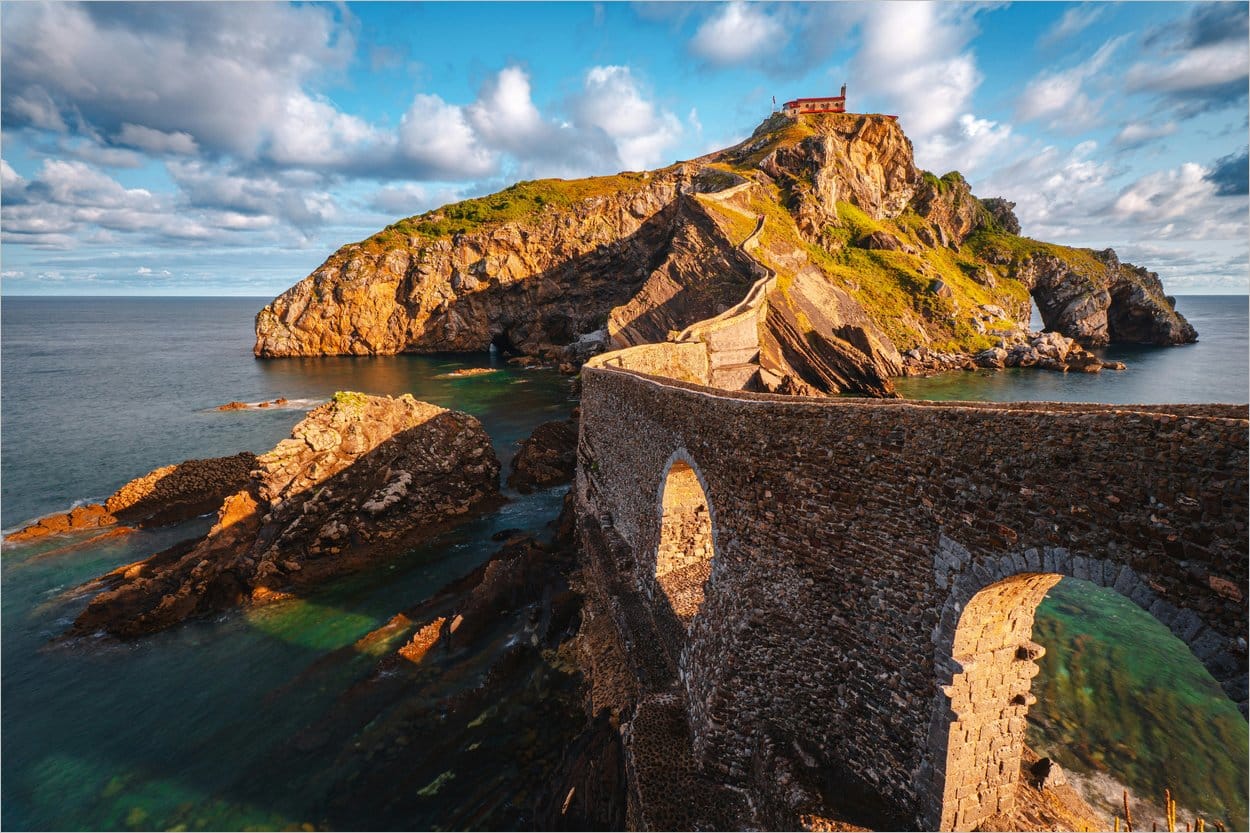
- Gaztelugatxe, this islet linked to the mainland by a staircase and made famous by Game of Thrones, offers a spectacular view of the Atlantic.
- Getaria, a charming fishing village, known for its restaurants and its local white wine, txakoli.
- Zumaia, known for its flysch cliffs, where the rock layers plunge into the sea in an impressive way.
- Visit the Guggenheim Museum in Bilbao, one of the city's major symbols.
- Discover San Sebastián with a guide, ideal for exploring the old town and its pintxos.
- Take a day trip to Gaztelugatxe, one of the most spectacular landscapes on the Basque coast.
Why choose Valencia for a first trip to Spain?
Valencia is an excellent idea for a first trip if you are hesitating between a city break and a few days by the sea, in an atmosphere that is a bit calmer than Barcelona.
The city combines a pleasant historic center, very spectacular contemporary architecture around the City of Arts and Sciences, and long beaches accessible by public transport. It is a destination I particularly recommend for a 3- to 5-day stay, when you really have time to alternate between sightseeing, walks, and moments by the water.
A charming historic center
Valencia's historic heart is very easy to explore on foot and offers a more relaxed atmosphere than in Spain's major metropolitan areas.
Around the cathedral and Plaza de la Virgen, you will find lively little streets, beautiful facades, squares where you can sit out on a terrace, as well as the central market, which is one of the most interesting covered markets in Spain for discovering local products. This is also where Valencian paella was born: during your stay, I would encourage you to try at least one traditional version, preferably in a trusted restaurant rather than in places that are too touristy.
The spectacular City of Arts and Sciences
The City of Arts and Sciences is one of Valencia's landmarks and a prime example of contemporary Spanish architecture.
Designed by Santiago Calatrava, this complex of futuristic buildings set amid reflecting pools can be explored both through indoor visits and simply by strolling around the structures. Between the aquarium (the Oceanogràfic), the science museum, and the cultural venues, you could easily spend several hours there, especially if you're traveling with family. Even without going inside every building, walking along the pools and seeing the reflections of the architecture on the water is one of the most striking images you'll take away from Valencia.
Enjoying Valencia's beaches
One of Valencia's major advantages, especially for a first trip, is how easy it is to go from the historic center to the beach.
The Malvarrosa and Las Arenas beaches, wide and well equipped, are accessible by tram or bus from the city center. This makes it easy to plan very pleasant days, for example sightseeing in the morning, lunch in town, then a quieter afternoon by the sea. If you have a little more time, you could also consider a getaway to the Albufera Natural Park south of Valencia, to discover another side of the region, with its rice fields and lagoon landscapes.
- Visit the City of Arts and Sciences, Valencia's major contemporary landmark, and the Oceanogràfic, which is particularly interesting if you're traveling with family.
- Take a trip to the Albufera to discover the lagoon and rice field landscapes south of the city.
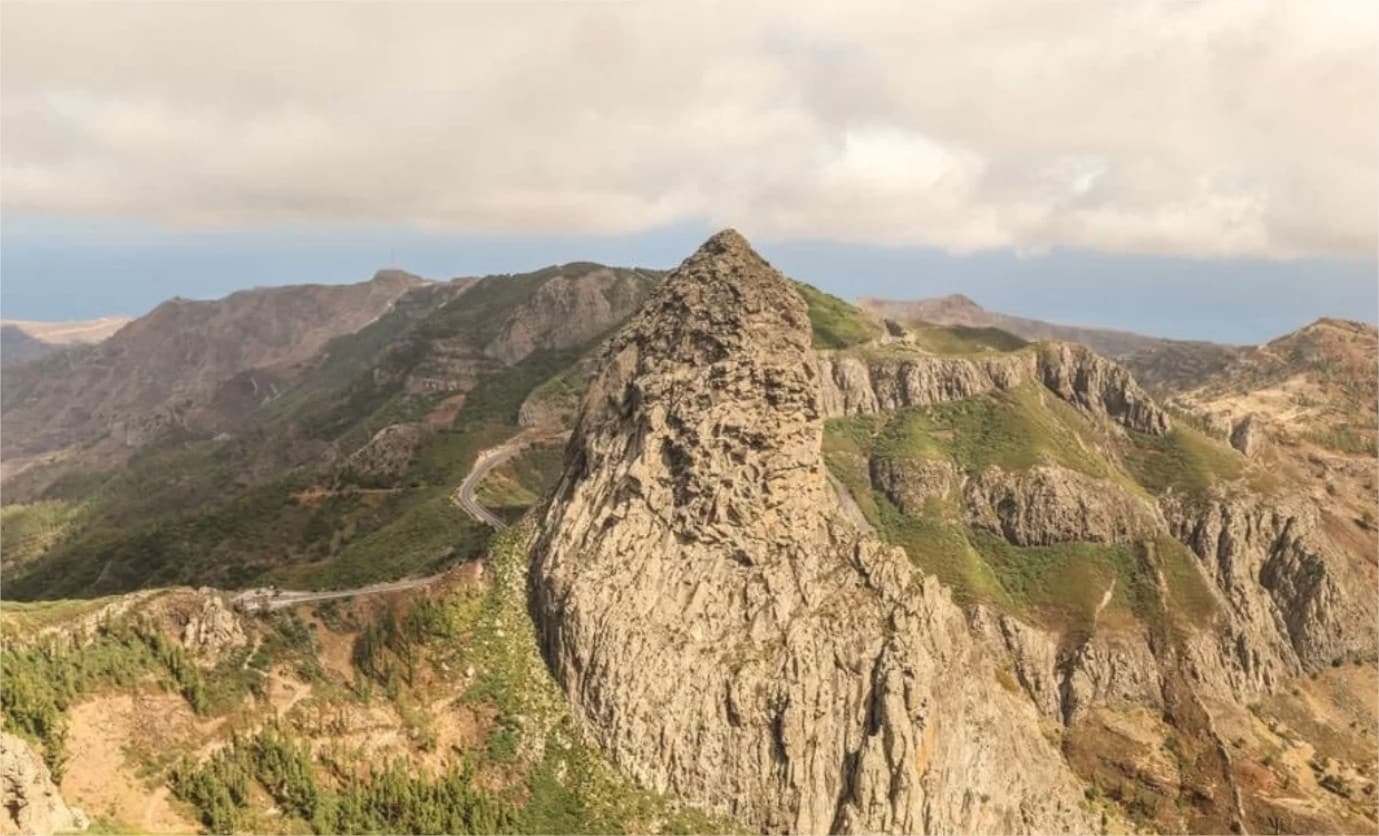
What about the Spanish islands for a first trip? If your priority is sunshine, beaches, or volcanic landscapes, the islands can be perfect for a first trip, with a very different atmosphere from mainland Spain.
- The Canary Islands are famous for their year-round sunshine and remarkably diverse landscapes. Tenerife, Lanzarote, Gran Canaria and Fuerteventura are the best-known islands, while La Gomera or El Hierro offer a much wilder and more peaceful experience.
- The Balearic Islands are a good choice if you're looking for coves, Mediterranean villages, and a seaside atmosphere. Majorca is often the best option for a first visit thanks to its variety of landscapes, while Minorca will appeal more to travelers in search of peace and quiet.
Which itinerary should you choose for a first trip to Spain?
The ideal itinerary for a first trip to Spain depends above all on the length of your stay and your interests, more than on how many places you can check off.
I would recommend choosing a travel pace that leaves room for quiet moments, long meals on a terrace, and walks without a specific goal. Spain is just as enjoyable in those moments as it is when you visit major cathedrals or palaces. Here are a few possible itineraries depending on the length of your first stay.
You're going for 3 to 4 days
In 3 to 4 days, the most realistic option is to focus on a single major city, without trying to multiply journeys.
- Barcelona is an excellent choice if you want to combine architecture, culture, and the seaside in one city break.
- Madrid will be a better fit if you're drawn to major museums, lively neighborhoods, and easy day trips such as Toledo or Segovia.
- Valencia is ideal for a more relaxed short stay, between the old town, the City of Arts and Sciences, and beaches that are easy to reach by public transport.
You're going for a week
With one week for a first trip to Spain, I'd recommend planning your stay around a single region, possibly with a few day trips.
- Andalusia: Seville as your main base, with Córdoba and Granada to discover the best of Andalusian heritage.
- Catalonia: Barcelona with at least one excursion to Montserrat or Girona, and maybe a glimpse of the Costa Brava.
- Spanish Basque Country: San Sebastián and Bilbao, plus one or two coastal villages if you enjoy seaside landscapes.
You're going for two weeks or more
From two weeks onward, you can consider combining two regions without feeling like you're spending all your time in transit.
- Andalusia + Madrid: a first part of the trip focused on Seville, Córdoba, and Granada, followed by a few days in Madrid with day trips to Toledo or Segovia.
- Andalusia + Catalonia: to experience two very different atmospheres, for example by traveling between Seville or Málaga and Barcelona by train or plane.
- Madrid + Castile and León: Madrid as a base, complemented by Salamanca, Segovia, or Burgos to deepen your exploration of historic Spain.
- Catalonia + Valencia: a trip combining Barcelona, the Catalan coast, and a few days in Valencia to enjoy the beaches and the City of Arts and Sciences.
The traveler's memo for planning a first trip to Spain
Here are answers to the most frequently asked questions about a first stay in Spain, to help you finalize your itinerary and destination choices quickly.
There is no single "best" first trip to Spain: it all depends on how long you're staying, what you want to do, and how you like to travel. The main thing is to choose one region and give yourself time to really discover it. Spain has this way of making you want to come back, sometimes as soon as you're on the return flight, to explore another side of the country on a future trip.


