

The Opal Coast is a beautiful region to explore by bike, with beaches, dunes, cliffs, seaside resorts, fishing villages, and nature reserves… all within reach for a weekend trip. In this article, I've put together a selection of routes to enjoy the Opal Coast by bike, tips on choosing your route and bike, and practical information to plan a nature-focused weekend by the sea.
- The Opal Coast by bike works well for both leisurely rides and more challenging routes, with a mix of bike paths, greenways and shared roads.
- The Vélomaritime (EuroVelo 4) crosses the region and makes it possible to plan a multi-day cycling trip or to select only a few sections, but the route is neither completely flat nor entirely on dedicated bike infrastructure.
- When planning a cycling weekend on the Opal Coast, consider distance, elevation, wind, and the type of roads you will be using.
- The areas around Boulogne-sur-Mer, Wimereux, the Grand Site des Deux-Caps, Le Touquet and Berck offer very different cycling experiences.
- The coastline is not always as easy as it looks on a map: coastal winds and the hilly terrain around the Deux-Caps can make the ride more challenging.
- Why discover the Opal Coast by bike?
- 5 easy bike rides on the Opal Coast
- Can you ride along the entire Opal Coast by bike?
- Which bike should you choose to ride along the Opal Coast?
- How to plan a biking weekend on the Opal Coast?
- A few tips before setting off by bike
- The traveler's memo for the Côte d'Opale by bike
Why discover the Opal Coast by bike?
The Opal Coast is well suited to cycling thanks to its varied landscapes, the presence of the Vélomaritime, and manageable distances for both short rides and longer routes.
Along the coast, you'll find a succession of sandy beaches, dunes, estuaries, cliffs and seaside resorts, some livelier than others. In just a few kilometers (a few miles), you can go from a seawall lined with Belle Époque villas to a nature reserve or to a small road winding between fields and pastures. This variety makes it easy to plan very different rides without necessarily covering endless distances.
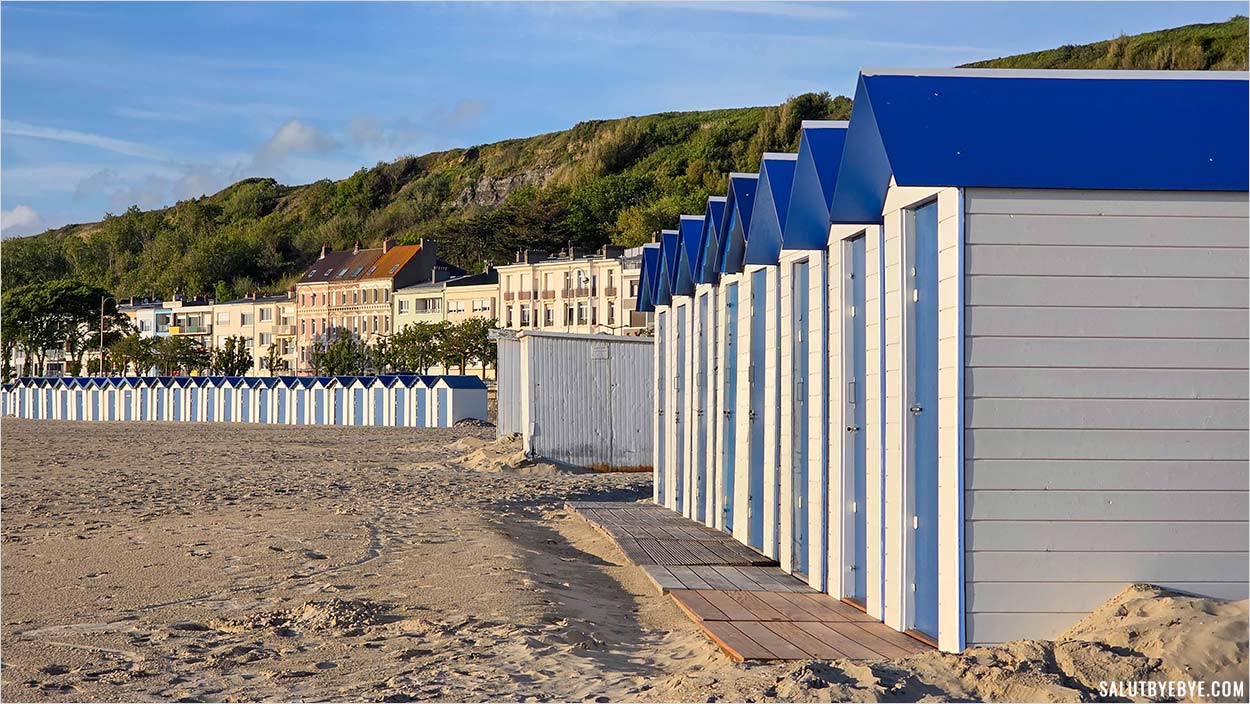
Another major advantage is the Vélomaritime (EuroVelo 4), which runs along the entire Opal Coast. This cycling route lets you link several sections over a few days, or simply choose a section that matches your fitness level for a ride of a few hours. Depending on the area, the route uses bike paths, greenways or roads shared with cars.
You do need to keep in mind that the entire coastline is neither flat nor entirely made up of dedicated bike paths. Some sections are hilly, particularly around Cap Blanc-Nez and Cap Gris-Nez, while the wind can also increase the effort required on a route that looks easy on paper. A trip that seems short on the map can therefore require more effort than expected, especially if you are riding out and back.
You can also choose your bike based on the route and your riding style. A regular bike or hybrid (VTC) works very well for shorter and relatively flat rides. If you feel like covering more kilometers (miles), tackling a few climbs or handling headwinds more comfortably, an e-bike (VAE) can make the experience much more pleasant. If you're thinking of buying one, take the time to find an e-bike that fits you and suits the way you plan to ride.
In the rest of the article, I've put together several ride ideas selected for their scenery and accessibility. They're a great way to enjoy the coastline at your own pace, while leaving time for breaks, visits and detours along the way.
5 easy bike rides on the Opal Coast
Here are five easy cycling routes for a full-day or half-day ride on the Opal Coast, with reasonable distances and varied scenery.
For each ride, I'll give you the key route details, the difficulty level, the type of roads you'll be using and the main sights along the way. Where relevant, I also include approximate distances. Your pace, your breaks and the weather conditions can significantly change how long a ride takes and how difficult it feels.
From Boulogne-sur-Mer to Wimereux
The ride between Boulogne-sur-Mer and Wimereux is a great introduction to cycling on the Opal Coast, combining historic sights, the port, the waterfront, and a classic seaside resort.
Before setting off, take the time to explore Boulogne-sur-Mer, which is well worth a visit in its own right. The upper town, still surrounded by ramparts, is home to the belfry, the castle-museum, and the Basilica of Notre-Dame, whose immense dome towers over the city. You can walk all the way around the ramparts before heading back down toward the port and the waterfront. Boulogne is also where you'll find Nausicaá, the French National Sea Center: plan several hours if you would like to combine a visit there with your bike ride.
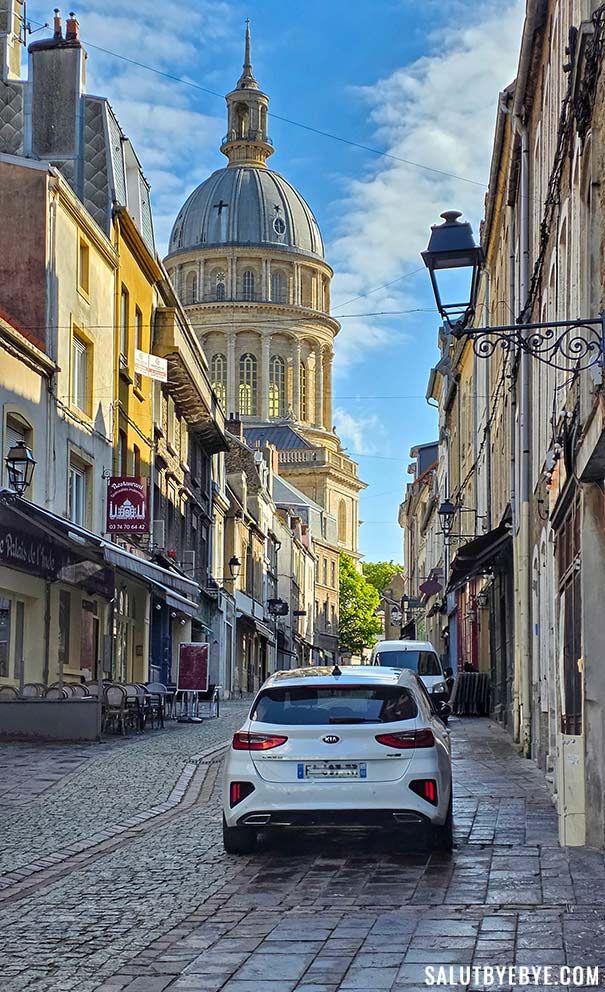
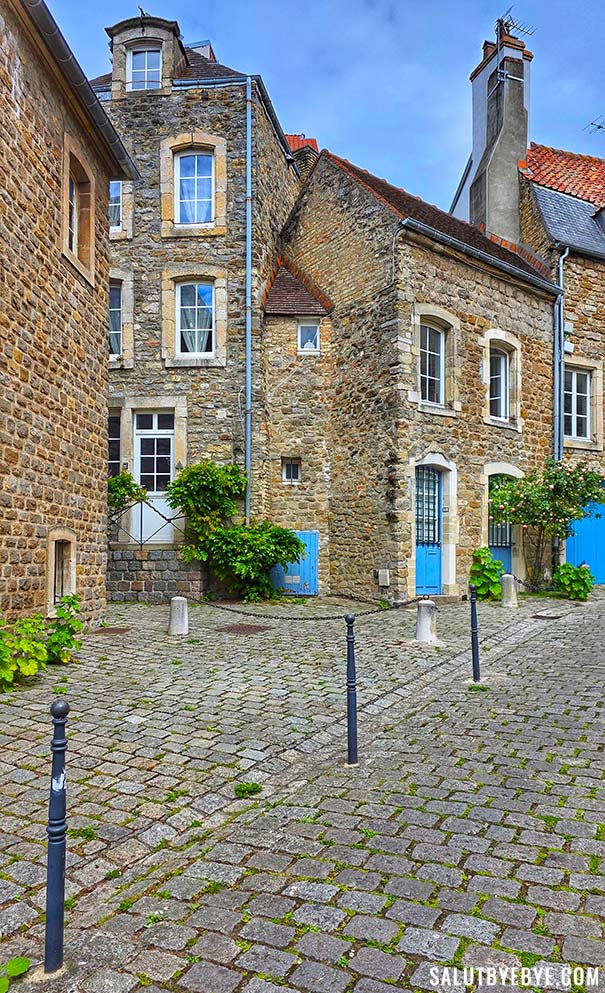
From Boulogne-sur-Mer, you can join the Vélomaritime (EuroVelo 4) heading toward Wimereux. On this section, the route follows a bike path that runs alongside the RD940 road all the way to Wimereux. It's a good option for a first ride on the Côte d'Opale, before moving on to longer sections of the coastline.
Wimereux has a different feel: this small seaside resort is especially known for its seawall promenade and its many colorful Anglo-Norman style villas. Take the time to stroll along the waterfront, look at the facades, or simply take a break on the beach or at a café patio before getting back on your bike toward Boulogne-sur-Mer.
The main challenge is the wind: along the coast, a headwind can make the ride more challenging, even over a fairly short distance. If you are doing a round trip, make sure to check the forecast before you leave. And if you would like to extend the ride, the Vélomaritime continues north of Wimereux toward Ambleteuse and the Grand Site des Deux-Caps.
From Wimereux to Ambleteuse and Audresselles
Between Wimereux, Ambleteuse, and Audresselles, you follow one of the most scenic stretches of the Opal Coast, with a mix of seaside villas, dunes, a coastal fort, and a fishing village.
Starting from Wimereux, follow the Vélomaritime north towards Ambleteuse. Dedicated cycling infrastructure lets you cross the natural area of the Dunes de la Slack. Allow for about 6 km (about 3.5 miles) between Wimereux and Ambleteuse, then an additional 3.5 km (about 2.2 miles) to reach Audresselles, for a total of about 19 km (about 12 miles) round trip for the full ride.
In Ambleteuse, take the time to stop and visit the Vauban fort at the mouth of the Slack, facing the sea. Its silhouette has become one of the most recognizable sights on this part of the Opal Coast. There is also an excellent World War II museum. You can also enjoy the beach before getting back on your bike.
A few kilometers further on, Audresselles has a different feel. This former fishing village still has many traditional low-rise houses and retains a strong maritime character. It is a pleasant place for a lunch break or simply for a walk down to the beach before heading back to Wimereux.
At under 20 km (about 12 miles) round trip, this is an accessible ride for leisure cyclists. Keep in mind, however, that the Vélomaritime does not run entirely on segregated bike paths along this section and that the wind can increase the effort required. If you're riding with children, check the route and the shared-road sections carefully before you set off.
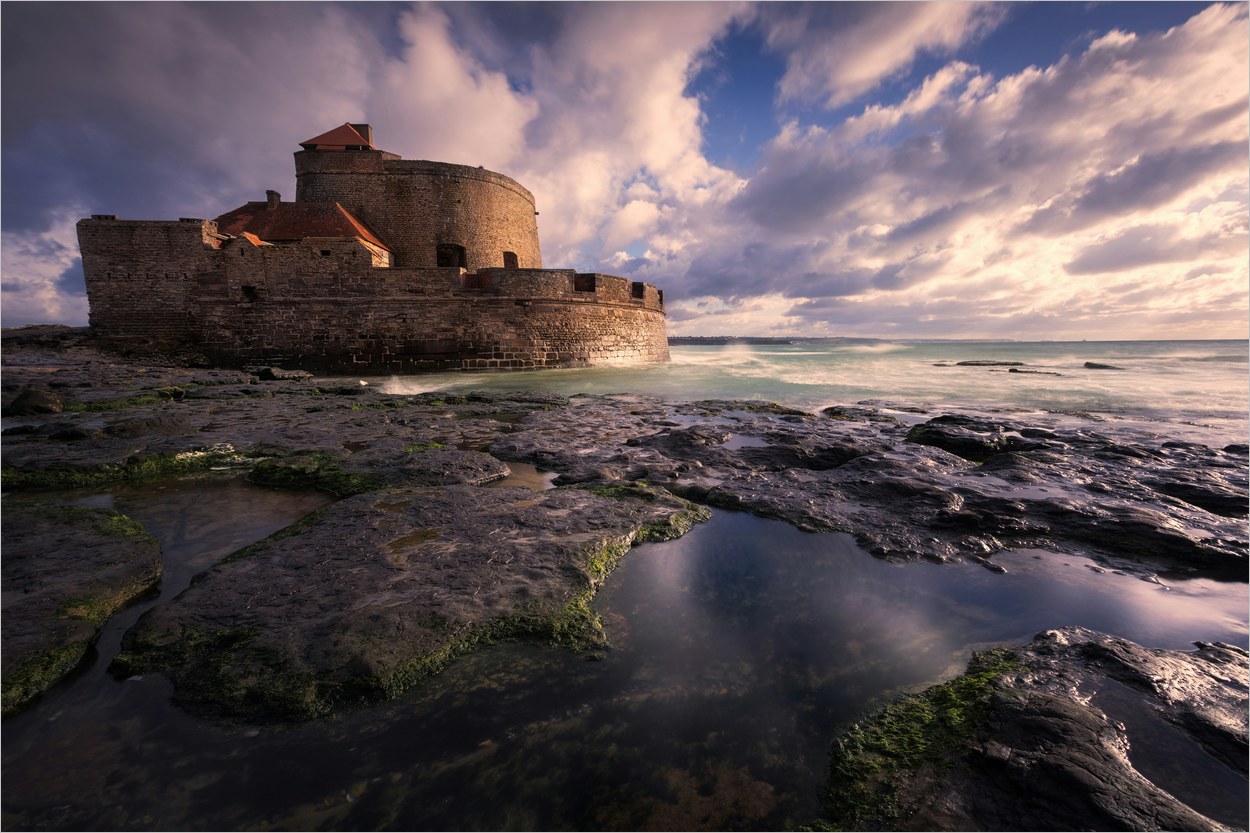
From Calais to Sangatte, in the Grand Site des Deux-Caps
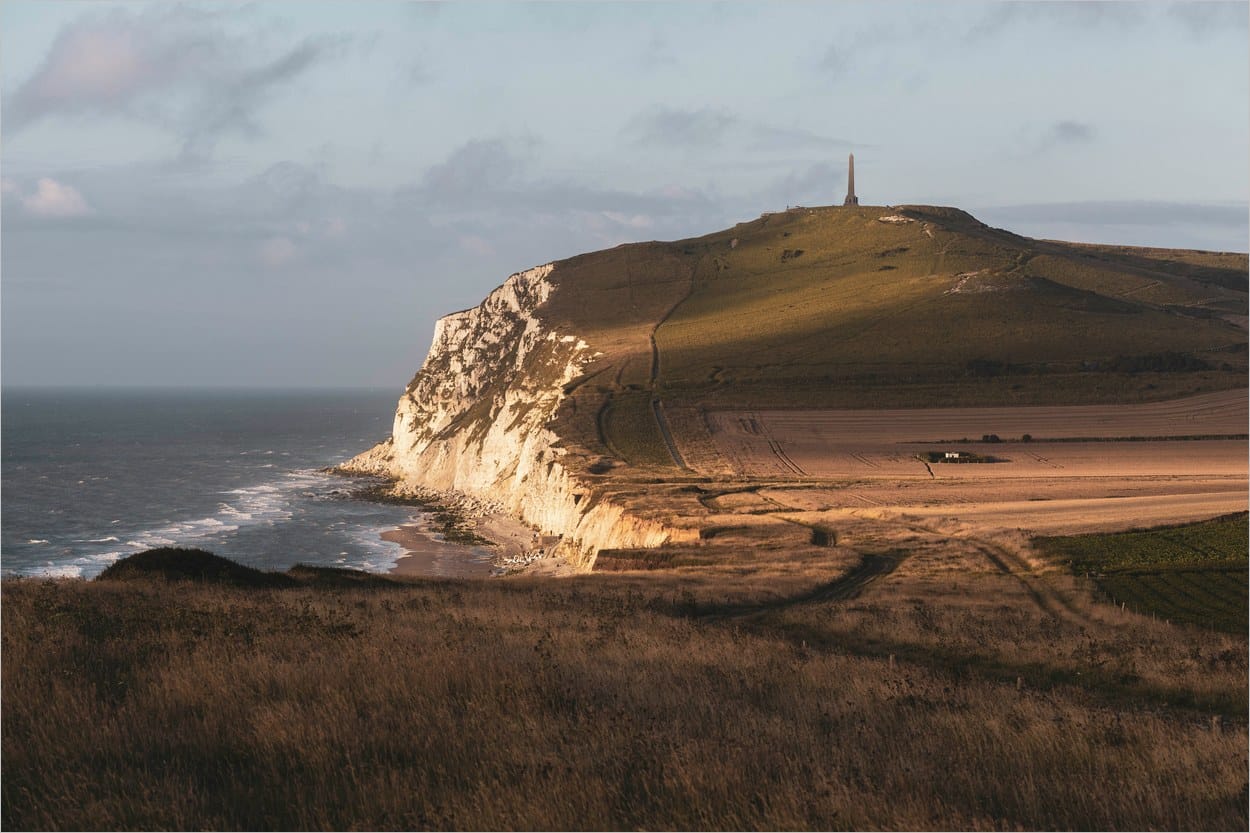
Starting from Calais, this ride lets you follow the coastline towards Sangatte and get a first taste of the Grand Site des Deux-Caps, without tackling the more demanding slopes of Cap Blanc-Nez and Cap Gris-Nez.
Before you set off, take some time to discover Calais. The city has an eclectic mix of landmarks, including its belfry listed as a UNESCO World Heritage Site, the town hall, and Rodin's famous sculpture The Burghers of Calais. Along the seafront, the large beach and the seawall show a completely different side of Calais. You might also come across the Dragon de Calais, a huge mechanical creature that moves along the waterfront.
By bike, you can follow the Vélomaritime (EuroVelo 4) westwards towards Blériot-Plage, then Sangatte. Depending on your starting point in Calais, allow for around 9 km one way (about 5.5 miles), so roughly just under 20 km (about 12 miles) out and back. For an easier ride, stick to the signposted Vélomaritime route, especially on the paths running along the beach.
When you arrive in Sangatte, you are right in the heart of the Grand Site de France Les Deux-Caps. Its coastline stretches from Sangatte to Wimereux, passing through Escalles, Wissant, Audinghen, Audresselles, and Ambleteuse.
For an easy ride, turn back here to reach Calais via the same route. If you feel like continuing farther into the Grand Site des Deux-Caps, be aware that the Vélomaritime carries on towards Escalles and Cap Blanc-Nez, then Wissant and Cap Gris-Nez. However, the terrain becomes much more physically demanding: the full official stage between Boulogne-sur-Mer and Calais has more than 300 meters (about 985 ft) of elevation gain. This section is therefore better suited to more experienced cyclists, unless you're using an e-bike.
Le Touquet and the baie de Canche
The Le Touquet and baie de Canche area is ideal for an easy ride that combines seaside resort, pine forest, and estuary landscapes. Here, rather than following a single linear route, you can put together your own itinerary through different parts of the resort.
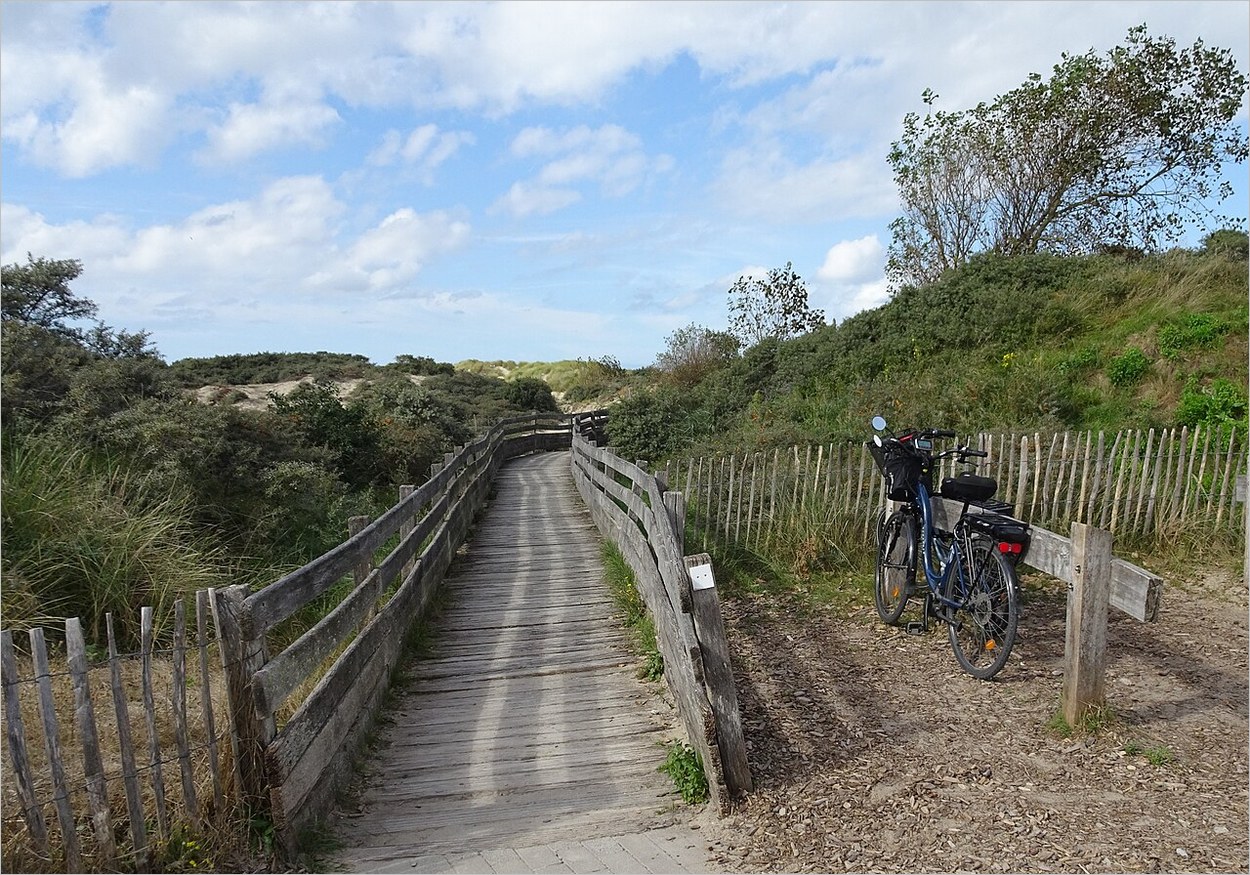
Start by discovering Le Touquet-Paris-Plage by bike. The resort has an extensive network of bike paths that lets you ride along the waterfront and reach the forest. The forest is a big part of Le Touquet's appeal: under the pines, the shaded avenues are lined with villas in a wide range of architectural styles.
Continue north to the Parc Nature de la baie de Canche, a protected area of more than 45 hectares (about 110 acres) with trails and access for both pedestrians and cyclists. The clifftop road runs along the northern tip and leads to an observatory overlooking the estuary. You can leave your bike there for a while to enjoy the footpaths and viewpoints over the dunes and the bay.
The estuary is a great place for wildlife watching: many migratory birds can be seen in the bay and seals also come to rest on the sandbanks. It feels much quieter than the lively waterfront and makes it easy to combine nature with sightseeing in a single outing.
Le Touquet is particularly well suited to a family ride or a gentle way to get back into cycling: there are many bike paths and you can easily adjust the length of the route to suit your energy level and plans. Build in a few breaks to enjoy the beach, the town center, or the villas in the forest rather than trying to rack up kilometers (miles).
From Berck-sur-Mer to the Authie Bay
In Berck-sur-Mer, this ride lets you easily reach the Authie Bay by bike, following the waterfront, ending at one of the Opal Coast's best-known natural attractions: its seal colony.
From the Esplanade Parmentier, a cycle path shared with pedestrians runs along the waterfront via the Promenade du Professeur Debeyre all the way to the Authie Bay. The route is easy to tailor to your pace and works well for a relaxed outing or a family bike ride.
Good to know: during spring tides, the Promenade du Professeur Jean Debeyre can be temporarily submerged and access may be closed. Remember to check conditions if your ride coincides with a high tidal coefficient.
Before or after your bike ride, take some time to enjoy Berck-sur-Mer. The resort is known for its huge sandy beach, but it also has some appealing seaside and maritime architecture, with its old villas and its lighthouse. Every spring, the beach takes on a completely different atmosphere during the International Kite Festival, which attracts enthusiasts from all over the world.
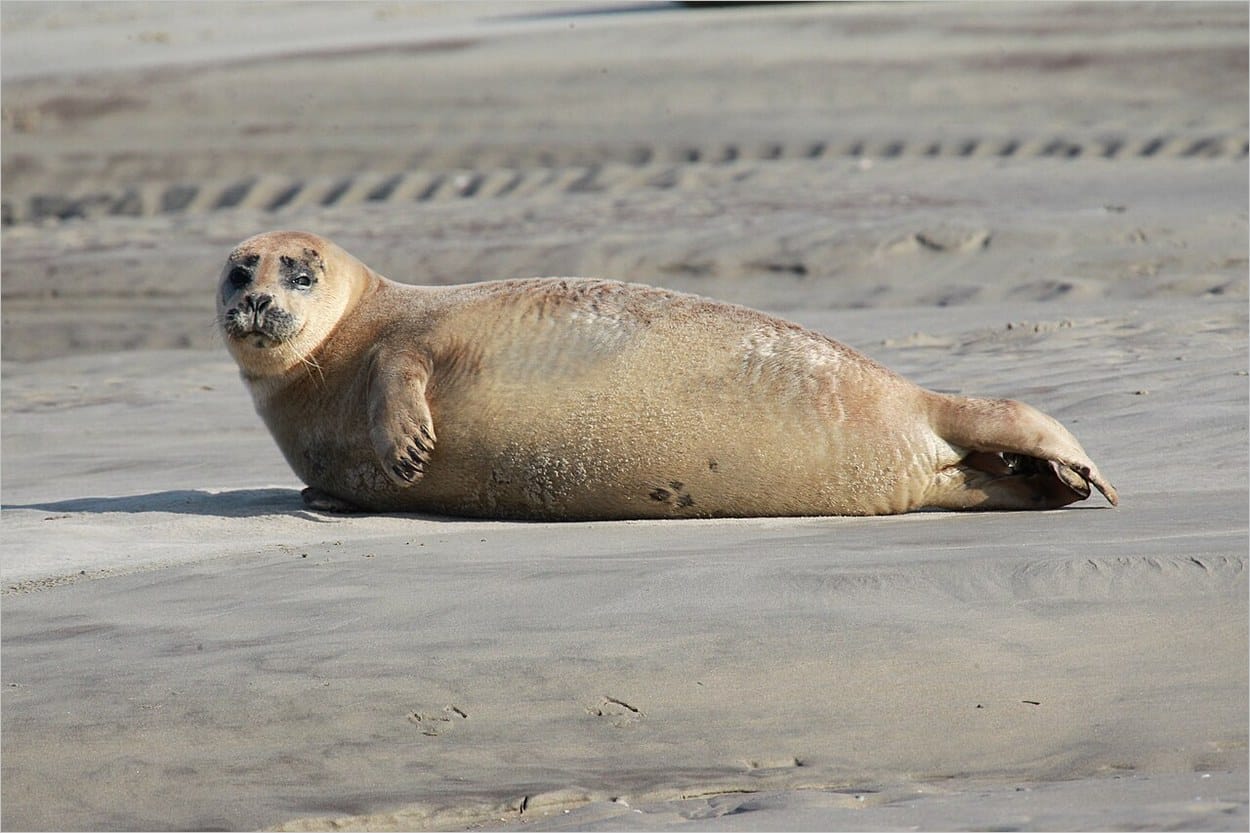
At the southern end of Berck, you reach the Authie Bay, a largely unspoiled estuary with dunes, salt meadows, and sandbanks. The bay is home to two species of seal, the harbor seal and the grey seal. The best time to try to see them is around low tide: the sandbanks begin to emerge about 2 hours 30 minutes before, and the animals come to rest on them. You will find a viewpoint near the Club Nautique Berckois, at the end of the Chemin aux Raisins. Keep your distance and above all do not try to cross the Authie to get closer to them.
You can then park your bike and continue exploring on foot. The Sentier des Garennes, an easy 3.4 km (about 2.1 miles) loop through the dunes and forest, includes a viewpoint over the Authie Bay. It is a nice way to combine cycling and walking on the same outing before heading back toward the center of Berck.
Can you ride along the entire Opal Coast by bike?
Yes, it is entirely possible to plan a multi-day cycling route along the Opal Coast by following the Vélomaritime (EuroVelo 4). Keep in mind, however, that not all sections have the same level of difficulty or the same type of infrastructure.
The Vélomaritime is the French section of EuroVelo 4: it stretches for about 1500 km (about 930 miles) between Roscoff and Dunkirk, on the Belgian border. EuroVelo 4 then continues beyond France. Along the Opal Coast, it provides a convenient backbone for a multi-day route that links places such as Berck, Le Touquet, Boulogne-sur-Mer, the Grand Site des Deux-Caps and Calais. You can therefore use it both for the short rides suggested in this article and to organize a full multi-day cycling trip.
One important distinction: a "véloroute" refers to a continuous, signposted cycling route, but not necessarily a bike path separated from cars along its entire length. The Vélomaritime alternates between bike paths, greenways, and shared roads. The level of difficulty also varies significantly from one stage to another.
This is particularly noticeable on the Opal Coast. The stage between Berck and Le Touquet, for example, stretches over about 17 km (about 10.5 miles) with very little elevation gain, while the one connecting Boulogne-sur-Mer to Calais covers 51 km (about 32 miles) and runs through the much hillier terrain of the Grand Site des Deux-Caps. The latter has more than 300 meters of total ascent (about 985 ft) and is ranked among the most demanding stages of the Vélomaritime.
To plan your route, I would recommend checking the detailed route on the official Vélomaritime website. For each stage, you will find the distance, elevation gain, difficulty level, and breakdown between cycle paths and roads, as well as a downloadable GPX track.
This way, you can plan your trip around your fitness level rather than forcing yourself to cover the same distance every day. You don't have to ride the entire Opal Coast either: choosing two or three stages and using the train to reach your starting point or travel back afterward can make for a very rewarding trip.
Which bike should you choose to ride along the Opal Coast?
Choosing a bike for the Opal Coast mainly depends on the distance you have in mind, your fitness level, the terrain on the sections you plan to ride, and the wind. For the rides suggested in this article, there is no need for highly specialized equipment: a regular bike, a hybrid bike, or an e-bike can all work perfectly well depending on how you ride.
Regular bike, hybrid bike, or e-bike?
For a short and relatively flat ride, especially around Berck or Le Touquet, a regular bike in good condition is perfectly adequate. If you are looking for more versatility, a hybrid bike is a good option: its relatively comfortable riding position and tires suited to different surfaces work well for a weekend that mixes bike paths, greenways, and small roads.
An e-bike is particularly useful if you want to cover longer distances or venture into the more hilly areas, especially around the Grand Site des Deux-Caps. It also makes coastal headwinds easier to handle, especially over longer distances.
If you're planning a multi-day trip with an e-bike, remember to factor battery charging into your itinerary. Actual range varies depending on the bike, the level of assistance used, the terrain, the weight carried, and even the weather conditions: it is therefore better to allow for a buffer rather than planning solely based on the maximum range stated by the manufacturer.
Bringing your own bike or renting locally?
If you already own a suitable bike, bringing your own bike means riding a bike you're already comfortable with and easily setting up your panniers or other equipment. However, you'll need to plan how to transport it and where to store it safely during your stay.
If you are coming by TER regional train, check the bike transport conditions before your departure. On standard TER Hauts-de-France trains, a non-dismantled bike can generally travel for free in the areas set aside for that purpose, but the number of spaces is limited. A free bike space reservation may also be mandatory at certain times and on certain lines serving the Opal Coast. Even when no reservation is required, access with a bike can be refused if the train is too crowded, so whenever possible it is better to avoid peak hours and check the current rules on the TER Hauts-de-France website before your trip.
Renting a bike locally is a particularly convenient option if you are coming by train or if you only want to plan one or two rides during your weekend. You can find rental options in several towns along the Opal Coast, especially in Le Touquet, Berck, or Boulogne-sur-Mer, with regular bikes and e-bikes available depending on the rental company.
During the tourist season, it is better to book in advance and check the drop-off times as well as the equipment provided with the bike. If you are traveling with children, also ask about the availability of suitable bikes, seats, or trailers.
Finally, for a multi-day cycling trip, check the rental conditions with particular care: not all rental companies allow you to pick up a bike in one town and drop it off in another. In that case, building your route around train stations or planning circular routes can considerably simplify the logistics.
How to plan a biking weekend on the Opal Coast?
To plan a biking weekend on the Opal Coast, start by choosing a base based on the scenery and rides that appeal to you the most. Two nights in the same place give you enough time for a good bike ride, a second shorter outing, and a few visits, without turning the stay into a race against the clock.
Where to stay for a biking weekend on the Opal Coast?
Boulogne-sur-Mer is a particularly convenient base if you would like to combine cycling and sightseeing. You can spend time in the upper town or at Nausicaá, then ride to Wimereux and possibly continue on to Ambleteuse. Wimereux offers more of a seaside resort feel and lets you set off directly toward the villages and landscapes of the Grand Site des Deux-Caps.
Further north, Calais allows you to combine city sightseeing with an easy ride to Sangatte, while staying close to the Grand Site des Deux-Caps. To the south, Le Touquet-Paris-Plage works well if you are looking for a weekend combining cycling, beach, forest, restaurants, and shops, while Berck-sur-Mer has more of a wide-open, nature-focused feel, with easy access to Authie Bay.
If you are coming with your own bike, check before booking that your accommodation has a secure place to store it. In particular, look for places with the Accueil Vélo label: these accommodations have, among other things, an enclosed and secure space for bikes and provide services tailored to cycle tourists. If you are traveling with an e-bike, also check what charging facilities the accommodation offers at the time of booking.
What is the best time of year for cycling on the Côte d'Opale?
From spring to early autumn, the days are long enough to easily enjoy bike rides and plan breaks along the way. July and August offer the liveliest summer atmosphere, but they are also the months when seaside resorts, beaches, and accommodation are at their busiest.
Spring and September are therefore good alternatives if you would like to enjoy the coast with fewer crowds. Whatever the season, pay close attention to the weather and wind strength before you set off: on the Côte d'Opale, a headwind can make a route significantly harder even if it looks easy on paper.
Outside the high season, also check the seasonal opening hours of bike rental shops, restaurants, or attractions you would like to include in your route.
A few tips before setting off by bike
Before you leave, a few simple checks will help you avoid common problems during your rides on the Côte d'Opale.
Start by checking the weather and wind forecast. On the coast, a headwind can make a route that looks easy on paper significantly harder. If you are planning a round trip, keep in mind that favorable conditions on the way out can make the return journey much more physically demanding.
Also check your route before you leave, especially if you are leaving the Vélomaritime or clearly marked bike paths. Roadworks and detours can temporarily alter a route, and some paths you see on a map are not necessarily allowed or suitable for bikes.
At a minimum, bring water, sun protection, a light waterproof layer, and a bike lock so you can enjoy breaks and visits along the way without having to worry about your bike. For a slightly longer outing, a small kit that lets you repair a flat tire can save you a lot of hassle if you get a flat.
Finally, stay alert on sections shared with cars and follow the road signs you encounter along your route. If you are traveling with children, check in advance the type of roads you will be using rather than judging a route only by its distance or elevation gain.
The traveler's memo for the Côte d'Opale by bike
Here are the answers to the most common questions when planning a cycling weekend on the Côte d'Opale.
The Opal Coast works especially well for a weekend where cycling is a way to explore the region rather than the sole focus of the trip. Choose an area based on the scenery and sights that appeal to you most, match the distances to your fitness level, and keep an eye on the weather before you set off. All that's left is to choose between the villas of Wimereux, the landscapes of the Grand Site des Deux-Caps, the forest of Le Touquet, or the seals of Authie Bay!


