

Looking for a nature-focused outing in Paris, with animals, educational content, and a real sense of escape without leaving the city? The Parc Zoologique de Paris, which many people still call the Vincennes Zoo, is a great option for a family day out or a nature break. I first visited after its major renovation, curious to see how this historic zoo had changed.
Between the different biozones, the large tropical greenhouse, and the design of the enclosures, the zoo offers some memorable sights… but also a few areas that could be improved.
In this article, I'll share a thorough and nuanced review of the Vincennes Zoo: how to get there, what to expect during your visit, what the zoo does well, where it falls short, and whether it's worth the ticket price this year.
- The Paris Zoological Park (Vincennes Zoo) is easy to reach by metro, RER, and bus, on the edge of the Bois de Vincennes in the 12th arrondissement.
- The visit follows a route through 5 biozones (Patagonia, Sahel–Sudan, Europe, French Guiana, Madagascar) across about 14.5 hectares (about 36 acres).
- Allow around 3 to 5 hours for your visit, more if you're with kids who enjoy stopping for activities, playgrounds, and observation points.
- The ticket price is high but comparable to other major European zoos; reduced rates and dated tickets can help reduce the cost.
- The zoo is well-equipped for families (the paths are stroller-friendly, lots of shelters, picnic areas, educational activities, and workshops for children).
- Overall, it's a great outing in Paris if you enjoy watching animals and are comfortable with the zoo's highly artificial setting.
- Where is Vincennes Zoo and how do you get there?
- Overview of the Parc Zoologique de Paris: size, layout and animals
- Visit route: the Vincennes zoo biozones one by one
- Visiting the Vincennes Zoo in practice: length of visit, weather, and food options
- Vincennes Zoo prices: how much does a visit cost in 2026?
- What I liked at the Vincennes Zoo
- What I liked less about the Paris Zoological Park
- Is the Vincennes zoo suitable for children and families?
- My overall opinion of the Vincennes Zoo: is it worth visiting?
- The traveler's memo for visiting the Vincennes Zoo
Where is Vincennes Zoo and how do you get there?
The Vincennes Zoo is located in the 12th arrondissement of Paris, on the edge of the Bois de Vincennes, and it is easy to reach by public transit.
Location of the Parc Zoologique de Paris
The Parc Zoologique de Paris is in southeastern Paris, on Avenue Daumesnil, in Paris's 12th arrondissement, right next to the Bois de Vincennes.
That location helps explain why many visitors still call it the "Vincennes Zoo," even though its official name refers to Paris. In practical terms, you're in an urban neighborhood, but the Bois de Vincennes is only a few minutes away on foot, which makes it easy to combine your zoo visit with a walk in the Bois de Vincennes if you still have some energy left.
Getting there by metro, RER, bus, or car
The easiest way to get to Vincennes Zoo is by public transit, which serves the area very well. You have several options depending on where you're coming from:
- Metro: the most commonly used station is Porte Dorée (line 8), located about a 10-minute walk from the park entrance. You can also get off at Saint-Mandé (line 1) or Château de Vincennes (line 1) and walk a little farther along the edge of the Bois de Vincennes.
- RER: the Vincennes station (RER A) is a convenient option from many parts of Paris and the surrounding area, especially if you're coming from Marne-la-Vallée or La Défense. From there, it's a short walk or bus ride to the park entrance.
- Bus: several lines run nearby, including lines 46, 86, 201, and 325. The most convenient stop for the visit is the Parc Zoologique stop, just a few steps from the entrance.
- Car: the zoo does not have a large dedicated parking lot like some parks on the outskirts, but you can park in the surrounding streets or in public parking lots close to the Bois de Vincennes. On sunny weekends, it's better to arrive early because spaces fill up quickly.
I took public transit to avoid the headache of parking, and I would recommend this option if you're coming from Paris or the inner suburbs.
Approximate travel times from around Paris
To help you estimate transportation time, here are some approximate journey times to the Parc Zoologique de Paris:
- From Châtelet – Les Halles: about 25 to 30 minutes by metro (line 1 or 14 + line 8) or RER A to Vincennes, then bus.
- From Montparnasse: about 35 to 40 minutes by metro, with a transfer to line 8.
- From Gare de Lyon: about 15 to 20 minutes by bus or metro (line 14 + 8).
- From Marne-la-Vallée – Chessy (Disneyland Paris): about 50 to 60 minutes via RER A to Vincennes, then bus or walking.
These times include a reasonable walking time to the zoo entrance, and they make it easier to plan a half-day or full-day visit.
Overview of the Parc Zoologique de Paris: size, layout and animals
The Vincennes Zoo takes visitors through five large "biozones" inspired by different ecosystems around the world.
A contemporary zoo across 14.5 hectares
After a full reconstruction and six years of work, the Parc Zoologique de Paris reopened in 2014 with a new philosophy: to recreate naturalistic habitats rather than placing animals in a series of separate cages.
The site covers 14.5 hectares (about 36 acres) and is home to around 180 animal species, housed in large habitats designed around recreated landscapes, carefully planned landscaping, and informative signage. The visit follows a marked route that links the different zones without requiring endless walking, which makes it a relatively compact zoo, particularly suitable if you are visiting with children or if you do not want to spend the day walking long distances.
The 5 biozones of the Vincennes zoo
The Paris Zoological Park is organized around five large biozones, each representing a group of ecosystems:
- Patagonia – rocky landscapes, pools, and species adapted to the open, cool environments of the southern hemisphere.
- Sahel-Sudan – the largest, devoted to African savannas and their large herbivores and predators.
- Europe – an area that showcases the wildlife of our continent, from birds of prey to large carnivores.
- French Guiana – a journey into the tropical rainforest, with the large greenhouse and emblematic species of the Amazon.
- Madagascar – a focus on the unique biodiversity of this island, especially lemurs.
The route takes you through the zones in a set order, which creates a sense of moving from one continent to another. During my visit, I appreciated this logical progression: you can simply follow the route, without having to think constantly about where to go next.
Visit duration and visitor profile
To fully enjoy the Vincennes zoo, allow around 3 to 5 hours for your visit if you like to linger in front of the enclosures, read the information panels, or take part in activities. With children, the visit can easily take longer because they tend to stop often for viewing areas, feedings, and snack breaks.
The zoo is well-equipped for:
- Families with young children, thanks to the manageable distances, numerous sheltered areas, and picnic spaces.
- Wildlife photography enthusiasts, even if the glass panes can sometimes make things more difficult.
- Visitors spending a few days in Paris who want to devote a full day to a large animal park without leaving the city.
On the other hand, if you are mainly looking for a sprawling, more naturalistic wildlife park with kilometers (miles) of forest trails, you might be a bit surprised by the zoo's urban, highly landscaped setting.
Visit route: the Vincennes zoo biozones one by one
The visit to the Paris Zoological Park takes you through Patagonia, Sahel-Sudan, Europe, French Guiana, and Madagascar.
The Patagonia biozone: rocks, sea lions, and penguins
Patagonia is usually the first stop, with a deliberately rocky and arid environment designed to resemble the landscapes of southern Argentina and Chile. You will see guanacos, maras, rheas… and I happened to see the pumas grooming each other, looking very relaxed despite the visitors' curiosity.

The area also includes two large glass-walled pools that offer great close-up views of the aquatic animals. The sea lions swim there with fascinating ease, regularly passing close to the glass, which is a hit with children and photographers alike.

A bit further on, the penguins fill the area with their calls: when I was there, they were particularly talkative and gave the area a lively feel around their pool.

Right after this area, on the right, you will find large picnic areas, convenient if you arrive early and would like to stop for lunch before continuing through the zoo.
The Sahel-Sudan biozone: giraffes, rhinoceroses, and the large aviary
The Sahel-Sudan biozone is the largest in the zoo, with around 45,215 m² (about 486,800 sq ft), and it is home to many of the largest animals. You start with the white rhinoceroses, actually gray, which are impressive for their sheer size but can move surprisingly fast.

A bit further on, you come to the West African lions, often dozing like big, calm house cats, until a sudden movement reveals their powerful jaws and immediately reminds you that they are not exactly stuffed toys.


For many visitors, the giraffes are probably the main attraction in this zone. The zoo provides very detailed signs showing the name, age, and distinguishing features of each one, which lets you try to work out which giraffe is which by observing the spots, the shape of the horns, or their height. In rainy weather, part of the group takes shelter in the "giraffe house", an indoor building where you can see them up close.

I especially liked the Grévy's zebra, with its slender build and distinctive, elegant stripes.

You also come across baboons (with absolutely adorable babies), oryx, kudus, addax, ostriches, storks, flamingos, and African marabou storks. The zone includes a huge open-air aviary that you walk through along a wooden boardwalk, which makes you feel completely surrounded by the birds.
The Europe biozone: discreet wolves and beautiful lynx
The Europe biozone was the least memorable for me during this visit, mainly because we did not see either the wolves or the wolverines, probably well hidden when we were there. You can also find vultures, kites, a vivarium, and beautiful lynx, which we did manage to see.

This zone is a reminder that European wildlife can be just as interesting, but it may feel a bit less exotic than the African and South American zones, especially if you are visiting with children who are eager to see iconic animals.
The Guyana biozone: large tropical greenhouse and surprising animals
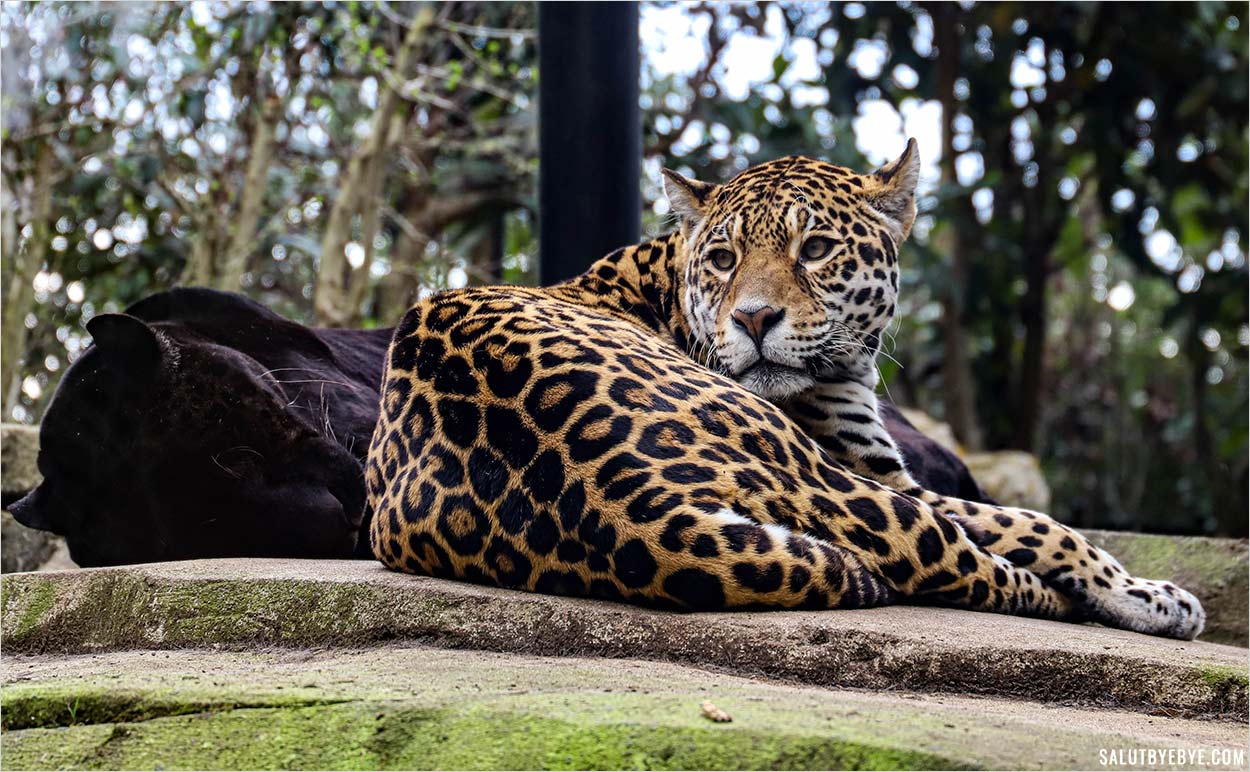
The Guyana biozone is one of the most striking, especially thanks to its large tropical greenhouse. You enter a warm, humid world, lush with vegetation, with walkways, waterfalls, and bird calls that really make you feel as if you've stepped into a completely different climate. You come across species such as the jaguar, the bush dog, and the tapir, often resting in the shade.
This is also the zone where I started handing out a few unofficial awards. I gave the best (or worst) haircut award to this monkey with a very "bowl cut" hairstyle.

The "best nose" award goes without hesitation to this anteater, with its impressively long snout.

I also gave a "Grandmother Willow" award to this striking bird with its cartoon-like plumage.

And it is impossible not to mention the "Can I take one home?" award for these two tamarins, adorable and very expressive.

Beyond these playful touches, Guyana is a zone where you can really see how much work went into recreating a tropical environment, with careful attention to both the landscaping and visitor experience.
The Madagascar biozone: lemurs and endemic wildlife
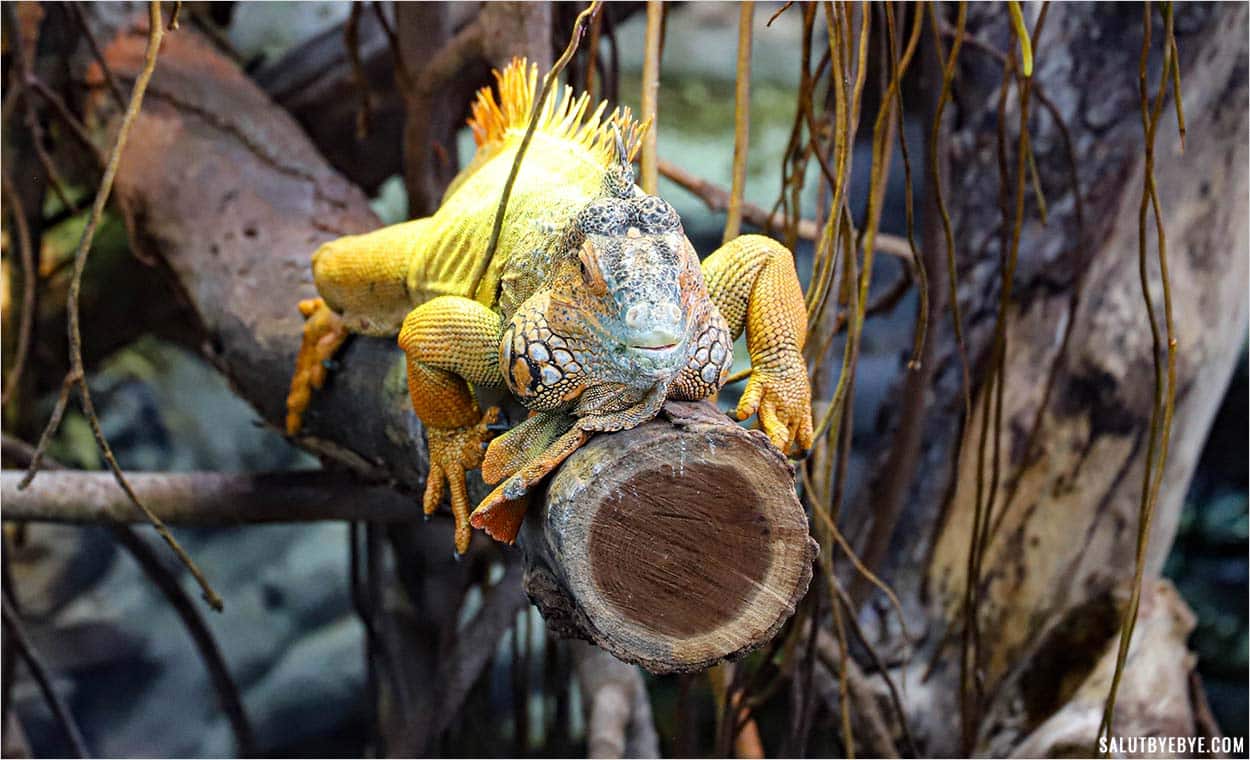
The Madagascar biozone highlights Madagascar's remarkable biodiversity and endemic species. You'll see curious, watchful lemurs, tortoises taking their time, a chameleon sometimes well camouflaged in the vegetation, as well as fruit bats. This zone is often very popular with children, as the lemurs' movements and expressions immediately catch their attention.
Visiting the Vincennes Zoo in practice: length of visit, weather, and food options
A visit to the Paris Zoological Park is quite easy to plan: you mainly need to choose the right time to visit, check the forecast, and decide whether or not you will have a picnic.
How much time should you allow for the visit?
A typical visit to the Vincennes Zoo, following the suggested route and taking the time to look at the main enclosures, generally takes 3 to 5 hours.
During my first visit, despite very changeable weather, we managed to see all the biozones without feeling rushed, while stopping whenever the animals were clearly visible. If you are passionate about photography or want to attend the activities (feedings, keeper talks), the visit can easily stretch to a full day.
Visiting the zoo when it rains or is very hot
The Paris Zoological Park works surprisingly well on rainy days, and can actually be quite pleasant, as it offers many sheltered areas. I went there on a particularly rainy June day, and the rain didn't disrupt our visit too much: most of the viewing areas have awnings, the large tropical greenhouse and the giraffe house provide shelter, and several information kiosks also offer additional cover during a shower.
In very hot weather, these same spaces become welcome pockets of shade. The park also has plenty of vegetation, which helps keep the park from feeling unbearably hot, as can sometimes happen at sites that are entirely paved or concreted over.

Eating on site: restaurants and picnic
You have two main options for eating at the Vincennes Zoo:
- The park's food outlets, which offer hot dishes, sandwiches, salads, and snacks. Prices are fairly typical for a major attraction in Paris, so a bit higher than in town, but with the advantage of staying on site, close to the enclosures.
- The large picnic area, located not far from the Patagonia zone, with numerous tables. It's an excellent option for families and groups who want to keep costs down or enjoy a quiet lunch.
During my visit, we ended up choosing a hot meal in one of the restaurants because of the rain, but if the weather had been kinder, a picnic would have been a nice option.
Vincennes Zoo prices: how much does a visit cost in 2026?
The Paris Zoological Park has relatively high prices, but they are comparable to those of other major European zoos of a similar size.
Ticket prices and discounts
The ticket prices for the Vincennes Zoo vary depending on age, time of year, and the type of ticket (dated, undated, full price, reduced).
In general, for a visit in 2026, expect to pay around:
- €20 to €30 per adult, depending on the time of year and type of ticket (about $22 to $33 / £17 to £26).
- A reduced price for children, young people, people with disabilities, and eligible groups.
- Possible bundled deals through the National Museum of Natural History for those who regularly visit its sites.
For a family with children, the cost can add up quickly, although prices remain comparable to those of large animal parks such as Doué-la-Fontaine or La Boissière-du-Doré, especially given the zoo's Paris location and operating costs.
Vincennes Zoo, Thoiry or Parrot World: which park should you choose?
If you are looking for a zoo or wildlife park outing in Île-de-France, the choice mainly depends on where you live, how much time you have, and the age of the children. Here is a comparison to help you choose between the Paris Zoological Park, the ZooSafari de Thoiry, and Parrot World.
| If you are looking for... | Parc Zoologique de Paris | ZooSafari de Thoiry | Parrot World |
|---|---|---|---|
| An outing that is easy to reach without a car | This is the simplest choice from Paris: the zoo is served by the metro, the RER and several bus lines. | You'll almost certainly need a car to make the most of the estate and the safari route. | The park is mainly convenient if you come by car. However, it can still be a fairly easy outing if you live in the eastern part of Île-de-France. |
| A half-day visit | It works well for a half-day visit: allow around 3 to 5 hours depending on your pace and the activities you attend. | The estate is very large and is better suited to a full day. In half a day, you will probably have to make some choices. | It works particularly well for a half-day, especially if the park is within easy reach of where you live. |
| An outing with young children | The zoo is compact enough to get around easily, the paths are stroller-friendly, and the numerous rest areas make the visit easier. | The park is very pleasant with children, but its size means a long day. With a child who still naps, you often need to adapt the schedule or accept skipping the nap. | The route is fairly compact and easy to follow as a family. The length of the visit works well for young children without necessarily disrupting the whole day. |
| The most immersive experience | The biozones are well designed, but the setting is still urban and some artificial scenery can reduce the sense of immersion. | This is the most spectacular park of the three in terms of large open spaces, especially thanks to the safari and the size of the estate. | The South America–themed area is well designed and pleasant, with bird habitats that are particularly immersive. |
| Seeing a lot of animals | The park is home to many species, but some areas can feel quite calm and the animals are not always very visible or active. | The diversity of species and the size of the park give you plenty of chances to see animals, even though the visit requires more time. | The number of species is more limited, but the park offers interesting encounters and a well-designed route centered on its South American theme. |
The Paris Zoological Park remains the most practical choice for an outing without a car or a half-day visit. If you have a car and a full day, the ZooSafari de Thoiry offers a larger-scale, more spectacular experience, but its full-day format can be awkward with young children who still nap. Parrot World can be a good middle ground for a family outing lasting a few hours, especially if you live in the eastern part of Île-de-France and can get there without spending a large part of the day in transit.
What I liked at the Vincennes Zoo
The Paris Zoological Park has several strengths that make it well worth visiting even if you have already been to other zoos.
A very educational and well-designed visit
What struck me during this visit was how informative the signage is on site. Next to each enclosure, you will find signs detailing the size, weight, diet, and habits of the species, but also individual details about the animals: the animals' names and ages, distinguishing features that help you identify them, short facts and anecdotes. The giraffe section is especially fun, and you may find yourself trying to work out which giraffe is which using the features listed on the signs.
Multiple viewing areas for spotting the animals
The zoo was designed to offer different ways to view the enclosures: viewpoints, windows, walkways, elevated passages. Each enclosure has several viewing points, which significantly increases your chances of seeing the animals, even if they are moving around or resting out of the way.
I've rarely visited this zoo in sunny weather, yet I've still managed to see a lot of animals, which is not always the case in larger, more "natural" parks where animals can easily hide.
A zoo that works well in bad weather
I really appreciated how well the sheltered areas are designed. Most observation posts are covered, there are plenty of covered areas along the paths, and the large greenhouse or the giraffe house quickly become useful places to shelter when the weather turns. This makes the Vincennes Zoo a good option when the weather is unpredictable: you can enjoy the day without getting soaked or having to cut your visit short.
Little tips to help you spot the animals better
Another thing I liked was the helpful signs installed near certain enclosures. You might read, for example: "Right now, the animals are often in the cave visible from the leftmost viewpoint" or "This animal often sleeps in the grove to the right of the window." This kind of practical advice makes a real difference: thanks to these tips, we were able to observe animals we probably would have missed if we had stayed in front of the first viewpoint we came across.
Shop, staff, and activities for children
The park shop also deserves a mention: even though I did not end up buying anything there, it is well stocked, with stuffed animals, books, games, and items related to animals and nature. You can easily find a souvenir of your day out.
The staff were excellent throughout the visit: security staff at the entrance, restaurant employees, shop assistants, staff in the greenhouse… everyone was helpful and friendly. We also came across staff members painting children's faces, with very pretty animal face paint, which added a fun, festive touch to the outing.
The park also offers many activities: watching the animals being fed, taking part in "zookeeper for a day" workshops, or even visiting the zoo after dark on certain evenings. These experiences add an extra dimension to a typical visit, especially if you have already seen the zoo during the day.
Picnic areas and thoughtful landscaping
The picnic area is a real plus for families, with enough tables to accommodate a crowd without making you feel crammed together. Even though we ended up choosing a hot meal at the restaurant because of the rain, I appreciated that the park offers a good option for visitors who bring their own food.
Finally, I would like to highlight the landscaping. You come to the zoo for the animals, but the vegetation plays an important role in the overall visitor experience. It helps create different atmospheres depending on the biozones, sometimes hides the barriers, and helps the zoo feel more natural than just a series of enclosures. The large greenhouse is particularly successful in this respect, with dense planting that creates a completely different atmosphere from the rest of the zoo.

What I liked less about the Paris Zoological Park
The Vincennes Zoo does have a few drawbacks, both aesthetic and practical.
Animal sightings can be unpredictable
As in any zoo where the animals have space and plenty of hiding places, you need to accept a degree of unpredictability. Across several visits, there were certain species that I simply never managed to see, especially the wolves, which are a highlight for many visitors.
This is obviously not a flaw in itself. On the contrary, I much prefer seeing animals moving around in spacious enclosures where they can get out of sight rather than in spaces where they would be constantly exposed to the public. It is probably a better compromise for their well-being.
However, this can be a real downside if you come with young children who dream of seeing a particular animal. If a child has their heart set on seeing the wolves or another animal, the disappointment can be very real if they remain invisible all day long. It is therefore better to go in knowing that some sightings depend on luck.
Artificial scenery and lack of color
The Paris Zoological Park uses a lot of artificial rockwork, the most iconic example being the famous Grand Rocher (Great Rock), which is 65 meters high (about 213 ft). While this structure has become one of the zoo's defining landmarks, I sometimes felt that the abundance of these rocks could make some areas feel overdesigned.
I found the surfaces too smooth and uniform, which created a somewhat unrealistic impression, especially when you compare it with other parks that use more texture and color variation. Even compared with the obviously artificial rockwork at Disneyland Paris, I still think this is one area the zoo could improve.
The park also often felt a bit dull to me outside the large greenhouse. There's plenty of greenery, shrubs, tall grasses, but relatively few flowers or touches of color to break up the monotony. Perhaps this is a deliberate choice to match the habitats more closely, but as a visitor, a few extra colorful touches would not hurt.
High ticket prices, limited aquatic exhibits, and tricky glass reflections
I did a double take when I saw the ticket prices, especially for a family outing. After comparing them with other major zoos, however, I have to admit that the Paris Zoological Park is priced fairly similarly to comparable attractions of this size in an urban setting. It can still make for an expensive day out, though.
I was also a bit disappointed by the limited focus on fish. Apart from a few large specimens visible in the big greenhouse, there are almost no aquariums or varied tanks like you can find in some other zoos or aquariums. That fits the zoo's focus on terrestrial biozones, but for those who enjoy observing aquatic life, it can feel like something is missing, especially since Paris doesn't have many aquariums, apart from the one at Porte Dorée and the Aquarium de Paris at the Trocadéro.
Finally, one practical drawback that can affect the experience, especially if you like taking photos: the glass panels. During my visit, they were often covered in handprints (you can easily picture the child who pressed their jam-covered slice of bread against the window while looking at an animal) and could also be very reflective.
In some areas, it was really difficult to capture a sharp image without having your own silhouette superimposed on the lynx or the jaguar. I don't know whether any anti-reflective treatment has been added, but in practice, it was quite frustrating at times.
Is the Vincennes zoo suitable for children and families?
The Paris Zoological Park works well as a family outing, thanks to its manageable size, its varied viewing areas, and its many activities.
Getting around with young children and strollers
The Vincennes Zoo is still relatively compact: you don't have to cover huge distances to get around the biozones, which is a real advantage with young children. The paths are stroller-friendly, the slopes are manageable, and there are plenty of places to stop and rest. The different viewing areas, sometimes elevated, sometimes at ground level, also help keep the youngest visitors' attention without exhausting them.
Activities, feeding times, and workshops for children
One of the zoo's biggest advantages is the chance to learn about the animals from knowledgeable keepers. Between the feeding sessions, the educational presentations, and activities like "keeper for a day," children learn a lot about the species, their behavior, and conservation challenges.
The face-painting activities I came across during my visit were a fun extra that was very popular with younger children, who suddenly turn into mini lions and giraffes themselves.
For parents, it also means you don't have to come up with all the explanations yourself: the signage and staff do much of the work for you.
Opening hours and school holidays
The opening hours of the Parc Zoologique de Paris vary by season, with longer hours during school holidays, which is especially helpful for planning an outing with children. You can find the detailed, up-to-date schedule on the official website: opening hours.
These longer opening hours in high season allow you to choose between an early-morning visit (often quieter) or a long afternoon, depending on your family's pace.
My overall opinion of the Vincennes Zoo: is it worth visiting?
The Parc Zoologique de Paris is a good outing if you are looking for a large zoo that is easy to fit into a day in Paris, with a strong educational focus and well-designed biozones.
An urban zoo full of potential
Overall, I find that the Vincennes Zoo is a good choice for a family day out. It strikes a good balance between manageable size, species variety, visitor amenities (shelters, viewpoints, food options), and educational content. It is also an outing that still works well in rainy weather, which is a real advantage if you are looking for outdoor activities that provide some shelter.
The zoo still has a lot going for it, thanks to its location, its reputation, and the improvements already made.
What type of visitor is the Vincennes Zoo best suited for?
I would particularly recommend the Parc Zoologique de Paris to:
- Families with children who want a full day out that is easy to organize with young kids (for example, I took my son there for his 2nd birthday; the timing was perfect to be back home in time for his nap).
- Residents of the Île-de-France region who are looking for a day out without leaving the region or driving.
- Visitors spending a few days in Paris who have already seen the major sights (Eiffel Tower, Louvre, etc.) and want to add a nature-focused activity to their trip.
If you come knowing that you are going to visit a modern urban zoo, with both advantages (accessibility, strong educational focus, layout) and drawbacks (a highly artificial setting in places, relatively high ticket prices), you are likely to enjoy your visit.
If you have already visited the zoo, I'd love to hear what you thought of it: feel free to share your thoughts in the comments, it will also help other readers know what to expect before booking.
The traveler's memo for visiting the Vincennes Zoo
Here are the answers to the most frequently asked questions to help you prepare your visit to the Paris Zoological Park, also known as the Vincennes Zoo.


