

Parc Monceau is one of the most beautiful gardens in Paris's 8th arrondissement, halfway between Boulevard de Courcelles and Boulevard Malesherbes. Surrounded by private mansions and wide Haussmann-style avenues, it offers a very different feel from major tourist gardens like the Jardin du Luxembourg or the Tuileries. Here, the atmosphere is more residential and peaceful, with a surprising mix of fake ruins, romantic bridges, ancient columns, and large lawns where Parisians come to read, run, or enjoy the sun.
It is also one of the parks I most like to recommend to visitors who want to discover another side of Paris. Located just a few minutes from the Arc de Triomphe and the Champs-Élysées, it makes an excellent break between two visits. Each time I have been, what has always struck me is the contrast between the bustle of the big surrounding boulevards and the calm you feel as soon as you pass through its monumental gates.
Between its famous Naumachia lined with Corinthian columns, its 18th‑century constructions, its playgrounds, and its elegant atmosphere, Parc Monceau works just as well for people out for a stroll as it does for families. Whether you live in Paris or are just passing through for a few days, it is a pleasant place to walk, have a picnic, take photos, or simply slow down for a few hours.
In this article, I invite you to discover the history of Parc Monceau, the must‑see sights, my visiting tips, and all the practical information you need to plan your time there.
- Parc Monceau is located in the 8th arrondissement of Paris, with a main entrance at 35 Boulevard de Courcelles and several very convenient secondary access points.
- If you are looking for an elegant park that is less touristy than the Jardin du Luxembourg or the Tuileries, Parc Monceau is an excellent alternative in western Paris.
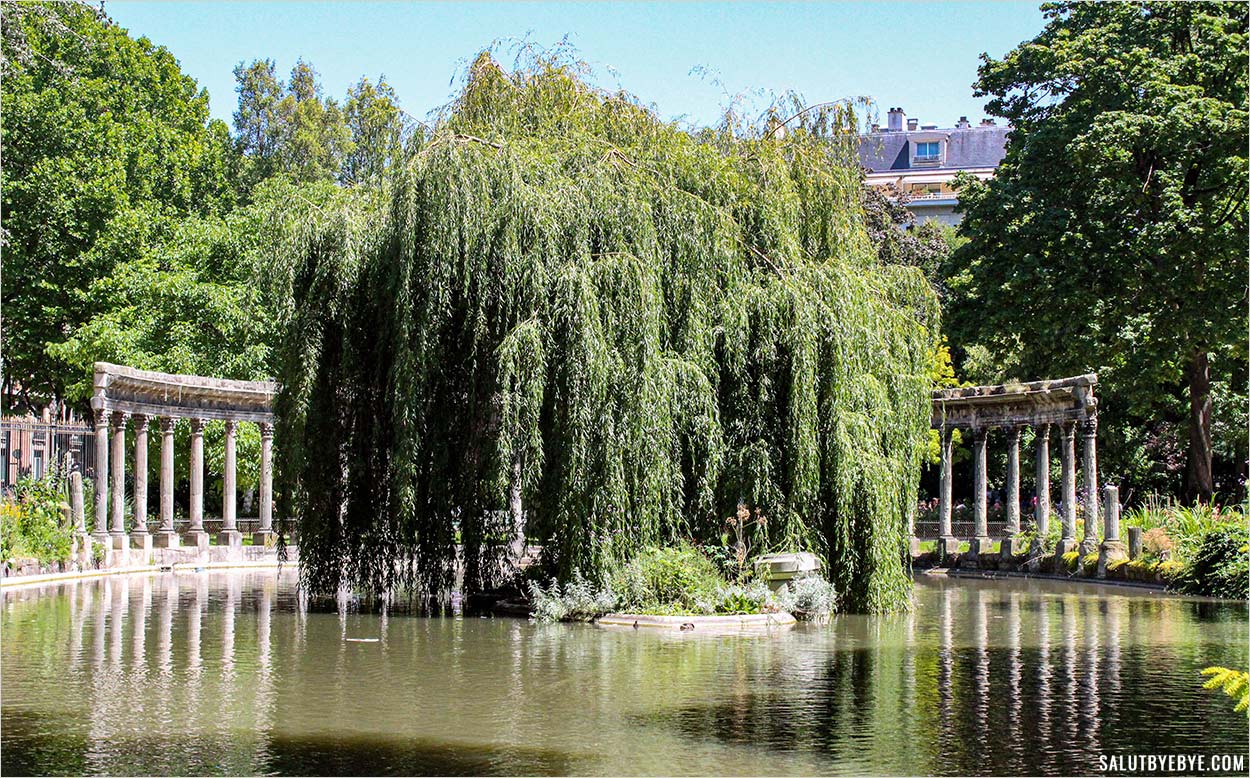
- If you only see one feature of the park, head to the Naumachia, a pool surrounded by Corinthian columns considered the most emblematic backdrop in Parc Monceau.
- On site, you will find playgrounds, a carousel, water points, Wi‑Fi, and paths that are largely accessible to people with reduced mobility.
- The setting combines lawns, pools, bridges, fake ruins, and statues, with a few remains of 18th‑century follies such as the Naumachia and the pyramid.
- The Monceau metro station (line 2) is right next door, which makes access to the park very easy from the rest of Paris.
- Why visit Parc Monceau in Paris?
- Parc Monceau, Luxembourg Gardens or Tuileries: which one to choose?
- A bit of history about Parc Monceau
- What to see in Parc Monceau during your visit?
- Parc Monceau with kids
- Where to eat near Parc Monceau
- How to get to Parc Monceau
- Services, facilities, and accessibility at Parc Monceau
- How much time should you plan to visit Parc Monceau?
- Traveler's memo for visiting Parc Monceau
- Should you visit Parc Monceau?
Why visit Parc Monceau in Paris?
Parc Monceau is one of the most original gardens in Paris. Less well known to visitors than the Jardin du Luxembourg or the Tuileries, it wins people over with its elegant atmosphere, its unusual 18th‑century decorative features, and its ideal location close to several major tourist sites. It is a park I often recommend to travelers who want to see a more residential, less busy Paris without straying far from the center.
To discover one of the most elegant gardens in Paris
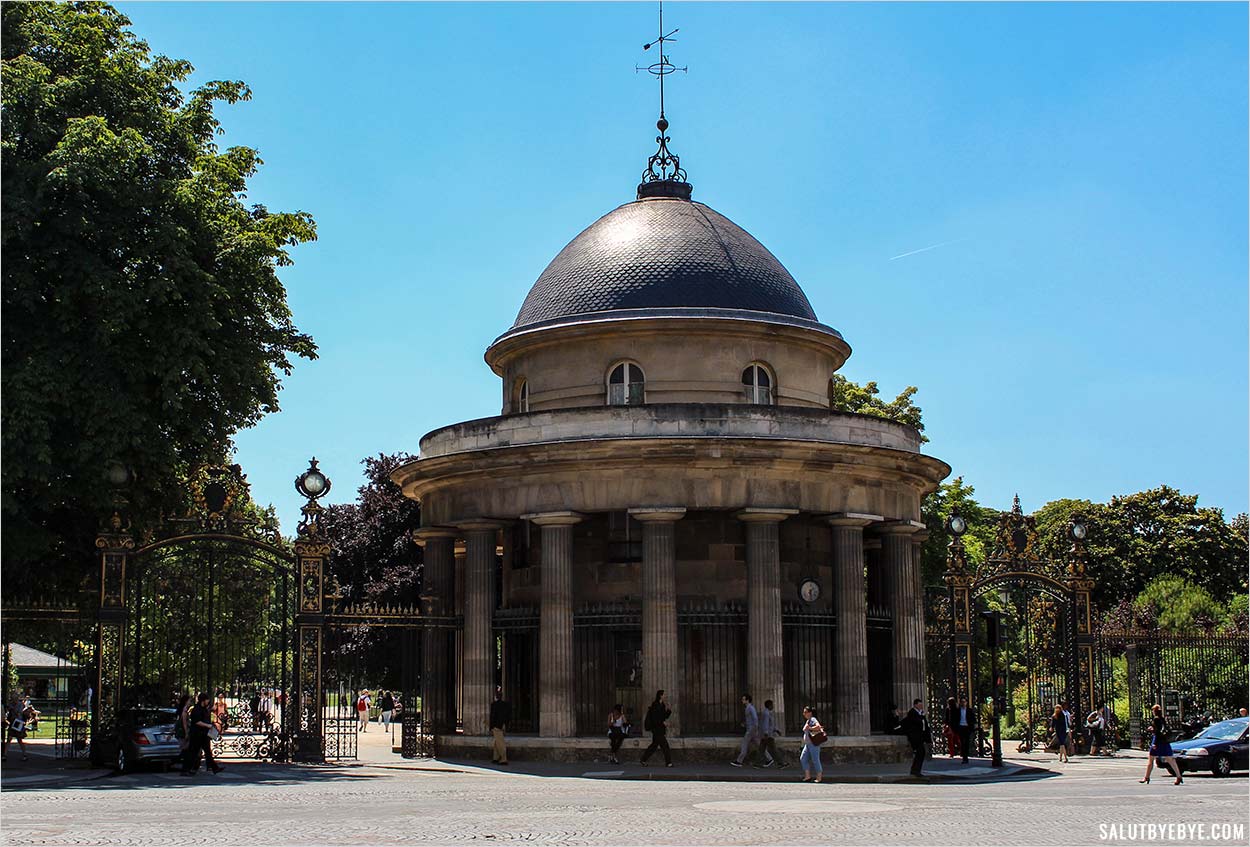
Parc Monceau is in the very chic 8th arrondissement of Paris, surrounded by Haussmann-style buildings, embassies, and private mansions. Unlike some major Parisian gardens located in the heart of tourist zones, it retains a more local feel. As soon as you pass through its monumental gates, the atmosphere changes: the cars and noise of the big boulevards seem to fade away, giving way to people out for a walk, neighborhood families, and joggers enjoying the shaded paths.
To admire a unique setting in Paris
What really sets Parc Monceau apart from other Parisian gardens are its 18th‑century decorative features and ornamental constructions. As you walk, you discover an Egyptian‑inspired pyramid, fake ruins, romantic bridges, and especially the famous Naumachia, a pool surrounded by Corinthian columns that has become the symbol of the park. This unusual setting sometimes gives you the impression of walking through an open‑air theater set rather than a simple public garden.
To take a break between two visits in Paris
Parc Monceau is located about a fifteen-minute walk from the Arc de Triomphe and the Champs-Élysées. If you are stringing together visits in western Paris, it is an excellent place to slow down the pace for an hour or two. I particularly enjoy stopping there after walking around the neighborhood: the lawns, rose beds, and numerous benches let you catch your breath a bit before heading back out to explore the capital.
Parc Monceau, Luxembourg Gardens or Tuileries: which one to choose?
If you are hesitating between several major Parisian gardens, the choice mainly depends on the atmosphere you are looking for.
| Garden | Ideal for... | Good to know |
|---|---|---|
| Parc Monceau | An elegant break in a chic residential neighborhood, far from the crowds. | Unusual decor, Naumachia, private mansions, very Parisian atmosphere. |
| Luxembourg Gardens | A first discovery of Paris and classic French gardens. | Very busy, especially in good weather. |
| Tuileries Garden | A walk between the major monuments in central Paris. | Exceptional location between the Louvre and Place de la Concorde. |
If I had to choose only one for a quiet walk that is a bit different from the classic tourist itineraries, I would generally recommend Parc Monceau. Its romantic decor gives it a special charm that is hard to find elsewhere in Paris. I prefer it to the hustle and bustle of the Luxembourg and to the slightly "bare" feel of the Tuileries (despite their superb vistas!).
A bit of history about Parc Monceau
Parc Monceau was created in the 18th century as a private garden laid out for the Duke of Chartres, before becoming one of the most original public gardens in Paris. Part of its current appeal comes precisely from this unusual history: unlike many Parisian parks designed according to very strict rules, it was conceived from the outset as a place for strolling, dotted with surprises and spectacular decor.
From wasteland to folly garden
At the beginning, Parc Monceau was just a simple piece of wasteland. It may seem surprising to imagine that in 1769 such a large space was still available in Paris, but the city did not yet have its current boundaries. The Duke of Chartres, the future Duke of Orléans, then bought the land to establish a folly there, meaning a secondary residence intended for very wealthy families.
The idea was to have a country house while still staying in the immediate vicinity of Paris. At the time, the area was still largely outside the city as we know it today. The estate was meant to allow the duke and his guests to escape daily life without undertaking a long journey.
A postcard setting between pyramid and pagoda
With the help of his landscape architect Louis Carrogis Carmontelle, the Duke of Chartres gradually transformed the land into a real open-air theater set. He had all kinds of exotic and unusual buildings constructed: an Egyptian pyramid, a Chinese pagoda, the ruins of a Temple of Mars, and other follies inspired by the major landscape trends of the 18th century.
The goal was not to faithfully reproduce these architectures but to surprise visitors as they strolled through the grounds. Each turn was meant to reveal a new setting, a bit like an imaginary journey through different civilizations.
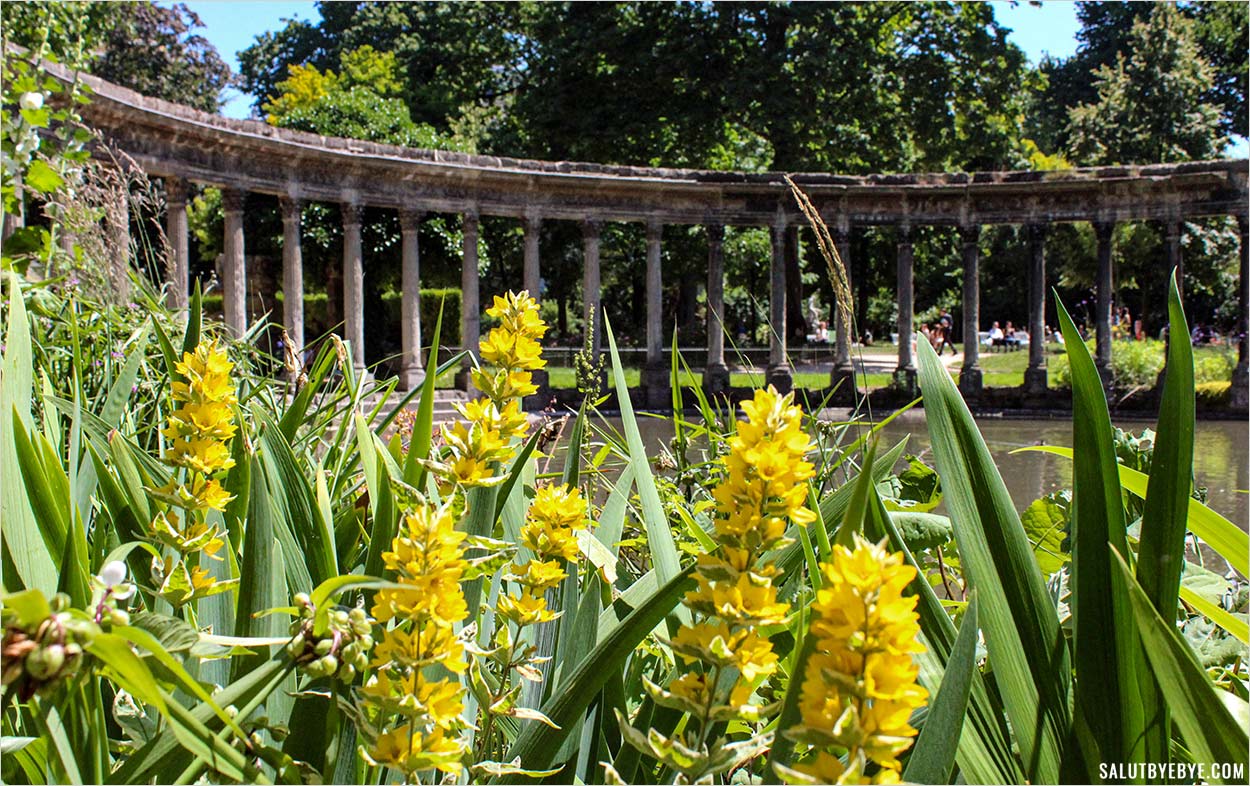
The duke also had artificial rivers dug and created a pool surrounded by Corinthian columns, the famous Naumachia. More than two centuries later, it is still one of the most photographed features in the park and one of the few remnants that make it possible to imagine how spectacular the original garden was.
From private garden to mansions
Over time, the estate changed hands several times before returning to state ownership, and was gradually transformed into a public garden. Its area was then reduced and part of the land was divided into plots.
Prestigious hôtels particuliers (private mansions) began to appear around the park, permanently shaping the neighborhood's identity. The area became one of the most sought-after addresses in Paris for the great wealthy families of the time. In the neighboring streets you would then come across names like Rothschild, Cernuschi, Menier, or Pereire, whose influence is still visible in the surrounding architecture.
Even today, Parc Monceau retains this distinctive atmosphere. As you walk along its paths, you regularly glimpse, through the trees, the elegant facades of the mansions that surround it. This contrast between romantic garden and bourgeois architecture is part of what sets Parc Monceau apart from other major Parisian gardens.
What to see in Parc Monceau during your visit?
Parc Monceau offers a mix of lawns, decorative architecture, statues, and small bridges that pleasantly break up a one- or two-hour walk. Even though the park is not huge, it has enough details and surprises to make you want to slow down and explore its different paths.
The Naumachia, the pool with columns
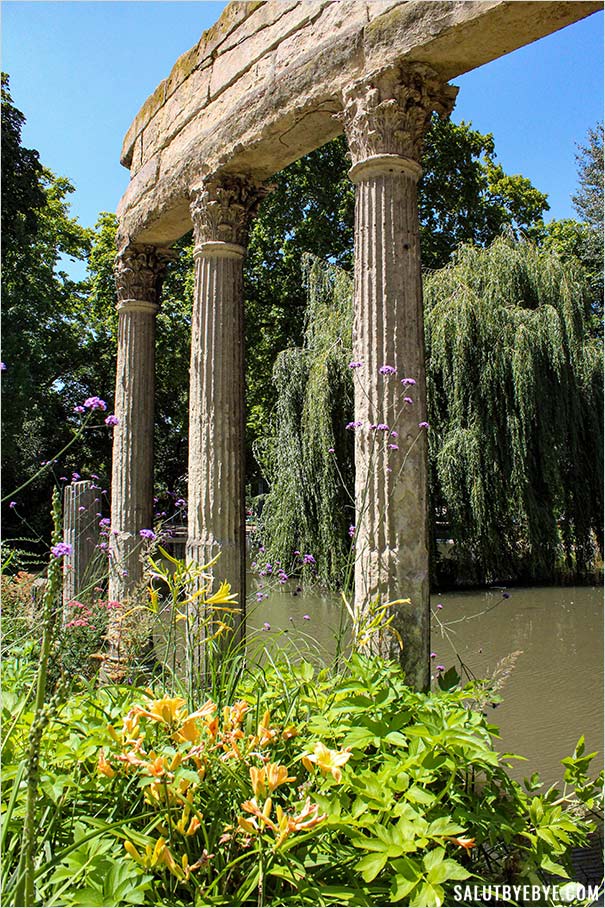
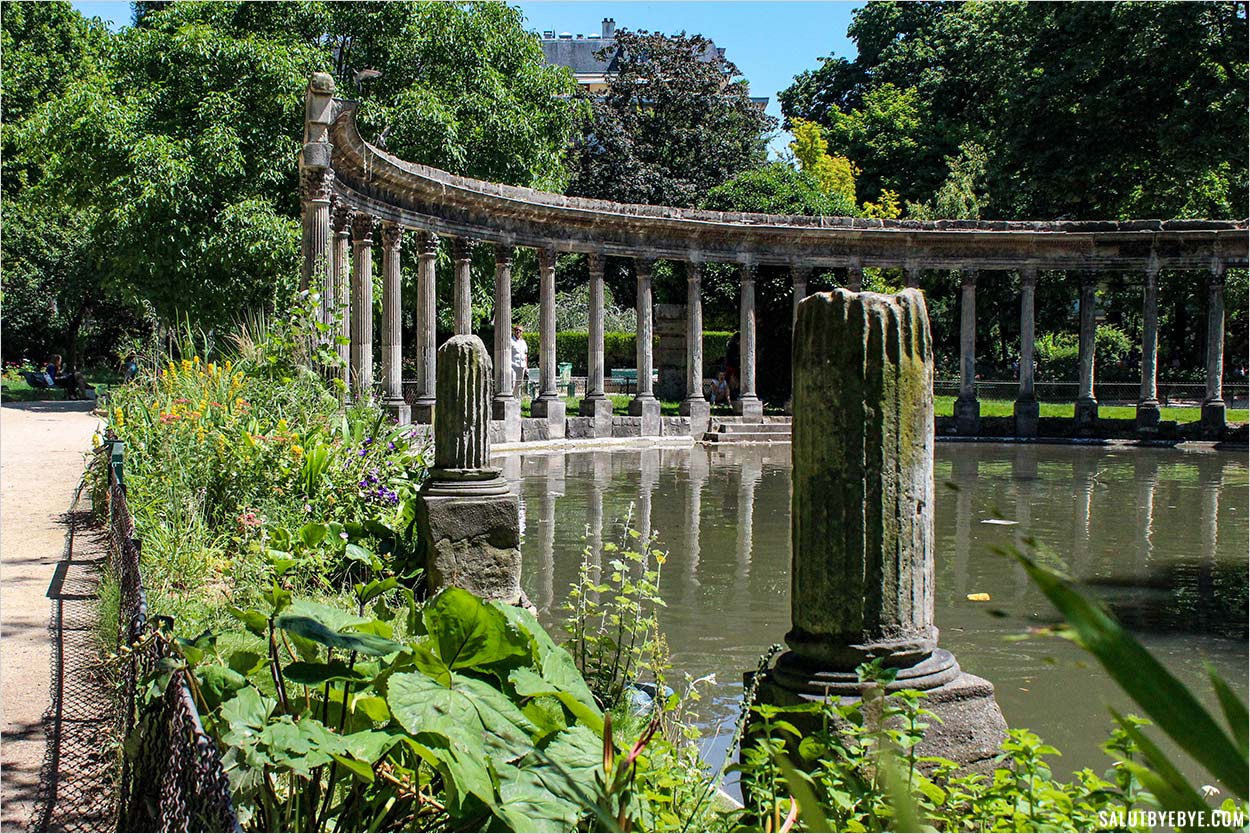
If you only see one place in Parc Monceau, head for the Naumachia. This long pool lined with Corinthian columns has become the park's real symbol and one of its most photogenic settings.
Picture a tranquil stretch of water, surrounded by a semi-circular colonnade, where the trees are reflected in the surface while walkers settle onto the nearby benches to chat or simply enjoy the quiet. It is one of the places in the park where I most like to stop, especially in the morning when there are still few people and the light slides gently over the stone. With the Haussmann-style facades that sometimes appear between the trees, you get a very Parisian backdrop that is still quite different from what you see in the other large gardens of the capital.
The fake ruins and the pyramid
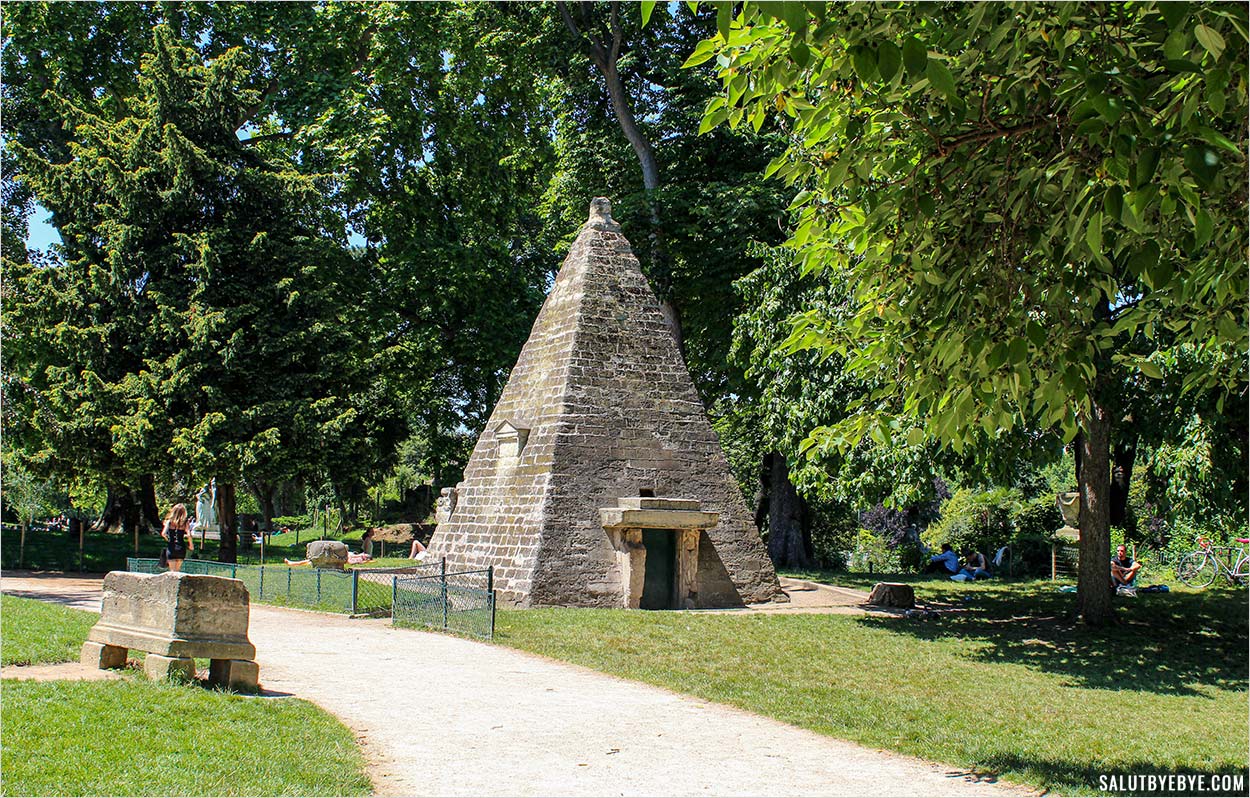
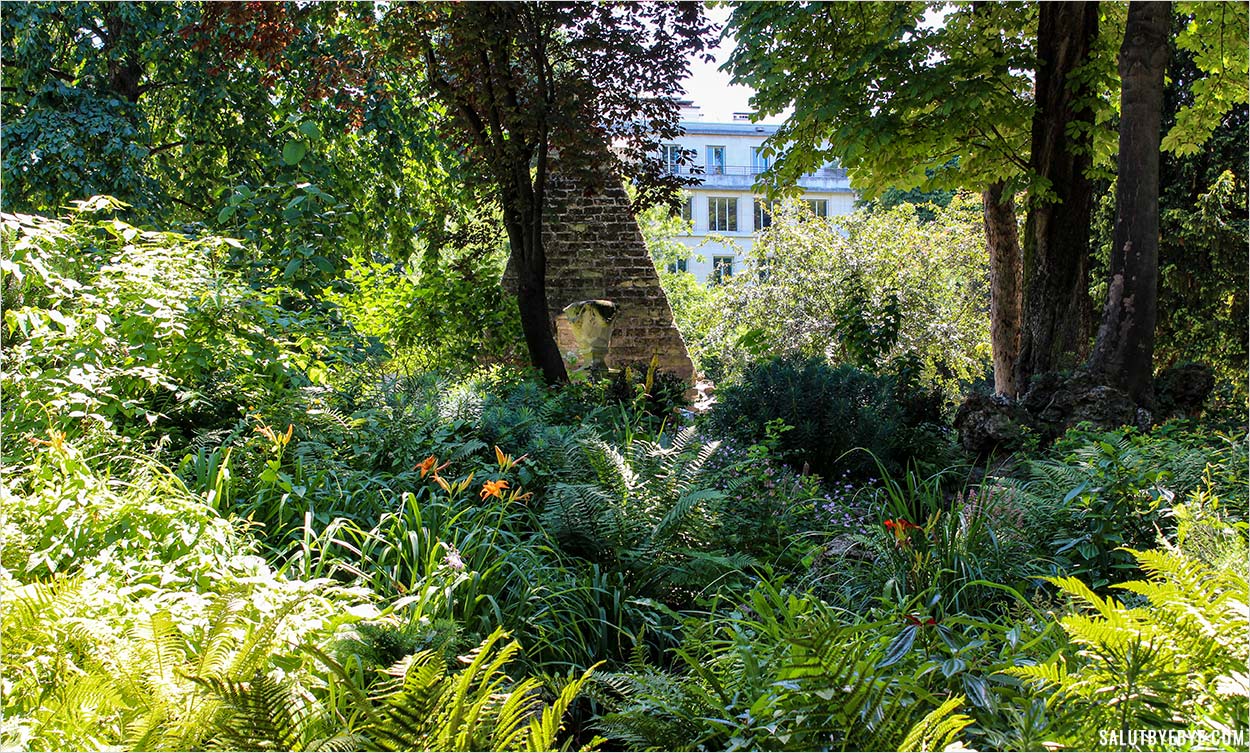
As you walk through the park, you also come across a few more surprising decorative elements, such as a small Egyptian-style pyramid nestled between the trees. It recalls the craze for ancient Egypt at the end of the 18th century and is part of a series of exotically inspired constructions (or "follies") commissioned by the Duke of Chartres.
Next to it, other fake ruins dot the paths and sometimes give you the impression of being on the set of a novel rather than in a Parisian park. It is precisely these slightly unexpected details that give Parc Monceau its charm. You do not discover everything at once: each turn reveals a new element of the scenery.
Bridges, streams and rose gardens
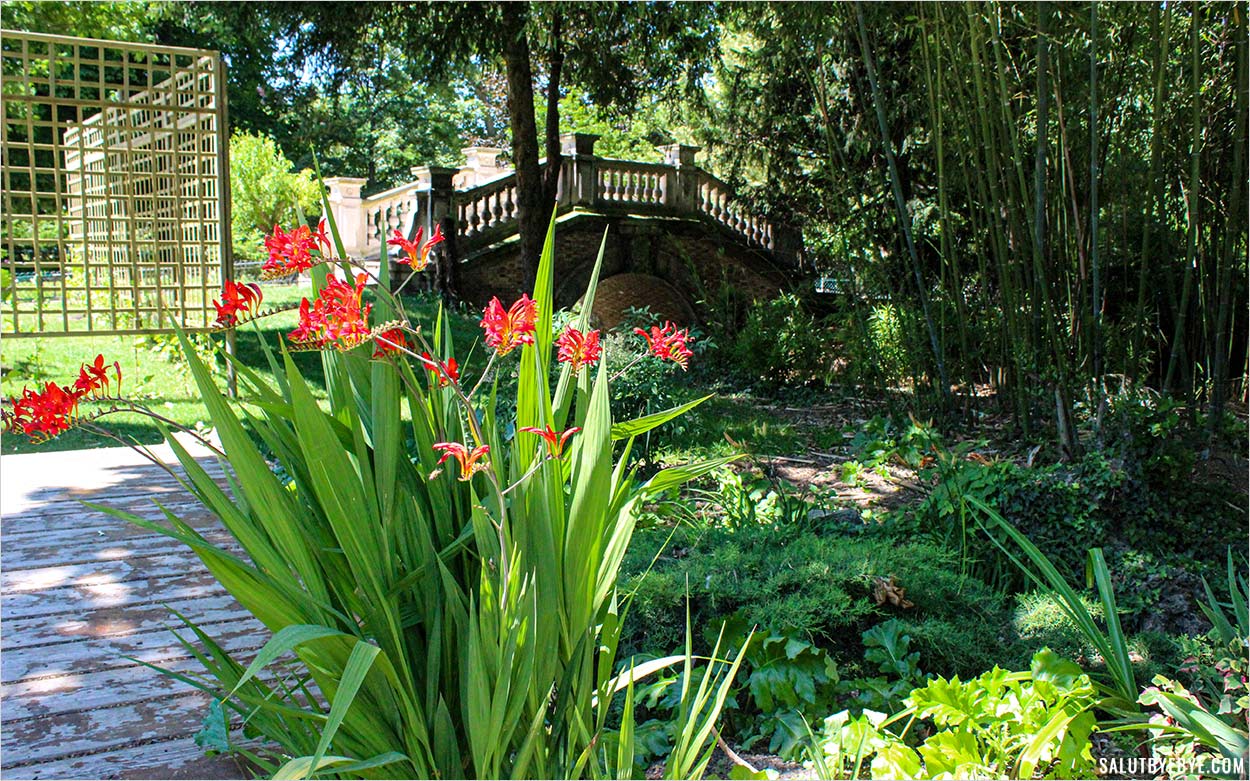
Parc Monceau is crossed by small artificial streams, spanned by several bridges. Some are very simple, others are more decorative and surrounded by flower beds, like this flower-covered bridge where I have often seen photographers taking advantage of the late-afternoon light.
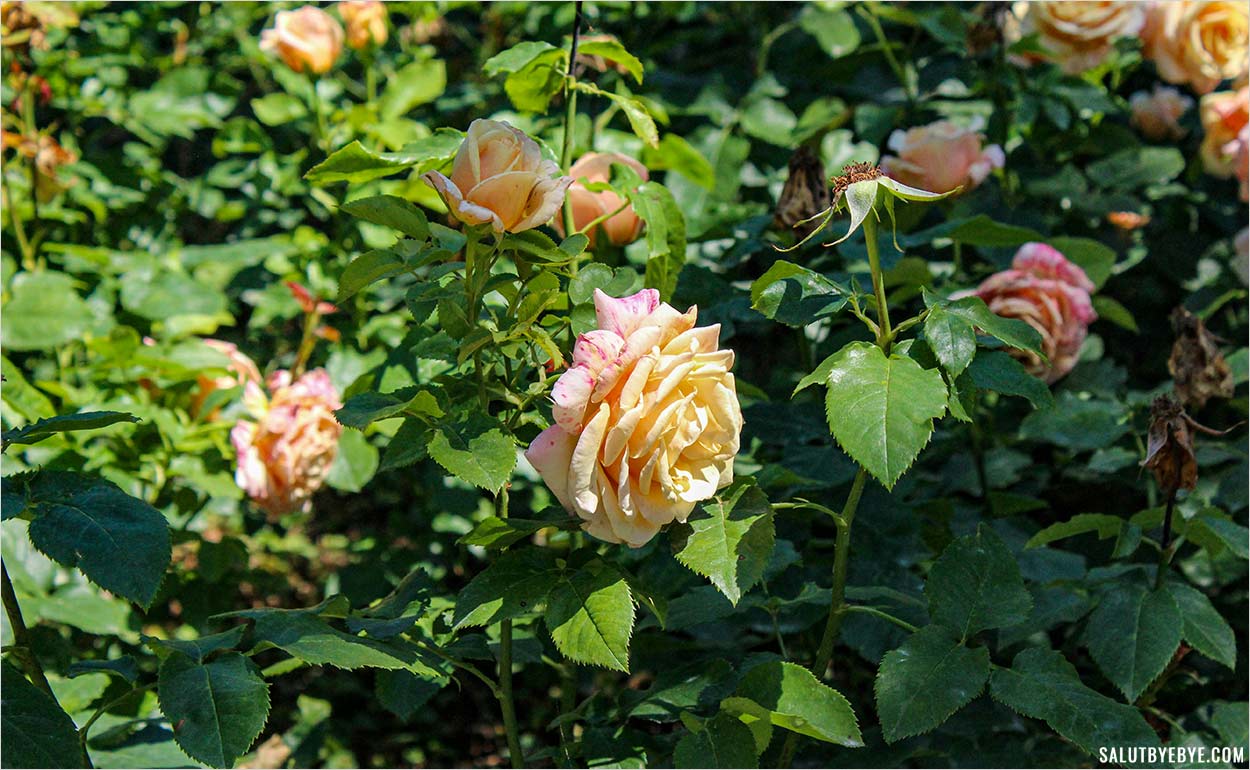
In the fine season, the roses bring a lot of color to the edges of the lawns. I particularly like this part of the park in spring and early summer, when the roses are in bloom and the different flower beds create a succession of small scenes that are very pleasant to photograph. Each corner of the park has its own atmosphere, which means you can quickly feel a change of scenery simply by switching to a different path.
Statues, carousel and everyday scenes
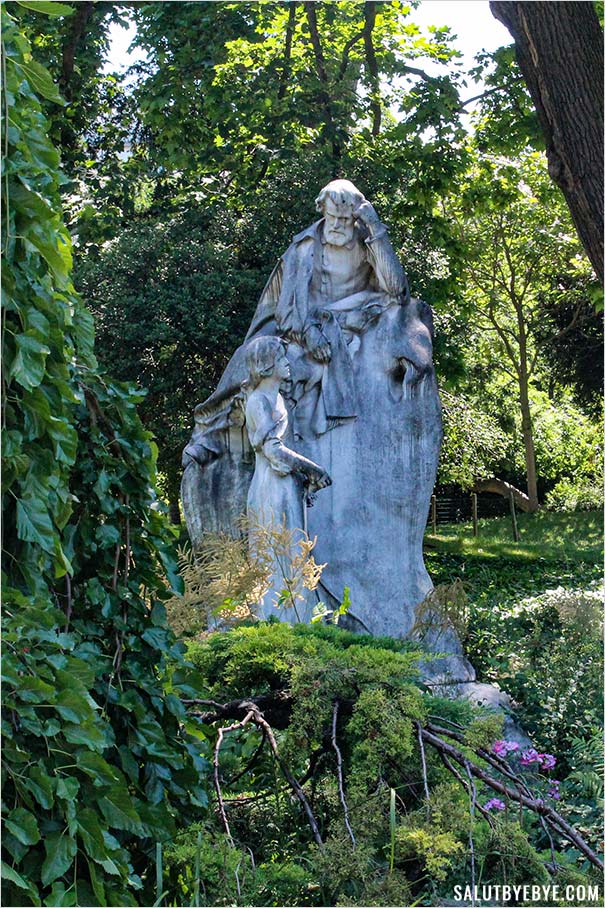
As you walk through the park, you will come across statues of famous figures, busts and a few more discreet monuments that you almost stumble upon by chance as you round a bend in the path. Parc Monceau is home in particular to statues dedicated to writers, musicians and personalities who have left their mark on French cultural history.
It is a park that lends itself well to a stroll without any specific goal, where you let yourself be guided by the perspectives, the play of light and the everyday scenes unfolding around you. Children are often drawn to the carousel, surrounded by laughter and music, while local residents come to read on a bench, go for a run or walk their dog. This coexistence between visitors and neighborhood residents greatly contributes to the atmosphere of the place and gives Parc Monceau a lively feel that I particularly enjoy.
Parc Monceau with kids
Parc Monceau is particularly suitable for families, with playgrounds, large open spaces to run around, a carousel and even pony rides on certain days. If you are visiting Paris with a child under 10, Parc Monceau is in my opinion one of the most pleasant gardens in western Paris thanks to its balance between play areas, decorative features to look at, and relaxation zones for adults.
Playgrounds, sandbox and carousel
The park has several playgrounds for children, with structures suitable for younger kids, slides and a large sandbox. It is a place where local families are happy to come after school or on weekends, which creates a very lively atmosphere on sunny days.
The carousel adds a slightly retro touch, with its music and wooden horses, and quickly becomes a must-stop if you come with a child. Even if you do not go on it, it contributes a great deal to the park's family atmosphere. When I have been there, there are almost always children running between the carousel, the playgrounds and the lawns.
Guignol puppet shows
You will also find in Parc Monceau an open-air puppet theater, open from May to September. It is located near the Naumachia. Tickets are bought directly on site, with no need to book in advance. You can easily come with a stroller.
The Guignol puppet shows are generally suitable for children over 3, making it a nice moment to share if you are visiting with young kids.
Pony rides with Animaponey
Children can also go for pony rides thanks to Animaponey, which is on site on certain days.
The idea is simple: an adult leads the pony by hand while the child sits in the saddle for a little ride around the park. When I have been there, I have often seen parents use this moment to take a few photos and offer a fun break between two more "adult" visits. For many children, this is often the activity they remember most after the visit.
Picnics, snacks, and quiet time
Parc Monceau offers a bucolic and very pleasant setting for having picnics with friends as soon as the sun comes back, or for taking a break in the shade of the trees. You can easily plan a simple lunch there or a snack if you are traveling with children.
It is also a good compromise if not everyone wants to do the same thing. While some people lie down on the grass or read on a bench, the youngest can enjoy the open spaces to run or play. I particularly appreciate this aspect of Parc Monceau: it allows you to slow down the pace in the middle of a day that is often quite full of visits, without feeling like you are coming to a complete stop.
There is also a kiosk on site, the Chalet Monceau, which offers waffles and crêpes, as well as ice cream in season.
For families who are visiting several monuments or museums in the same day, the park provides a welcome break where children can burn off some energy before setting off again to explore Paris.
Where to eat near Parc Monceau
Beyond the Chalet Monceau in the park, you will easily find places to grab a quick bite or enjoy a sweet break around Parc Monceau.
An ice cream break at Amorino
My little guilty pleasure when I go to Parc Monceau is often the Amorino ice cream shop, at 2 avenue de Villiers, just a few minutes' walk from the garden.
The flavors are fairly classic, but the quality is there, with well-made artisanal gelato. On nice days, I like to stop there after a walk in the park, then go back to sit on a bench and soak up the neighborhood atmosphere.
A quick lunch around the park
Since the area is very residential, you will easily find bakeries, cafés, and brasseries in the streets around the park. For a quick lunch, I would suggest picking up a sandwich, salad, or quiche to go before heading back into the garden.
If you prefer a sit-down meal, the stretches along boulevard de Courcelles, boulevard Malesherbes, and avenue de Villiers offer many options, from classic Parisian brasseries to more contemporary restaurants. To mention a few good places: brunch at Laïa (rue de Monceau), the sunny restaurant Sergent Garcia (3 place Rio de Janeiro), Le Petit Parc, l'Annexe, or Bistrot Monceau for French cuisine.
How to get to Parc Monceau
Parc Monceau is very easy to reach by metro, but also on foot from several major tourist sites in western Paris.
The main entrances to the park
Parc Monceau is located in the 8th arrondissement of Paris, with a main entrance at 35 boulevard de Courcelles. This is generally the entrance you arrive at when you come by metro.
The park also has several secondary entrances, notably on avenue Vélasquez, avenue Van Dyck, and avenue Ruysdael. Depending on where you are coming from, these entrances can save you a few minutes of walking.
Getting there by metro, bus, or on foot
The easiest way to reach Parc Monceau is to take metro line 2 to Monceau station, located right in front of one of the garden's entrances.
You can also get off at Villiers (lines 2 and 3) or Courcelles (line 2), both just a few minutes' walk away.
Several bus lines also serve the surrounding area (20, 30, 84, 93 for example), but the metro generally remains the most convenient option for visitors.
On foot, allow about:
- 15 minutes from the Arc de Triomphe;
- 15 to 20 minutes from the Champs-Élysées;
- 20 minutes from Parc Martin Luther King;
- 25 minutes from Montmartre or the Moulin Rouge.
If you are already exploring western Paris, Parc Monceau fits very easily into an itinerary that includes the Arc de Triomphe, the Champs-Élysées, or the Batignolles neighborhood.
Services, facilities, and accessibility at Parc Monceau
Parc Monceau has several useful facilities for visitors, including water fountains, restrooms, and paths that are largely accessible.
Facilities available on site
The park has water fountains where you can cool off, a carousel, and a playground for children. There are also plenty of benches, lawns where you are allowed to sit, and paths wide enough for a comfortable stroll.
It is exactly the kind of park where it is easy to spend an hour without realizing it. Some people come to read, others to have a picnic, go for a run, or simply enjoy a quiet moment between two visits in Paris.
Accessibility for people with reduced mobility
Parc Monceau is largely accessible to people with reduced mobility. The main paths are paved and relatively flat, which makes it possible to get around in a wheelchair or with a stroller without major difficulty.
Some areas near the artificial streams or bridges may require a bit more attention, but overall the park remains fairly comfortable for visitors who need accessible terrain.
Opening hours and best time to visit
Parc Monceau's opening hours vary depending on the season, with longer hours in summer. At the height of summer, the park usually opens around 7 a.m. and closes around 10 p.m., so you can enjoy both quiet mornings and long summer evenings. From September onward, closing time gradually gets earlier.
To find the exact hours for 2026, I recommend checking the official website, which keeps the opening times and any exceptional closures up to date.
If you have a choice, I find that spring and early summer are the most pleasant times to discover the park. The rose gardens are particularly in bloom then, and the flowerbeds bring a lot of color to the different paths. I also really enjoy visiting early in the morning, when there are still more joggers than tourists and the light particularly highlights the Naumachia and the large lawns.
Parc Monceau is a free public garden, accessible without reservation. You can go in and out freely during opening hours, which makes it a very easy stop to fit into a day of sightseeing in Paris.
How much time should you plan to visit Parc Monceau?
You should plan between 1 and 2 hours to enjoy Parc Monceau, depending on your pace and what you feel like doing.
One hour to see the essentials
If you simply want to discover the park, a walk of about an hour is enough to see its main points of interest: the Naumachia, the pyramid, the bridges, the rose gardens, and the large lawns. Parc Monceau is still relatively compact and can easily be explored on foot.
Two hours to soak up the atmosphere
If you enjoy taking your time, reading on a bench, having a picnic, or traveling with children, it is easy to spend two hours here without noticing the time go by. During my own visits, I often started by walking all the way around the park before settling down for a while to enjoy the quiet and watch neighborhood life.
Traveler's memo for visiting Parc Monceau
Here are the answers to the most common questions to help you prepare a visit to Parc Monceau in Paris.
Should you visit Parc Monceau?
Parc Monceau is not always the first park that comes to mind for a first trip to Paris, and yet it is very much worth a visit. I particularly like its blend of Parisian elegance, the unusual features inherited from the 18th century, and its preserved, neighborhood feel.
Whether you want to stroll somewhere quiet, let the children play, take a few photos around the Naumachie, or simply give yourself a break from the hustle and bustle of the major landmarks, it is an easy place to add to your itinerary. Just a few minutes from the Arc de Triomphe and the Champs-Élysées, it offers a different way to experience Paris, calmer and more local.


