

Kensington Gardens occupy part of what used to be the Hyde Park estate. They are one of London's eight Royal Parks and are managed by The Royal Parks charity, just like Hyde Park, Regent's Park or Green Park. Picture a vast green space in the heart of London, where you come across Londoners out for a walk, children captivated by a pirate ship, a statue of Peter Pan, and people strolling along a pond lined with fountains.
Kensington Gardens are among the most pleasant parks in the British capital. Located right next to Hyde Park, they have a very different feel: calmer, more elegant, and more closely associated with the royal family.
It is a place steeped in history, closely tied to several iconic figures: Queen Victoria, Princess Diana, the world of J. M. Barrie, and Kensington Palace. In this article, I'll show you around these royal gardens: the must-sees, the activities you won't want to miss, practical tips to plan your visit, and good places to go nearby. You'll see that they are well worth a visit, whether you are just passing through for a few hours or spending several days in London.
- Plan at least 1 to 2 hours to explore the main areas of Kensington Gardens (Italian Gardens, Peter Pan statue, Kensington Palace).
- Access the park easily by Tube via Lancaster Gate (for the Italian Gardens) or Queensway (for Kensington Palace) on the Central Line.
- With children, aim for the Diana Memorial Playground early in the morning, as it gets very busy.
- If you enjoy history, combine your walk with an indoor visit to Kensington Palace by booking your ticket in advance.
- Kensington Gardens connect directly with Hyde Park: it's an excellent starting point for exploring two of London's finest Royal Parks in a single walk.
Why visit Kensington Gardens?
Quieter than Hyde Park, Kensington Gardens reveal another side of London. People come here both to stroll and to explore a place closely linked to the British monarchy, Peter Pan and Princess Diana. Between the large landscaped gardens, Kensington Palace, artworks, squirrels and the many activities offered to families, it's easy for everyone to find something they enjoy.
A more peaceful atmosphere than Hyde Park
Even though they connect directly to Hyde Park, Kensington Gardens have a different feel. The gardens have a more formal, landscaped feel, with broad lawns and carefully designed planting, the paths are often quieter, and the royal connection feels much stronger, especially thanks to the presence of Kensington Palace. I really like alternating between the two parks during the same walk: Hyde Park is livelier, while Kensington Gardens are better suited to a slower, more leisurely stroll.

Peter Pan's park and the royal family
Kensington Gardens are closely tied to several iconic figures in British history. You'll find Kensington Palace there, the official residence of several members of the royal family, the famous Peter Pan statue inspired by J. M. Barrie’s character, Diana Memorial Playground, and several monuments dedicated to Queen Victoria or Princess Diana. Few London parks bring together so many historical and cultural references in a single space.
An ideal visit with children
Families are particularly fond of Kensington Gardens. Between the squirrels, the lawns where children can run, Diana Memorial Playground and the many opportunities for a picnic, the park is a great place to visit with children. It is also large enough to offer quiet areas, even on the busiest days.
What to see and do in Kensington Gardens?
A visit to Kensington Gardens offers a mix of monuments, green spaces, family activities and peaceful walks along the shores of the Serpentine. Whether you are interested in history, into photography or simply looking for a pleasant place to walk, you'll find plenty to see and do.
Major monuments and statues not to miss
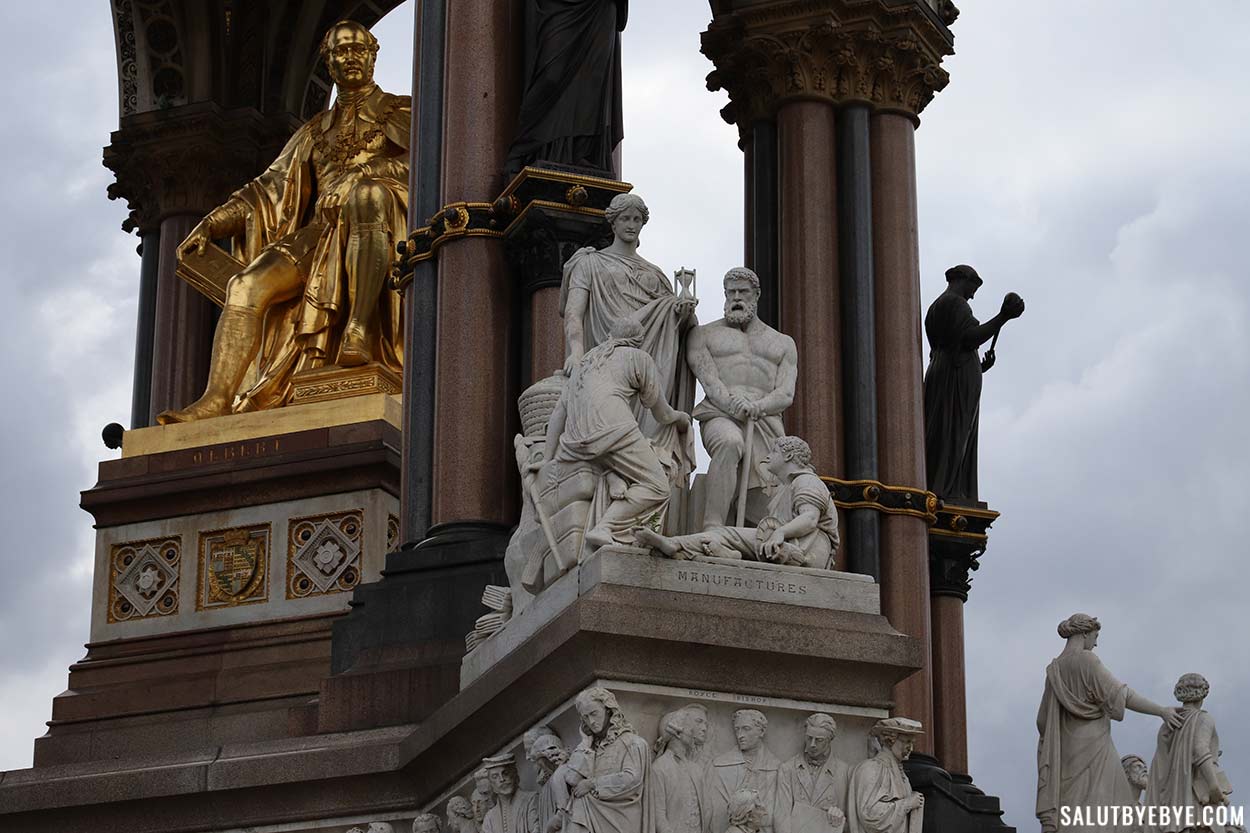
Kensington Gardens are dotted with statues and monuments, each telling part of London's history. Among them, you will find the monumental Albert Memorial, dedicated to Queen Victoria's husband, Prince Albert, who died of typhoid at only 42. The memorial is striking, with its frieze of 187 sculpted figures and its gilded neo-Gothic structure that stands out clearly against the London sky.
Located opposite the Royal Albert Hall, on the boundary between Hyde Park and Kensington Gardens, it is one of the most spectacular monuments in the area. Up close, the memorial is almost overwhelming in its level of detail: you could spend ages studying the sculpted figures.
One of the most popular monuments in Kensington Gardens, however, is the Peter Pan statue, shown with squirrels, fairies and rabbits. The creator of the famous character, James Matthew Barrie, lived not far from the gardens and found inspiration for his character here by watching children play and observing the surrounding nature. He commissioned Sir George Frampton to create this statue, which was quietly installed in 1912 as a surprise for the children who were already visiting the park.

The statue is located on the west side of the Serpentine, just off the main path. When you come across it, take the time to walk all the way around the base: the small animals, fairies and sculpted details really make it feel as though you’re stepping into the story.
Peter Pan and the Diana Memorial Playground
The world of Peter Pan also inspired a children's playground, Diana Memorial Playground, with a large wooden pirate ship, teepees, sand areas and quieter corners for younger children. It was created in tribute to Princess Diana and welcomes around one million children every year, a sign of just how popular it gets.
The playground is extremely popular; there is even sometimes a line to get in, as capacity is limited for safety reasons. Access is reserved for children up to 12 years old accompanied by an adult, which helps create a family-friendly atmosphere. Operating hours vary according to the season (often from late morning until late afternoon, with earlier closing times in winter) and admission is free. It was recently renovated, with a reopening scheduled for summer 2026.
If you are traveling with children, I would recommend going early in the day, especially on sunny weekends and during school vacations, to avoid the biggest crowds. While the children play, adults can enjoy the shaded benches, a small café and the view of the large ship that dominates the playground.
Watching the wildlife in Kensington Gardens
Kensington Gardens are home to a surprising variety of wildlife for a park located in the heart of London.
As you walk around, you will easily come across gray squirrels, which are fairly bold and constantly dart from tree to tree. The Serpentine is also home to many birds: swans, geese, ducks, coots and sometimes even a few herons. If you look up, you may be lucky enough to spot the famous green parakeets that now live in several London parks. They add an unexpectedly exotic touch and always surprise visitors who do not expect to see parrots in the middle of the British capital. This is also part of what makes Kensington Gardens so charming: you quickly forget that you are in the heart of a metropolis of several million inhabitants.
Visiting Kensington Palace
It is impossible to talk about Kensington Gardens without mentioning Kensington Palace, which borders the gardens. A royal residence since the end of the 17th century, the palace was home to Queen Victoria during her childhood and remains today the official residence of several members of the British royal family.
Even if you do not go inside, the palace façade and the surrounding gardens are well worth a look. If you enjoy the history of the British monarchy, the royal apartments, temporary exhibitions and collections displayed in the palace are well worth a visit. The visit explores court life, the apartments of Victoria and Albert, and many objects and clothing associated with the monarchy.
Booking in advance is highly recommended, especially in high season.
Walks, guided tours and cycling in Kensington Gardens
Beyond the monuments, Kensington Gardens are perfect for a leisurely walk, a picnic or a quiet break from the bustle of the city. The paths are well maintained, the terrain is very flat, and you will find many benches where you can sit, read or simply watch other walkers go by.
It is also an excellent starting point for exploring several of London's Royal Parks on foot or by bike. It is particularly pleasant to move between tree-lined paths, views over the Serpentine and the emblematic monuments of the area. The contrast between these vast green spaces and Buckingham Palace or the Royal Albert Hall, located just a few minutes away, is quite striking.

The history of Kensington Gardens
Kensington Gardens began as a peaceful royal retreat, before becoming one of London's most popular public parks.
Royal gardens designed as a peaceful refuge
Unlike Hyde Park, which served as a hunting ground for King Henry VIII, Kensington Gardens appealed to King William III because of their peaceful setting. Because he suffered from asthma, he was looking for a healthier place to build a residence, away from the smoke and bustle of late 17th-century London. That is how Kensington Palace was born, at the heart of a vast landscaped estate.
Even today, the gardens stand out for their peaceful atmosphere, especially if you move a little away from the busiest paths. The lawns are extensive, the trees form pleasant shaded avenues, and you often hear more birdsong than traffic noise.
Kensington Gardens only gradually opened to the public starting in the 18th century. At first, access was limited to certain days and reserved for the best-dressed visitors, which shows just how exclusive the gardens once were. Over time, they became more accessible and turned into one of Londoners' favorite places to go for a walk.

The move of the monarchy to Buckingham and the Italian Garden
In 1837, Buckingham Palace became the monarch's principal residence. Kensington Palace then lost its central role, even though it continued to house several members of the royal family.
At the same time, the gardens continued to evolve. The Italian Garden, laid out to the north of the Serpentine, introduced a more formal, ornamental style with its basins, fountains, and symmetrical flowerbeds. Tradition has it that it was a gift from Prince Albert to Queen Victoria, inspired by the Italian gardens they had seen during their travels.
Scenes from the film Bridget Jones: The Edge of Reason were shot there, which adds a cinematic connection to the gardens. On my first visit, I was especially struck by the contrast between the perfectly designed pools and the larger, wilder areas along the Serpentine.
It is also one of the most photogenic spots in Kensington Gardens, especially in spring and in the early evening when the light reflects in the pools.

A park still connected to the royal family
Even though Buckingham Palace is now the official residence of the British sovereign, Kensington Palace still plays an important role within the monarchy. Queen Victoria was born there and spent her childhood there, while several members of the royal family still live there today.
This enduring royal connection explains why Kensington Gardens feel different from Hyde Park. Here, the royal heritage is everywhere, while still letting Londoners and visitors freely enjoy this vast green space. In my view, it is precisely this mix of history, nature, and everyday life that gives Kensington Gardens much of their charm.
Practical information for visiting Kensington Gardens
A few practical pointers will help you make the most of Kensington Gardens, whether you are planning a simple stroll or a more in-depth visit to the park and Kensington Palace.
Cost, opening hours and how long to spend
Access to Kensington Gardens is completely free. You can come and go freely through the different gates bordering the park, with no ticket or reservation. Only certain attractions and activities charge admission, such as a visit to Kensington Palace or some guided tours.
Kensington Gardens are generally open every day, from early in the morning until nightfall, with hours that change depending on the season. If you enjoy photography or want to enjoy the quiet, early morning and late in the day are often the best times.
As a rough guide, allow:
- About 1 to 2 hours to see the Italian Garden, the Peter Pan statue, and the exterior of Kensington Palace.
- Half a day if you add a visit to the palace or a stop at the Diana Memorial Playground with children.
- A full day if you continue your walk into Hyde Park, which naturally extends from Kensington Gardens.
Several cafés and kiosks are convenient places to stop for a break around the Serpentine or near Kensington Palace. Prices are comparable to those in the other major London parks.
The operating hours of the gardens and Kensington Palace can vary depending on the season and special events. It's a good idea to check up-to-date information on The Royal Parks website before your visit.
Access: the best Underground stations
Kensington Gardens are well served by public transport, which makes them easy to fit into a day of sightseeing.
- Lancaster Gate (Central line): ideal for quickly reaching the Italian Garden and the shores of the Serpentine.
- Queensway (Central line): convenient for accessing Kensington Palace and Diana Memorial Playground.
- High Street Kensington (Circle and District lines): a good choice if you are combining the gardens with Kensington High Street or a visit to Kensington Palace.
- Notting Hill Gate (Central, Circle and District lines): perfect if you are arriving from Notting Hill or want to cross the gardens from west to east.
London buses also serve the streets bordering the gardens, especially Kensington Road and Bayswater Road. If you are coming from Hyde Park, you can simply continue your walk: the two parks merge seamlessly into one another.
Where to eat near Kensington Gardens
If you are looking for a good place to eat after your walk, I would recommend Maggie Jones's, a few minutes’ walk from Kensington High Street. This London institution serves traditional British cuisine (pies, roast meats, homemade desserts, and more) in a very different setting from the more contemporary restaurants in the neighborhood.
I have to admit I absolutely love this restaurant's decor, which feels a little like stepping into Molly Weasley’s home in Harry Potter: exposed beams, objects hanging everywhere, candles, checkered tablecloths… It's the perfect place to continue the quintessentially British atmosphere after your walk.
If you are planning to have lunch there on a weekend or during school vacations, it's worth booking ahead: the place is as popular with Londoners as it is with visitors.
Key things to remember for visiting Kensington Gardens
Here is a summary table to help you organize your visit to Kensington Gardens based on how much time you have and what you want to see.
| If you want to... | Focus on | Recommended access | Time to allow | Ideal for |
|---|---|---|---|---|
| See the highlights in an hour | The Italian Garden and the shores of the Serpentine | Lancaster Gate (Central Line) | 1 hour | A first visit or a break between two sights |
| Explore the history of the British monarchy | Kensington Palace and its gardens | Queensway or High Street Kensington | 2 to 3 hours | History and royal family enthusiasts |
| Enjoy the park with children | Diana Memorial Playground and the statue of Peter Pan | Queensway | 1 to 2 hours | Families with children up to 12 years old |
| Go for a long peaceful walk | Walking all the way across Kensington Gardens, with the option to continue into Hyde Park | Lancaster Gate, Queensway or Notting Hill Gate | 2 to 3 hours | Fans of walking, nature and photography |
| See several highlights in a short time | Guided walking or cycling tour of the Royal Parks | Starting point depends on the tour you book | 2 to 2 hr 30 | A first trip to London or a short weekend |
- Guided tour of Hyde Park and Kensington Gardens (2 hrs), ideal for exploring the main monuments and the history of the two parks in a single walk.
- Afternoon tea at Kensington Palace and guided tour of the gardens, perfect if you would like to enjoy a quintessentially British royal experience.
- Entrance ticket for Kensington Palace, to visit the palace at your own pace.
- Guided bike tour through London's Royal Parks, to combine Kensington Gardens, Hyde Park, Green Park and several iconic landmarks in a single outing.

The Traveler's Memo for Kensington Gardens
Here are answers to the most frequently asked questions to help you plan your visit to Kensington Gardens in London.

Kensington Gardens offer that rare mix of royal history, literary inspiration, and everyday London life, in a space large enough for everyone to find their own pace. It is a place where you can combine a palace visit, a closer look at the details of the Peter Pan statue, a break by a pond and playtime for children, all within the same park.
When I am in London, I like returning to these gardens precisely because they’re so versatile: you can spend 30 minutes there or several hours, without ever feeling like you are wasting your time. If you are planning a trip to London, I would really encourage you to make time for it in your itinerary, even if it is just a peaceful green break between two more "urban" sights.


