

Today I'm taking you to church… or rather to the heart of one of the most beautiful places you can visit in London: St Paul's Cathedral. People had often told me about its immense dome and the panoramic view over London, but it took me years before I finally walked through its doors. Yet in just a few minutes, it became one of my favorite London landmarks, enough to earn a place on my list of the best viewpoints in London.
In this article, I'd like to take you on a guided tour of St Paul's Cathedral, from the floor of the nave all the way up to the Golden Gallery at the very top of the dome, with explanations about the history of the place and what you actually see when you're there. You'll also find all the practical information for visiting St Paul's: opening hours, tickets, access to the dome, visit duration, nearby tube stations, and tips to help you make the most of this landmark during a stay in London.
- Plan for about 2 hours on site to visit the interior, climb up to the dome, and discover the crypt without rushing.
- Buying your skip-the-line ticket online helps you avoid the queue and secure access to the upper galleries on busy days.
- The climb to the dome involves 528 steps in total: being in good physical condition and wearing comfortable shoes makes the experience much more pleasant.
- Photos are allowed inside the cathedral during tourist hours, but are still forbidden on Sundays and during services.
- The St Paul's (Central Line) tube station is the closest, about a 3-minute walk away, which makes it convenient to include the visit in a day of wandering around the City.

Visiting St Paul's Cathedral
St Paul's Cathedral is an emblematic historic monument in London, at once an Anglican place of worship, an architectural masterpiece, and an exceptional viewpoint over the city.
A monument steeped in history in the heart of London
St Paul's Cathedral is one of the oldest places of worship in London, even though the building you see today dates from the modern era. The very first version was made of wood, then it was rebuilt and enlarged several times over the centuries before being ravaged by several fires, the most famous of which was the Great Fire of London in 1666. After this disaster, the city entrusted the cathedral's reconstruction to Sir Christopher Wren, the same architect who designed the Monument in London.
It took 35 years to complete the new cathedral, from 1675 to 1710, which gives you an idea of the scale of the project. However, the public was able to visit it as early as 1697, shortly before Christmas, even though some elements were not yet finished. With its monumental dome and instantly recognizable silhouette, St Paul's gradually established itself as a powerful symbol of London. You may already have seen it in films, TV series, or documentaries about the English capital.
If you enjoy the world of Harry Potter, you will also come across it in Harry Potter and the Prisoner of Azkaban, with the famous staircase that leads to the Divination class.
During the Second World War, the cathedral played a particularly powerful symbolic role. The German bombings largely destroyed the surrounding area, and period images show a landscape of ruins around the dome of St Paul's, which remained standing. The cathedral suffered only limited damage, while the rest of the district was in flames. Many people speak of a true miracle when they see these photos.
Today, it is an Anglican cathedral, the seat of the Bishop of London. And as a small anecdote, you should not confuse it with "St Paul's Cathedral in London"… which is in Canada, in London (Ontario), and has very little to do with the London monument you will be visiting here.

First steps inside St Paul's Cathedral
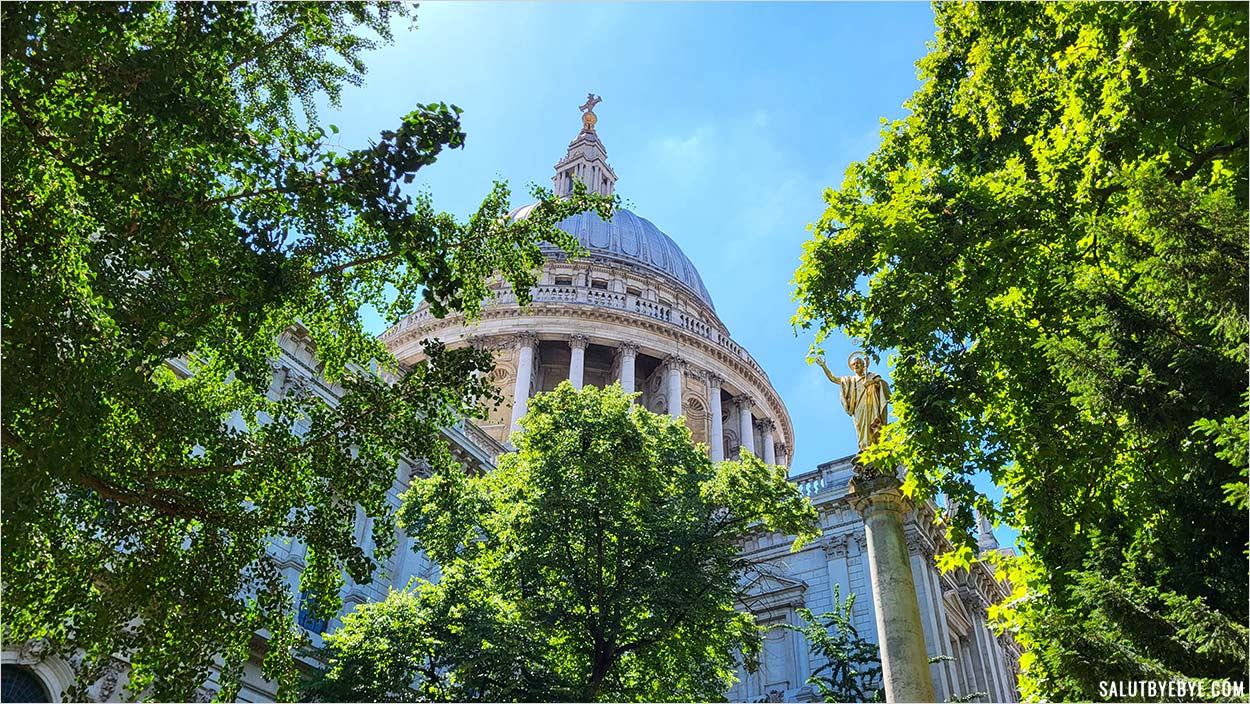
From the outside, St Paul's Cathedral immediately makes you feel incredibly small compared to its size. That impression starts on the forecourt, as you climb the wide steps leading up to the main entrance and then look up at the monumental columns and the dome towering over the façade.


When you step inside, you discover a nave 150 meters long and 36 meters wide (about 492 ft by 118 ft), with a ceiling height that strikes you from the very first steps. For a long time, photos were completely forbidden inside the cathedral, which didn't make it easy to hold on to your memories. Over the last few years, things have changed: photos are now allowed during tourist opening hours, provided you follow a few simple rules.
For example, taking pictures is still forbidden on Sundays and during services, so that tourists and worshippers can coexist peacefully. Flash, tripods, selfie sticks, and any bulky equipment are also banned inside. This helps preserve the atmosphere of the place and avoid disturbing other visitors.
What to see inside the nave and chapels?
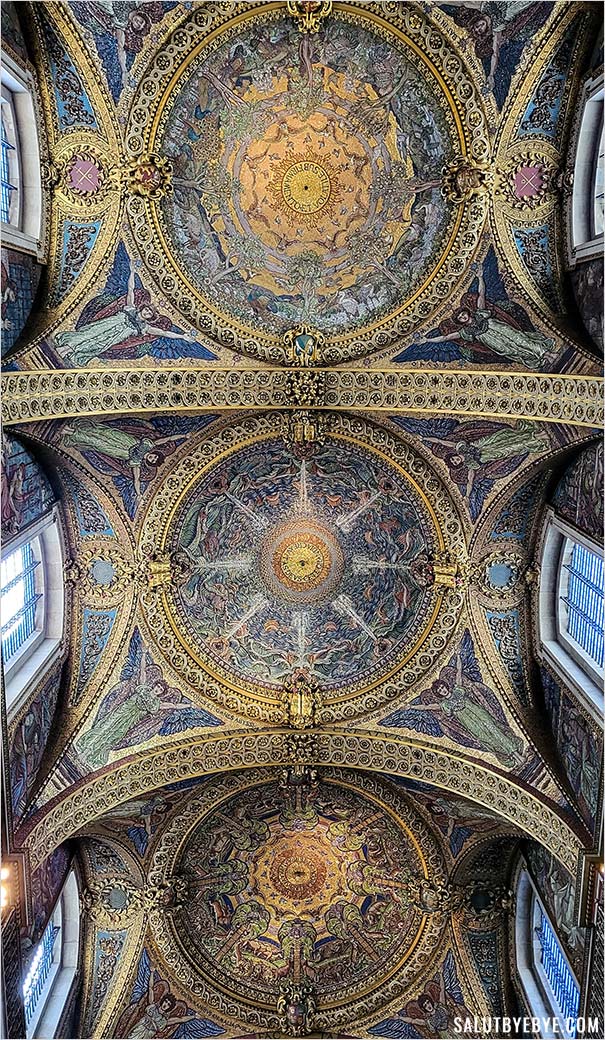
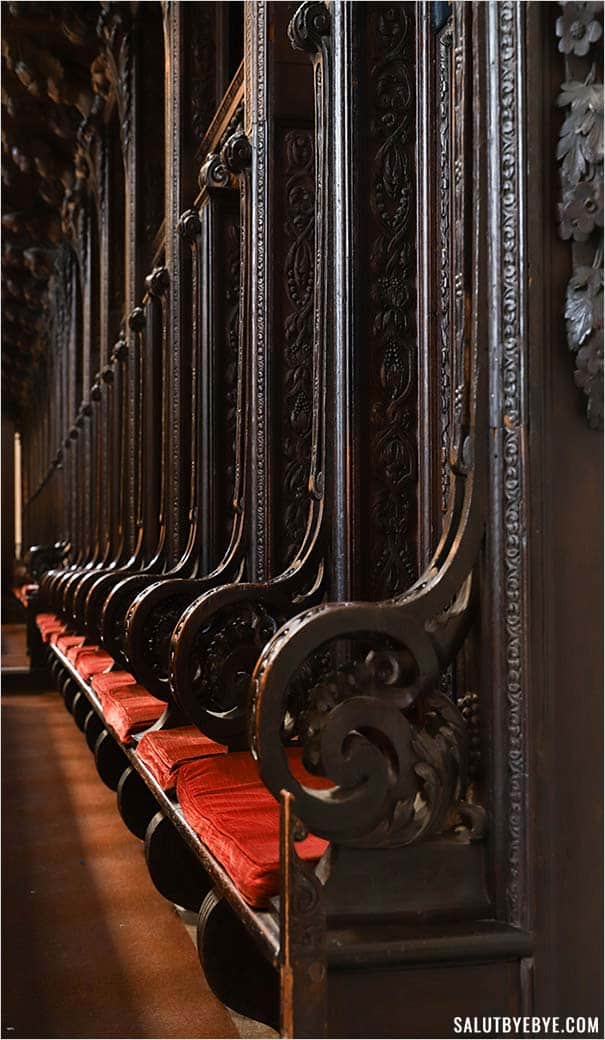
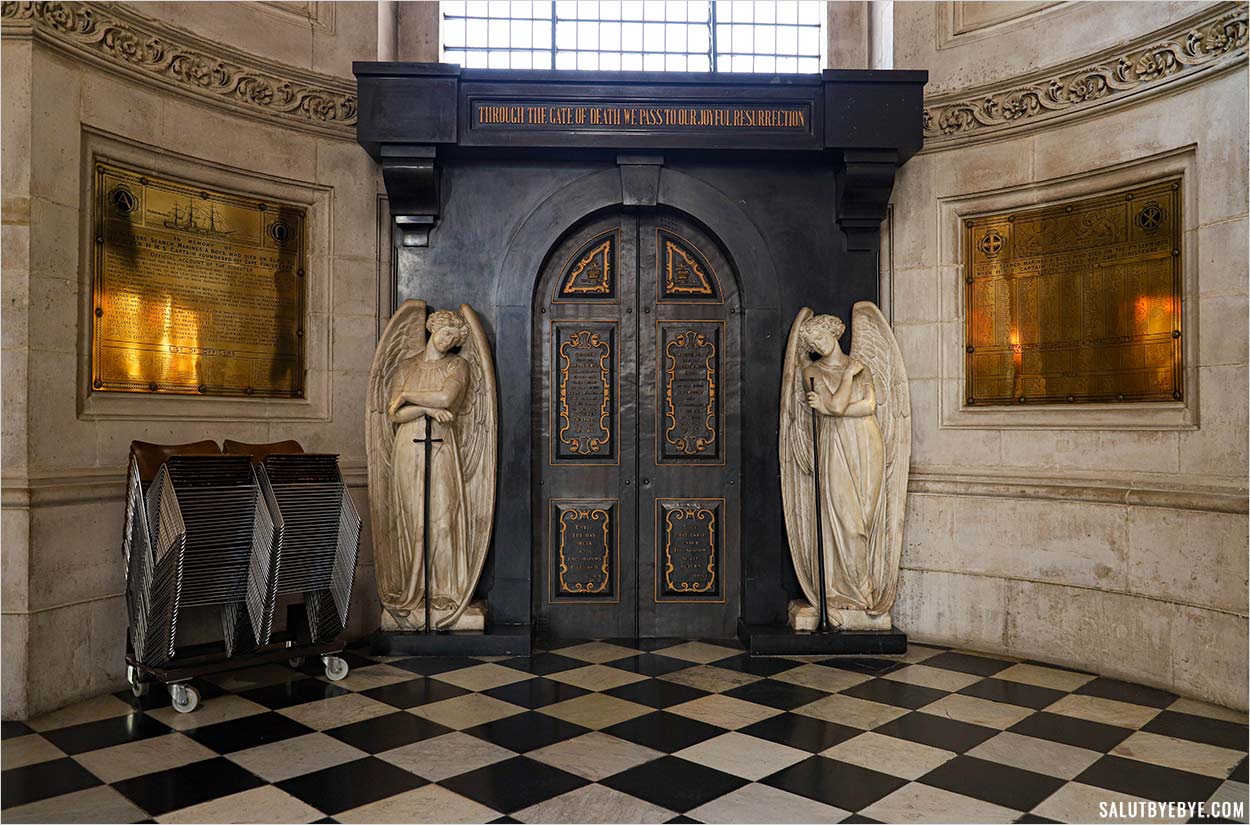
A visit to St Paul's Cathedral begins with exploring the nave and the various chapels and monuments that line it. It's an opportunity to discover works of art, tributes to historical figures, and remarkable elements of religious architecture.
- In the north transept, a painting by William Holman Hunt shows Christ knocking at a door that can only be opened from the inside. The work illustrates the idea that God only enters people's lives if they themselves invite Him in, a striking way of representing each individual's freedom.
- In the north aisle, you will find St Dunstan's Chapel, a small chapel dedicated to silent prayer, often quieter than the rest of the nave.
- In the south transept, a large sculpture pays tribute to Admiral Nelson. This is also where you access the south gallery of St Paul's Cathedral, an interior balcony that offers a beautiful view of the Millennium Bridge and the Tate Modern museum on the other side of the Thames.
- The south aisle leads to the Chapel of St Michael and St George, associated with the Order of St Michael and St George, a British honor linked in particular to services rendered abroad.
- Between the two aisles, in the nave, there is a monument glorifying the Duke of Wellington, another major figure in British military history.
- The organ of St Paul's Cathedral in London is one of the most impressive in the country. With its 7189 pipes, it is the third-largest organ in England and contributes greatly to the atmosphere of services and concerts held there.
- You will also see a beautiful altar and a chapel dedicated to the American soldiers who came to the aid of the United Kingdom during the Second World War. This chapel was created in a part of the cathedral that had been damaged during the bombings, which gives it a particularly symbolic dimension.
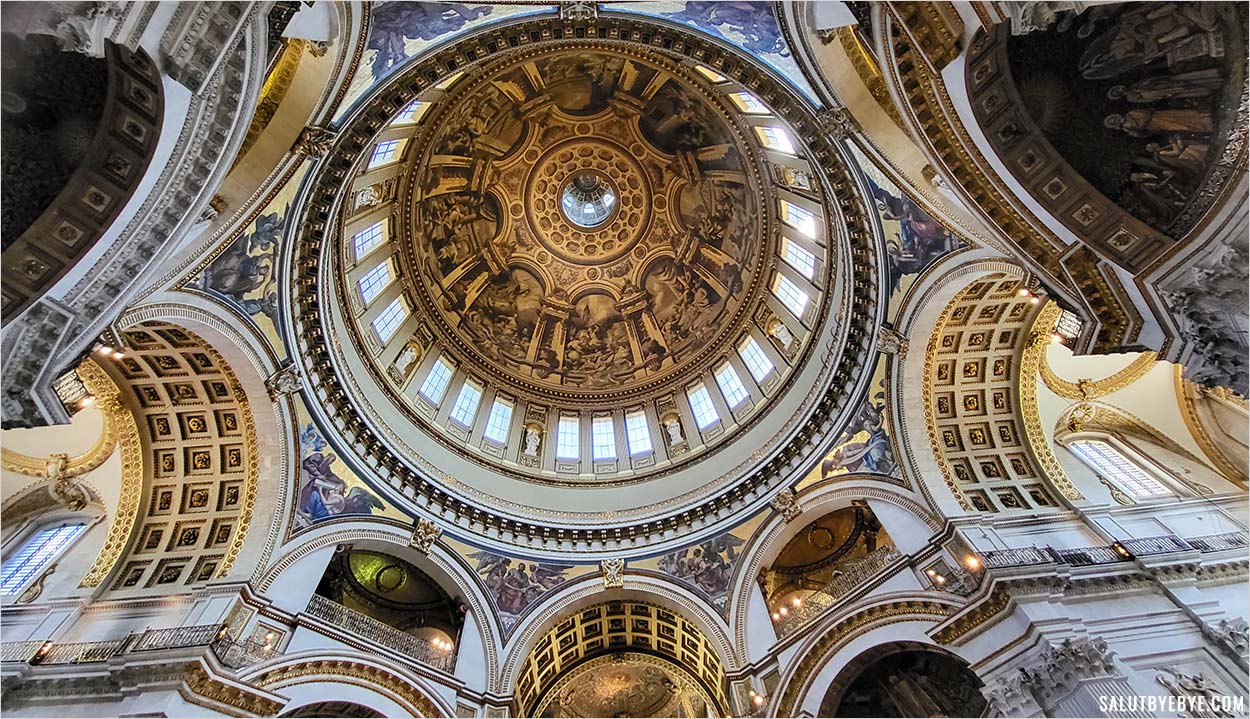
Throughout this first part of the visit, your gaze is naturally drawn to the dome, visible from the nave. Seeing the dome of St Paul's Cathedral from the inside is already impressive: you become aware of the height of the monument, which rises to 111.3 meters (about 365 ft). And this is only a foretaste, because the rest of the visit allows you to climb inside this very structure.
Heading up to the dome and galleries of St Paul's Cathedral
The climb up to the dome of St Paul's Cathedral is done in stages, via three successive galleries that offer different perspectives on the interior of the building and on the London skyline.
The Whispering Gallery, first stop inside the dome
After exploring the nave and chapels, the visit continues with a first ascent. You have to climb a series of 257 steps to reach the first gallery, which is located inside the dome. It's a climb that gives your legs a bit of a workout, but it remains manageable for many visitors if you take your time.
This circular gallery is located about 30 meters (about 100 ft) above the cathedral floor. By carefully leaning over the balustrade, you can admire the nave and the altar from above, with a bird's-eye view that lets you appreciate the proportions of the building. It quickly becomes clear why so many visitors linger here.
This level is called the Whispering Gallery. The name might sound like it came straight out of an episode of Game Of Thrones, but it actually refers to a very real acoustic feature, which can also be found in other buildings of this kind. The shape of the dome and the geometry of the gallery mean that a whisper spoken against the wall can be heard on the opposite side of the gallery if another person presses their ear to the wall, even when the atmosphere is noisy. If the experience intrigues you, you now know where to whisper.

The Stone Gallery, first outdoor view of London
From the Whispering Gallery, a small, discreet door leads to another staircase. This time, you have to climb 119 additional steps to reach the Stone Gallery, the first outdoor gallery of the dome. As its name suggests, it is lined with stone pillars.
At this level, the cathedral really starts to turn into a viewpoint over London. The Stone Gallery offers unobstructed views of several iconic landmarks of the capital, which you can easily pick out with a bit of observation.
You can make out, for example, the Houses of Parliament and the London Eye, a duo you see on many postcards. Just behind them, you can spot the top of Elizabeth Tower, the tower that houses the bell known worldwide by the nickname Big Ben.

By zooming in a little, you can even make out the white towers of Westminster Abbey behind the London Eye.
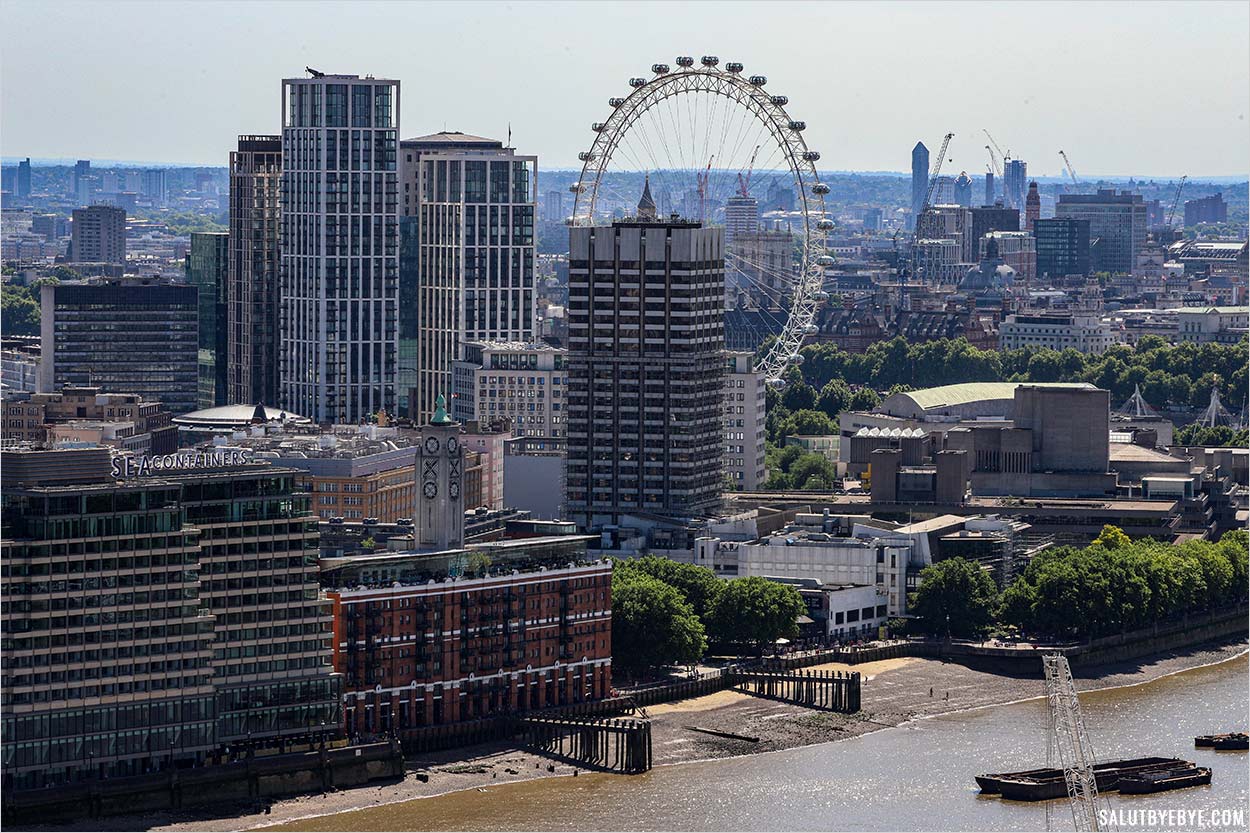
If you turn your gaze, you can also see London Bridge and London Bridge Hospital, next to St Olaf House, which has the distinction of being the first Art Deco building constructed in England.

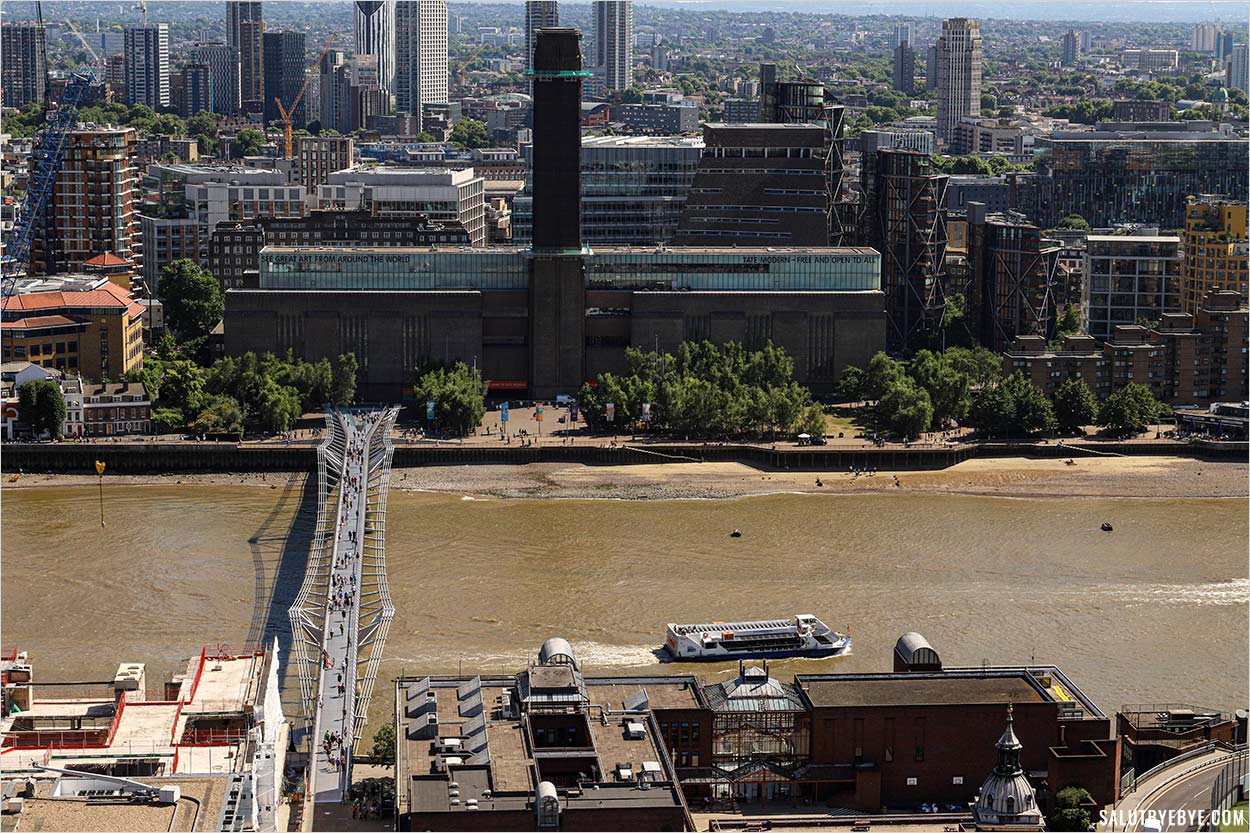
You can also spot the Millennium Bridge, the pedestrian footbridge that links the cathedral to the south bank of the Thames. From this bridge, you can take very beautiful photos of St Paul's, especially at dusk when the city lights are reflected on the river. Directly opposite, you will also see Tate Modern, a famous modern and contemporary art museum housed in a former power station.
The Golden Gallery, for a 360° view of London
For those who want to take the experience all the way, there is one last climb to reach the Golden Gallery, right at the top of the dome. This time, you have to go up 152 additional steps. It is the most impressive part of the ascent, especially if you are prone to vertigo.
The stairways become narrower and more metallic, with sections of openwork steps and small walkways. You almost feel as if you are walking through an old attic, with the structure exposed and little nooks where you can easily imagine the backstage of the monument. It is not far from the truth, given the age of the cathedral and the many interventions needed to maintain it.

Before stepping outside, you pass through a small room with a glass panel in the floor. As you get closer, you will see all the empty space beneath your feet, down to the floor of the nave, located about a hundred meters lower (around 330 ft). The window is tiny, so if this perspective does not appeal to you, you can easily walk through the room without paying attention to it.
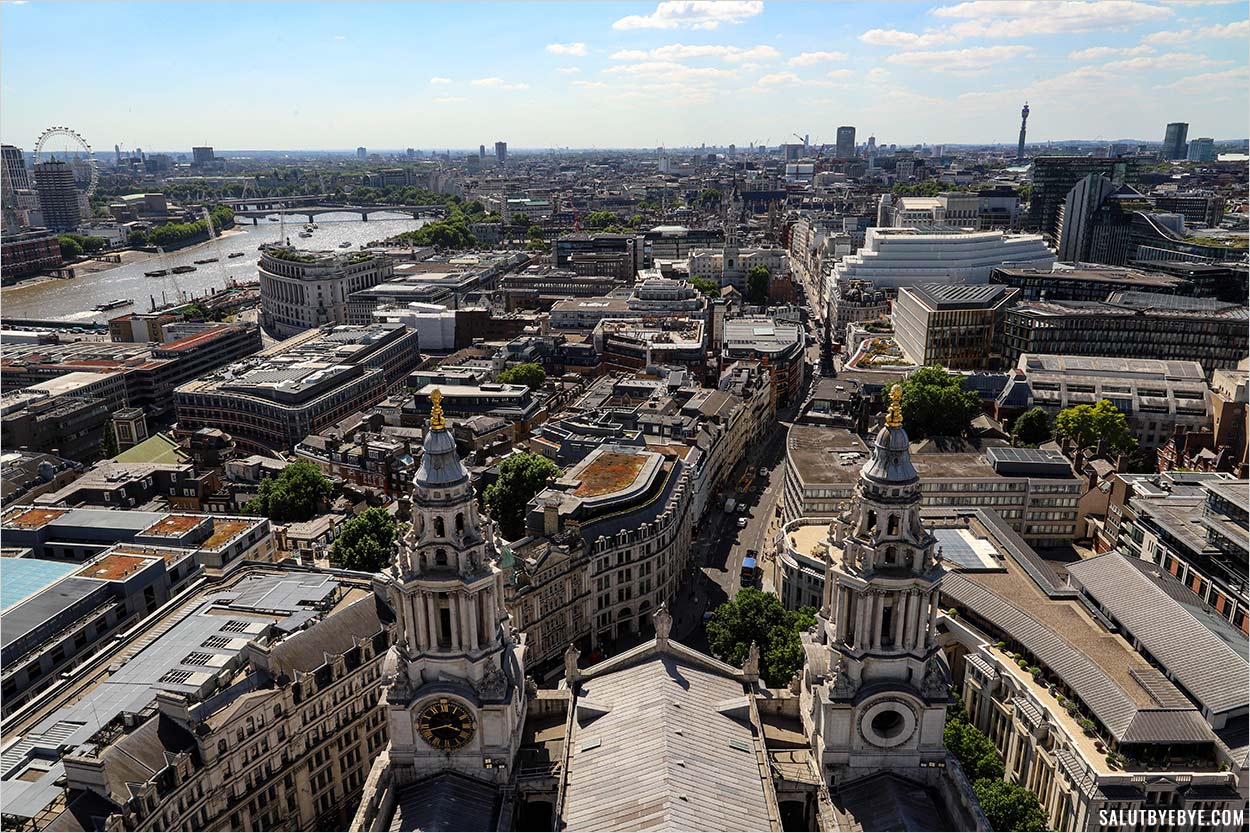
A few more steps and you emerge onto the Golden Gallery, the last exterior gallery and the highest point accessible to visitors. From here, the view of London is truly spectacular. You are above most of the neighboring historic buildings, which allows you to enjoy a 360° panorama of the City, the Thames, and the surrounding districts.

From up there, you can clearly see Paternoster Square, a pretty modern pedestrian square lined with offices, cafés, and a few works of art, which offers an interesting contrast with the classical silhouette of the cathedral.

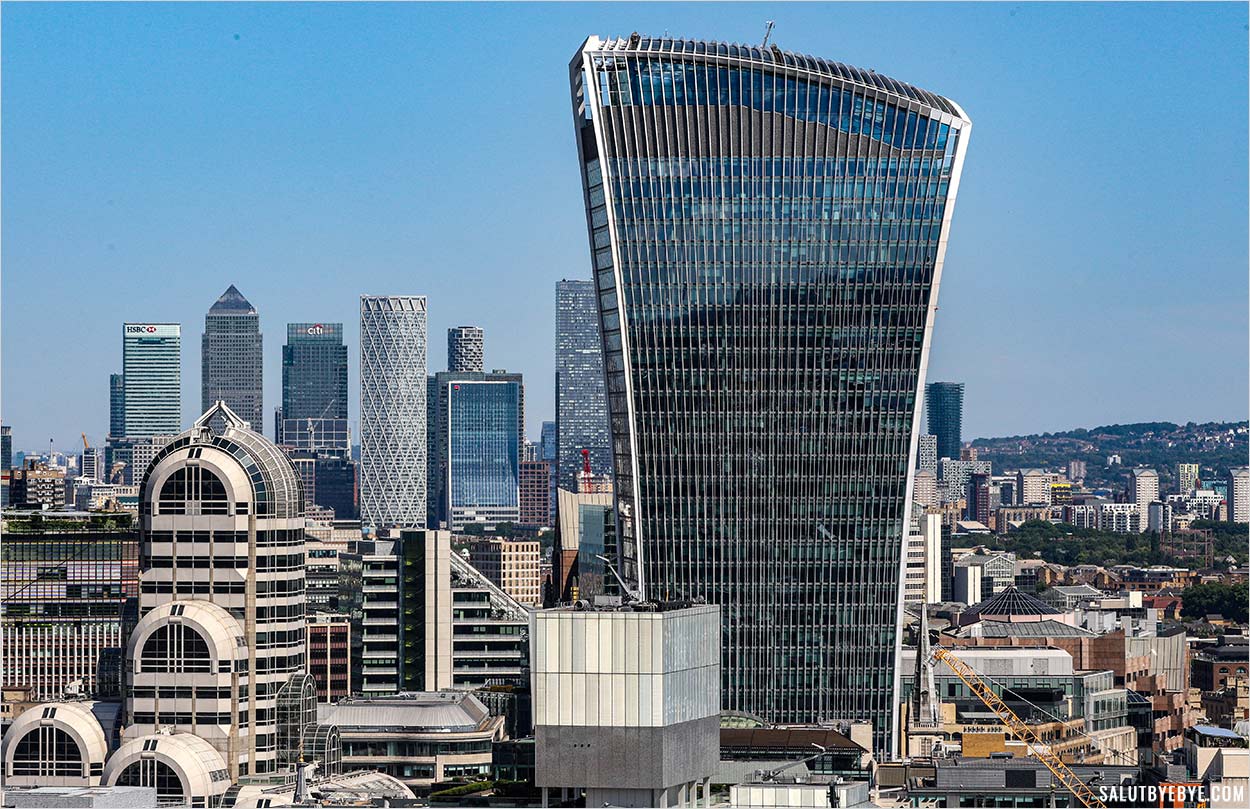
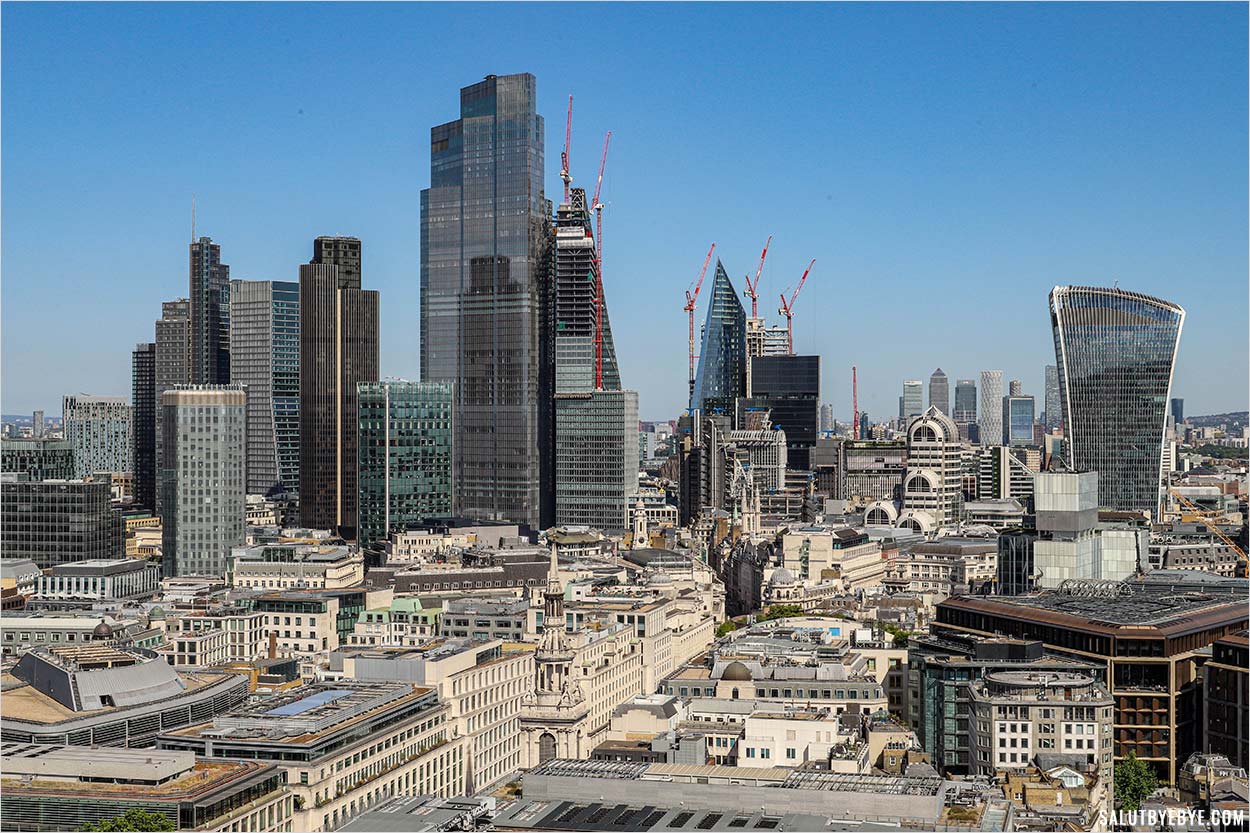
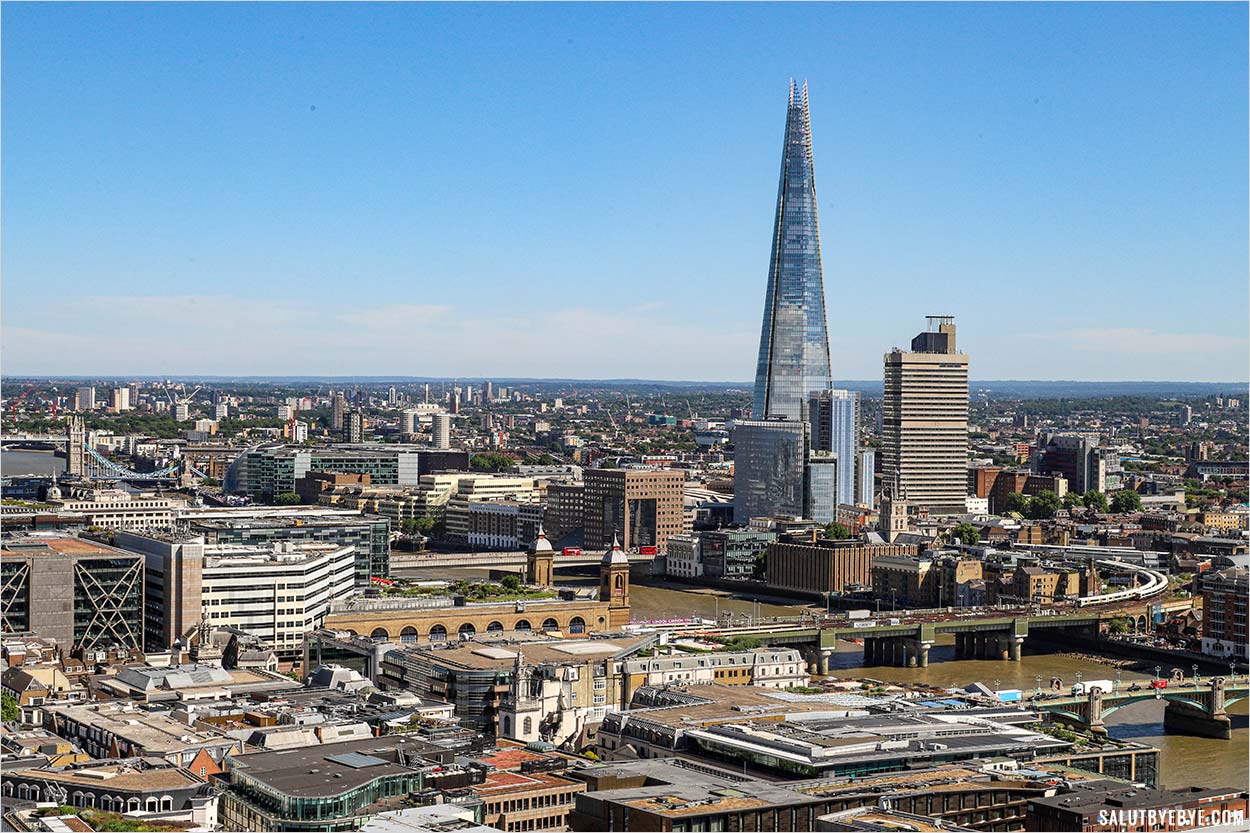
On the Golden Gallery, the wind often blows quite strongly and your hair tends to get tangled, but the pleasure of seeing London from this angle more than makes up for this small inconvenience. You can clearly make out the City skyscrapers, with now-famous silhouettes such as the Walkie-Talkie (which houses the free viewpoint of the Sky Garden), the Gherkin, and other glass and steel towers that make up the London skyline.
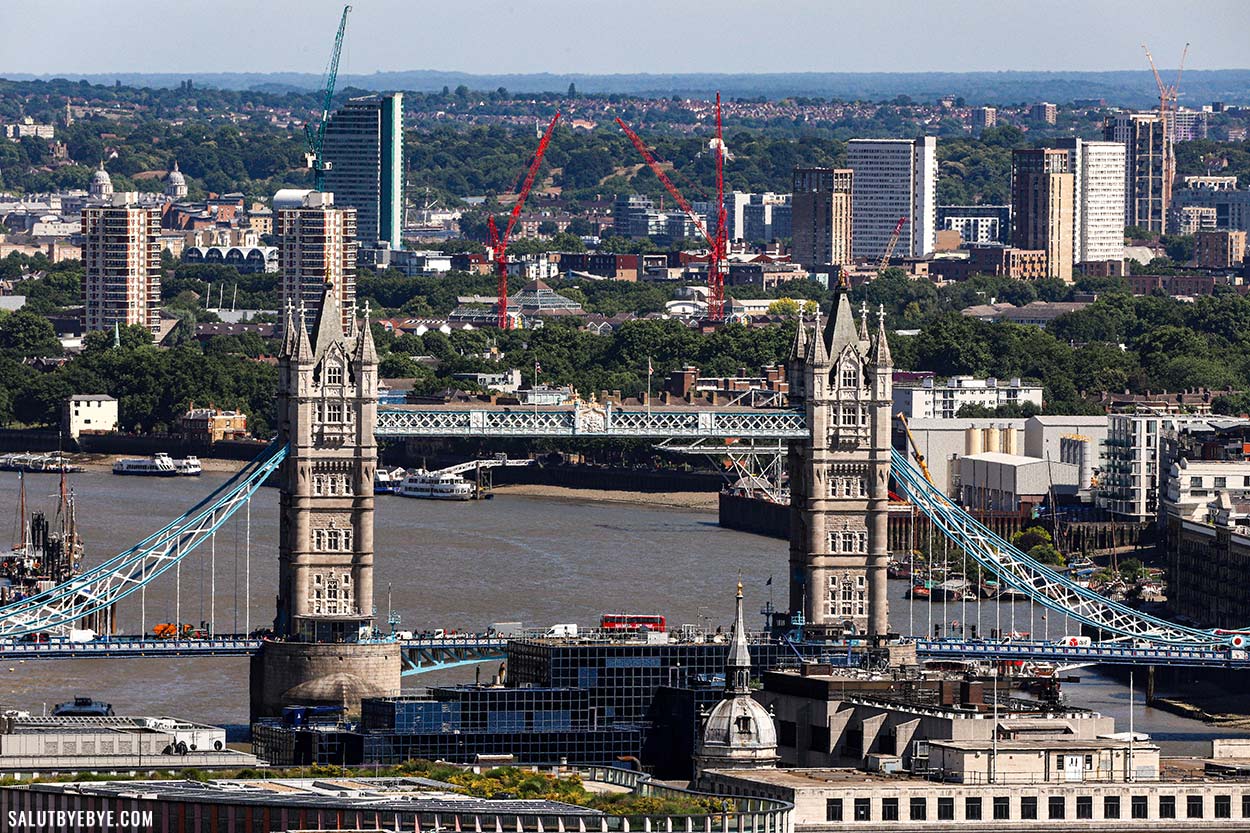
Not to mention Tower Bridge, the famous bridge with two towers, which you can clearly distinguish.
The bells of St Paul's and the cathedral crypt
Just as Elizabeth Tower has its famous bell "Big Ben," St Paul's Cathedral also has its star bells, nicknamed Great Paul and Great Tom. They are part of a larger set of bells, but these two are the best known.
Great Tom is the bell that chimes the hour, but it also has a more solemn role. It is the one that announces the death of a member of the royal family or a Bishop of London. It rang, for example, upon the death of Queen Elizabeth II in 2022, continuing a long-standing tradition at the cathedral. Great Paul, for her part, is one of the largest bells in Great Britain, even if she is less present in the collective imagination than Big Ben.
After fully enjoying the view from the dome, you go back down via the same staircases. Before leaving the cathedral, take the time to visit the crypt located beneath the building. It is a darker place, but very rich in history, where several important British figures are buried.
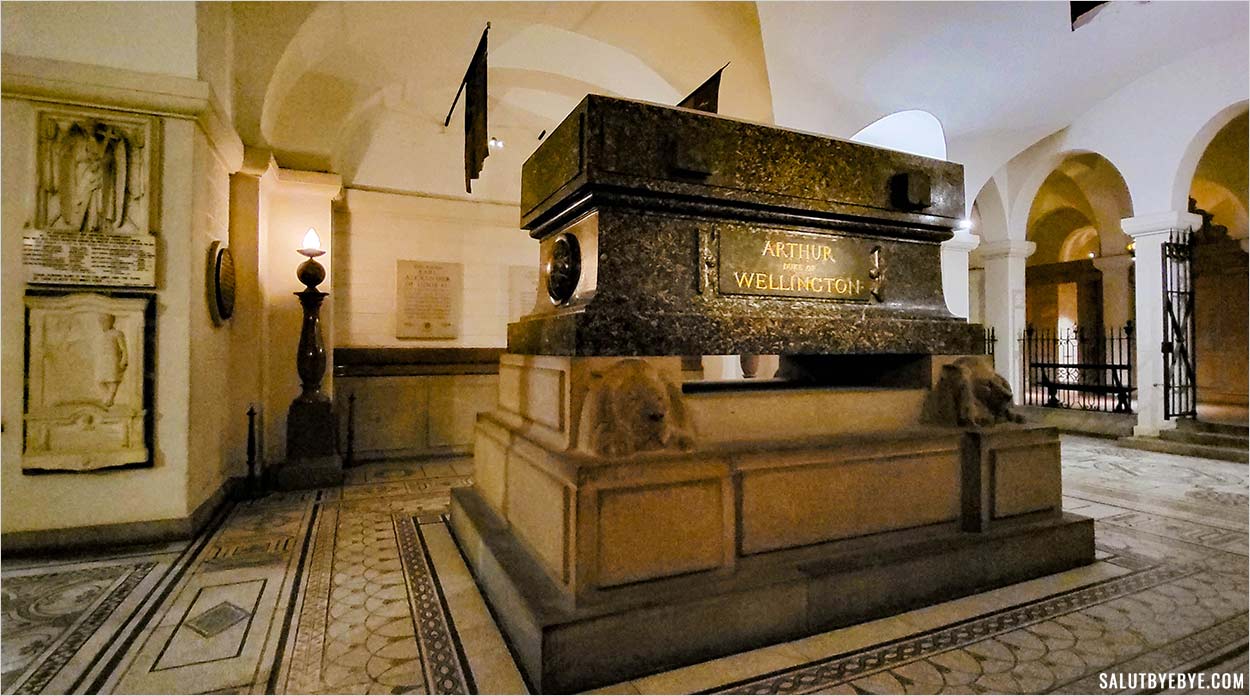
Among them are Admiral Nelson, hero of the Battle of Trafalgar, Sir Christopher Wren, the architect of the cathedral, and the Duke of Wellington, whose tomb is in the crypt. The crypt also contains many monuments and commemorative plaques paying tribute to other major figures in British political, military, or artistic life.
The cathedral regularly hosts temporary exhibitions, art installations, and special events (light mapping, late-opening evenings, Christmas concerts, and so on). When I visited, I felt that these activities added another dimension to the visit without undermining its spiritual and historical character.
Visiting St Paul's Cathedral in London: practical information
To prepare your visit to St Paul's Cathedral, it is important to understand how the tickets work, the opening hours, the conditions for accessing the dome, and the most convenient means of transport to reach the monument.
Tickets, prices, and access to the dome
Tourist access to St Paul's Cathedral is paid for visitors, but remains free for those who come to pray or attend a service without visiting the galleries. The ticket includes entrance to the nave, access to the crypt and the dome galleries, as well as a multimedia guide to accompany your visit.
Each year, nearly one million people come to St Paul's to visit it. This influx means there must be staff for security, welcoming visitors, cultural mediation, as well as for maintaining the building. Funding is also needed for the many activities organized on site: daily services, recitals, concerts, specific prayer times, and exceptional events, especially during holiday periods. As the cathedral does not receive direct funding from the British government, tourist ticket sales are an essential resource for its operation.
Prices change regularly. In 2026, check the current price at the time of your booking. The ticket generally includes the visit to the cathedral, the crypt, and the dome galleries. Discounts are available for children, students, families, and certain categories of visitors.
Opening hours and visit duration
St Paul's Cathedral is generally open to visitors from Monday to Saturday, while Sundays are reserved for religious services. Exact times can vary slightly depending on the time of year, but visiting hours are usually from early morning until late afternoon.
To really make the most of your visit, it's best to allow about two hours inside. That gives you time to explore the nave, climb up to the dome in stages, take in the views from the different galleries, and spend a while in the crypt. If you like taking photos, reading the information panels, and lingering in the chapels, it's easy to plan for a bit more time.
The monument also has a small café where you can have a drink or a light snack. It's very handy if you're visiting the cathedral around lunchtime or if your energy dips after climbing the 528 steps up to the dome.
Tourist opening hours and access to the dome may be changed during services, religious ceremonies, concerts, or special events. Before your visit, especially around holiday periods or if you plan to arrive late in the day, be sure to check the opening hours and last entry time on the cathedral's official website.
How to get to St Paul's Cathedral: access and transportation
St Paul's Cathedral is located in the City of London, the historic heart of the capital's financial district. It is very well served by public transport, which makes it easy to include in a broader sightseeing itinerary (for example, a day combining the City, Tate Modern, and the South Bank).
The closest Underground station is, unsurprisingly, St Paul's on the Central Line, about a 3-minute walk from the cathedral. When you come out, just follow the signs or look up to spot the dome, which rises well above the surrounding buildings.
You can also get off at Mansion House or Blackfriars, both on the District and Circle lines. These stations are about a 5-minute walk from the cathedral and may be more convenient depending on where you are starting from in London or the order in which you've planned your visits for the day.
If you are arriving by train, City Thameslink station is also only a 4-minute walk away.
Should you climb up to the dome of St Paul's?
Climbing up to the dome of St Paul's Cathedral is, in my opinion, the highlight of the visit. If you enjoy city panoramas and are not put off by the 528 steps, it offers one of the most beautiful 360° views of London, with a very different feel from what you get from big wheels or modern skyscrapers.
The climb really does mean 528 steps in total (257 up to the Whispering Gallery, another 119 to the Stone Gallery, then 152 more to reach the Golden Gallery). So the ascent calls for a reasonable level of fitness and a minimum of comfort: good shoes, no large suitcase or overly heavy bag, and enough time so you can go up at your own pace.
If you suffer from pronounced vertigo, the last stretch toward the Golden Gallery can feel quite daunting, with more open staircases and airy walkways. You can absolutely stop at the Stone Gallery, which already offers a very enjoyable outdoor view of London's main landmarks.
If you are looking for an alternative spot for a beautiful view of London, you can find my favorite viewpoints over the English capital here.
Access to the galleries may be temporarily suspended for safety reasons or due to weather conditions. Make sure you check this information on the day of your visit if climbing up to the dome is one of your priorities.

St Paul's in a London sightseeing itinerary
The location of St Paul's Cathedral makes it an excellent anchor point for a day of sightseeing focused on the City and the south bank of the Thames. It is easy to combine it with:
- A walk across the Millennium Bridge followed by a visit to Tate Modern or a stroll along the South Bank.
- Exploring the little streets around Paternoster Square, with its cafés and viewpoints of the dome.
- A broader walk around the City, discovering its churches, old inner courtyards, glass buildings, and the many memorial sites linked to London's financial history.
- A climb up to the Monument to the Great Fire of London, about a fifteen-minute walk away, to enjoy another iconic panorama of the capital.
On my first visit, I decided to arrive in late morning, climb up to the dome before lunch, then cross the Millennium Bridge to go to Tate Modern in the afternoon. It is an itinerary I am happy to recommend if you like alternating between religious heritage, architecture, and modern art.
The traveler's memo for visiting St Paul's Cathedral in London
Here are answers to the most frequent questions to help you organize your visit to St Paul's Cathedral in London and enjoy the building and its dome with peace of mind.
To conclude, a visit to St Paul's Cathedral in London is much more than just another monument to check off a list: it's an immersion in the city's history, an architectural discovery, and a truly beautiful way to see London from above. Whether you're interested in religious heritage, love city panoramas, or are simply curious, this stop really deserves a place in your itinerary.


