

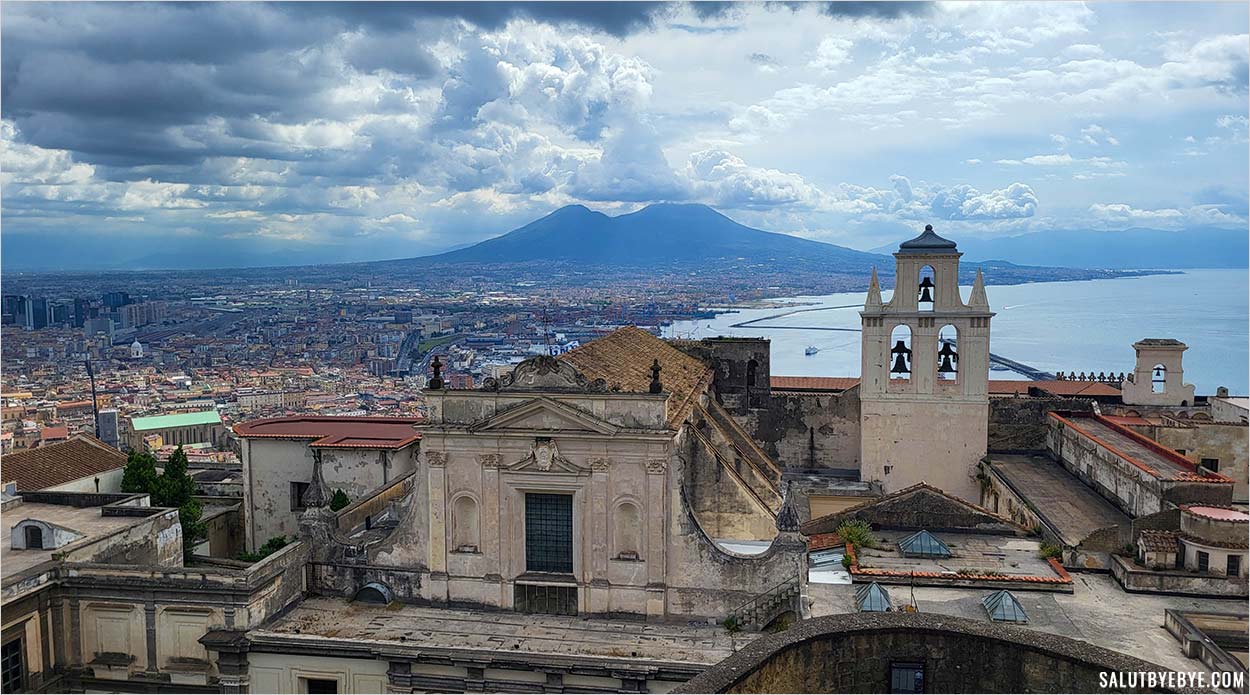
Today, I'm taking you to Castel Sant'Elmo, the castle overlooking Naples from the hilltop neighborhood of Vomero. It offers a stunning view: the tightly packed rooftops of the historic center with Spaccanapoli, the artery that cuts through the city; the curve of the Gulf of Naples and the port of Naples; Vesuvius as a backdrop.
The first time I went up there, with my son, what struck me most was the sense of space and the chance to step back and see Naples from above, both literally and figuratively. After the noise and constant bustle of Naples, you arrive in a vast open fortress where everything feels calmer. It gives you space to walk, look around, and take in the city...
Castel Sant'Elmo is both one of the best vantage points in Naples and a place steeped in history. You can visit a contemporary art museum there, walk along the fortifications, or simply enjoy the setting and take some lovely photos. In this article, I'll cover its history, what to see, how to get there, and what I thought of the experience!
The history of Castel Sant'Elmo: from church to fortress
Castel Sant'Elmo was reinvented several times over the centuries before taking on the form you see today. The site originally housed a church dedicated to Saint Erasmus (Sant'Elmo in Italian), which existed as early as the 10th century. The site was strategically chosen: perched high above Naples in Vomero, it offered a commanding view over the entire Bay of Naples.
At the beginning of the 14th century, King Robert of Anjou recognized the strategic value of the site and commissioned the first medieval castle there in order to strengthen the city's defenses. The project was entrusted to the architect Tino di Camaino, marking the site's transformation into a military stronghold.
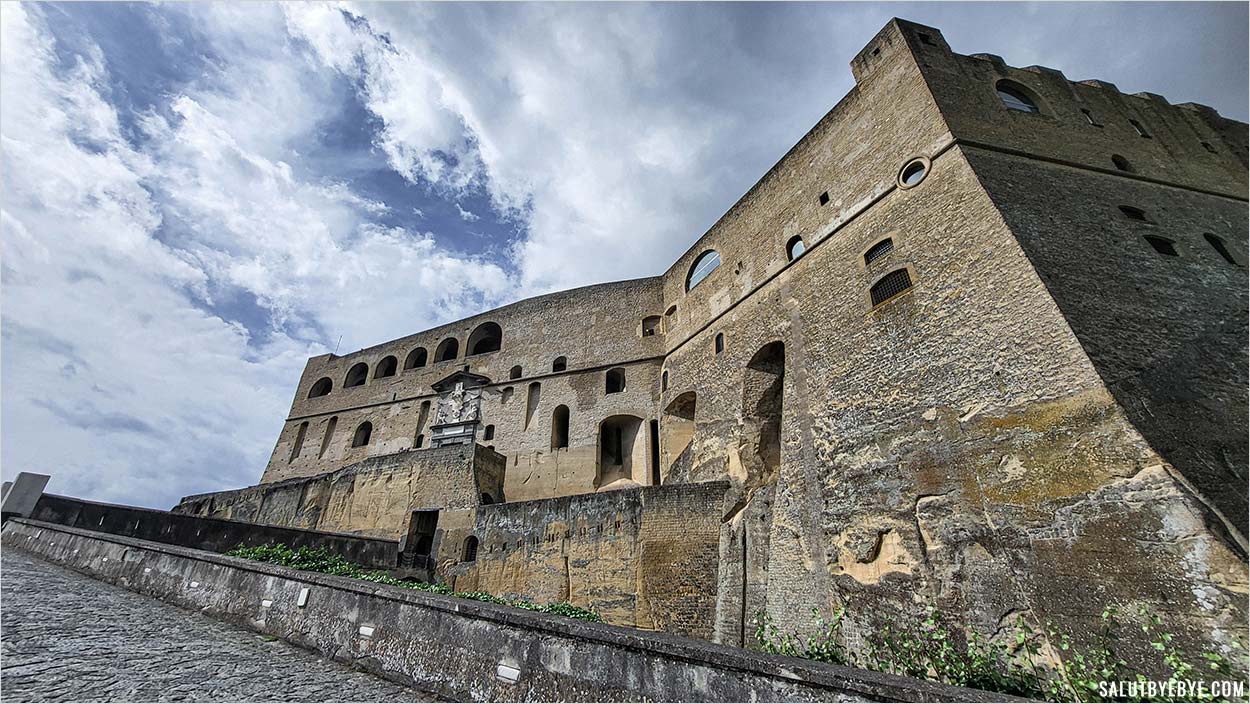
It was in the 16th century, under Spanish rule, that Castel Sant'Elmo took on the form we see today. It was transformed by the viceroy Don Pedro de Toledo into a star-shaped fortress, designed with the latest defensive innovations of the period to withstand siege weapons.
Over the centuries, the castle served as a military fortress, a seat of power and eventually a prison, a role it retained until the 20th century. Closed to the public for a long time, restoration work eventually gave the site a new cultural role.
Today, the castle is open to visitors and houses the Museo del Novecento, devoted to Neapolitan modern and contemporary art.
What to see at Castel Sant'Elmo: views, ramparts and museum
There are several parts to a visit to Castel Sant'Elmo. First, you make your way to the top of the fortress, then explore the views of Naples, the castle's military architecture, and, if you're interested, the Museo del Novecento. You can explore the site freely at your own pace.
The walk up to the castle
When you enter the castle grounds, you need to stop briefly at the ticket counter (located to the right of the entrance) to buy your ticket if you have not done so in advance. You then have two ways to reach the top of the fortress:
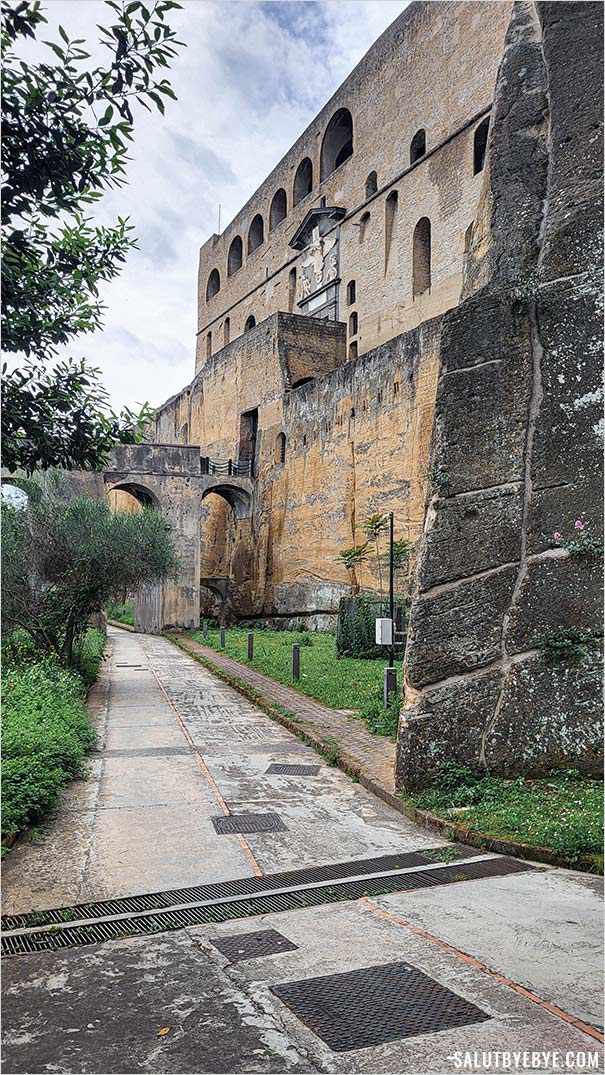
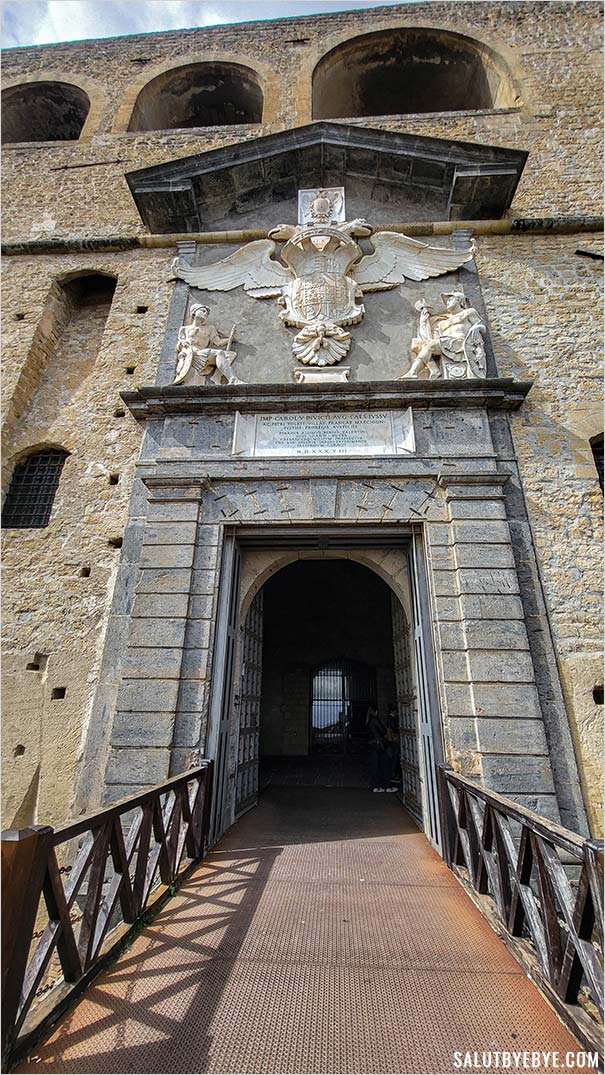
- Take the ramps to the left of the entrance: you can climb gradually at your own pace, enjoy views of the city, cross the drawbridge into the castle, and catch glimpses of the Certosa–Museum of San Martino through the arrow slits;
- Or take the elevator if walking up the ramps is difficult for you.
I was there with a stroller, and I chose the ramps because the views are much better and I did not find the walk too difficult.
The view from the castle
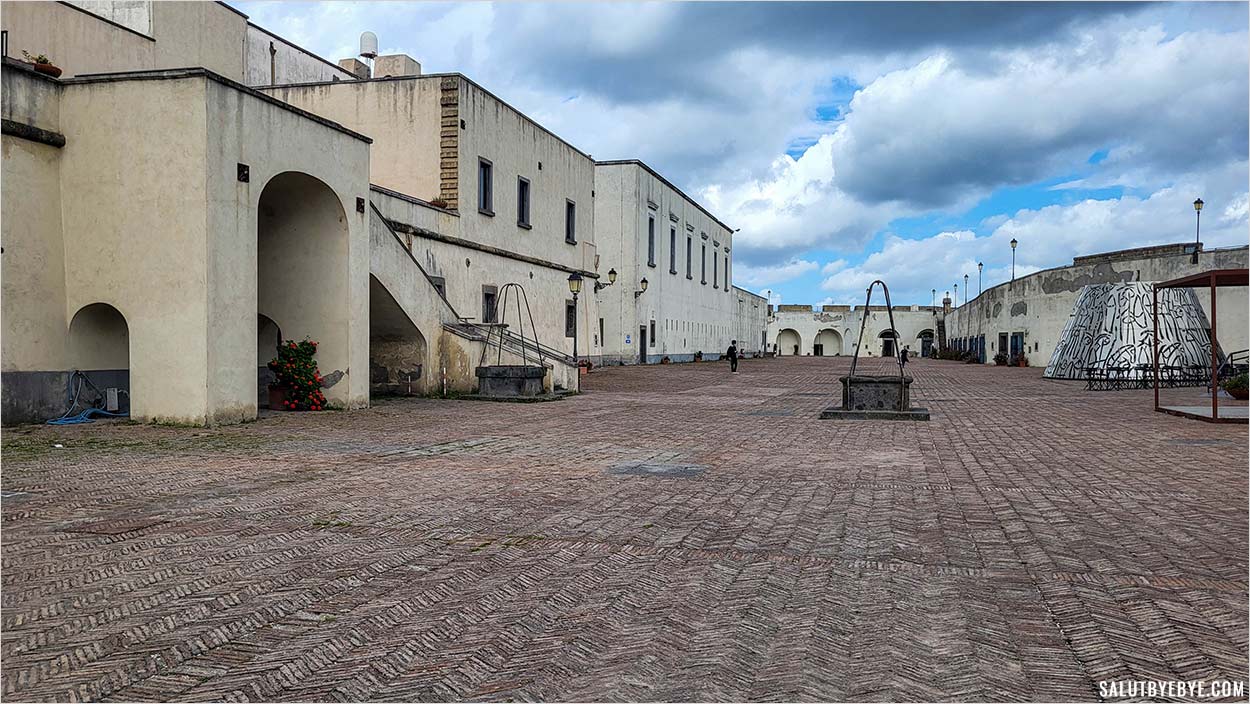
Once you are on the castle terrace, you can easily reach the rampart walkway via a ramp or a staircase… and enjoy a 360° view of Naples. The space is large and open, and you can move freely along the walls with no time pressure. There is also plenty of space for children to move around.
Facing the Gulf of Naples, Mount Vesuvius immediately draws your eye. Its familiar silhouette dominates the bay.

Once you look beyond this familiar landmark, the details of Naples start to stand out: the port of Naples, Castel Nuovo, the glass roof of the Galleria Umberto I…
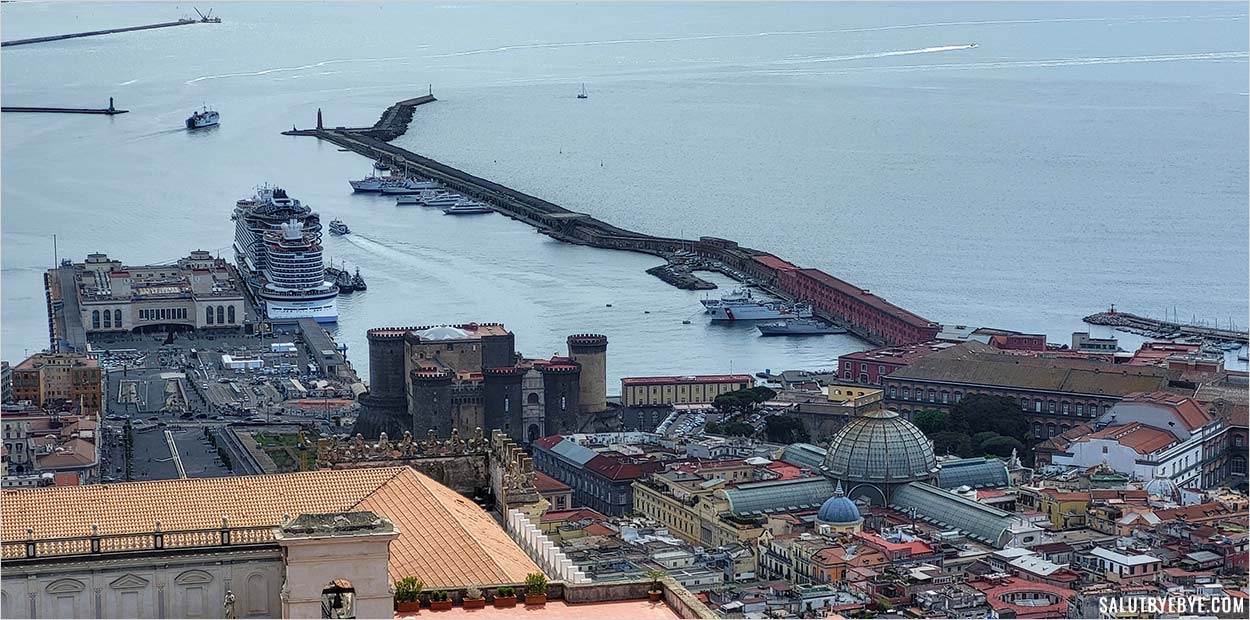
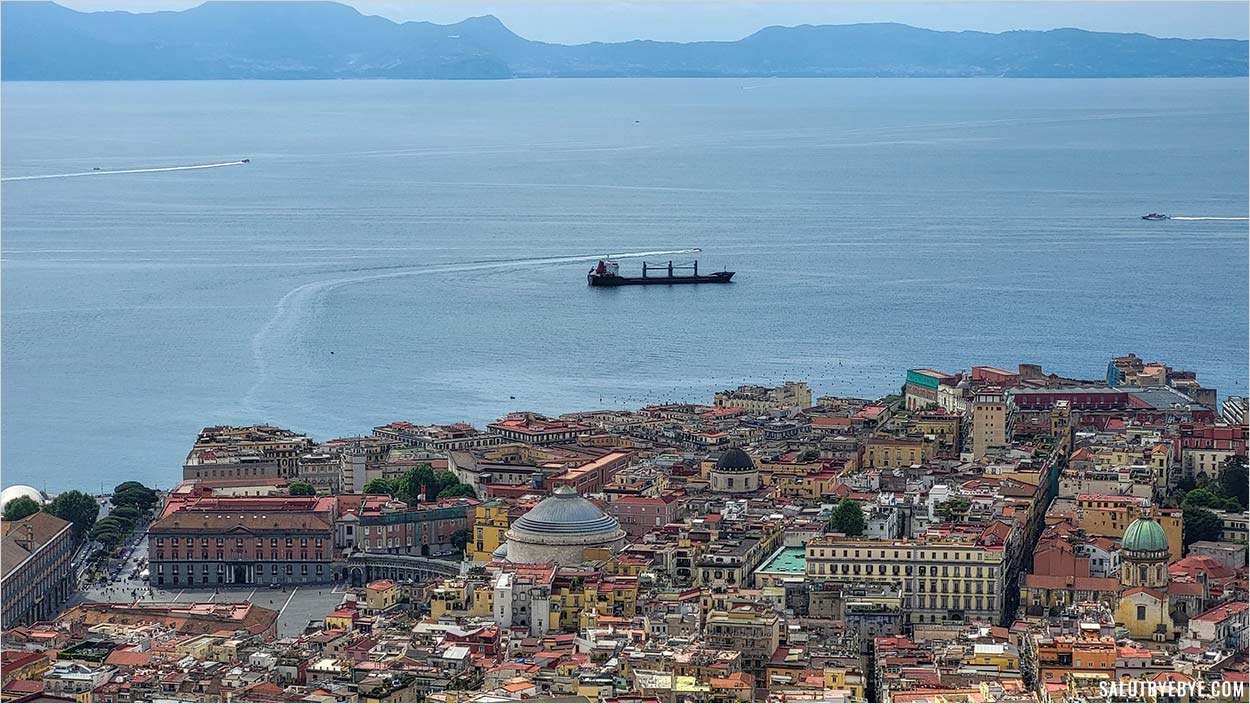
You can also pick out the dome of the Basilica of San Francesco di Paola on Piazza del Plebiscito.
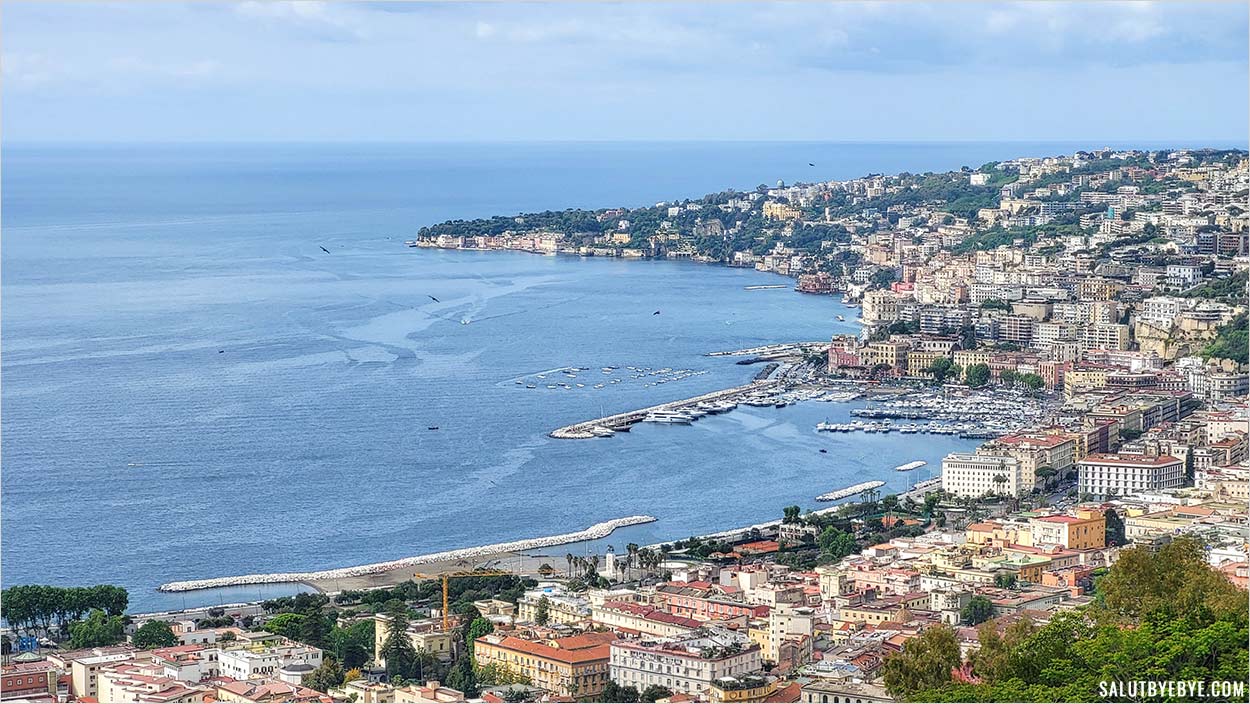
Further to the right, the elegant Chiaia neighborhood stretches along the sea, while the hill of Posillipo frames the horizon.
You can pick out many of the monuments in Naples' historic center, as well as Spaccanapoli, the former Roman decumanus, which is especially easy to spot from above. You can watch planes taking off from Naples Airport or see the greenery surrounding the Capodimonte Museum.

On a clear day, you can even make out the island of Capri in the distance.
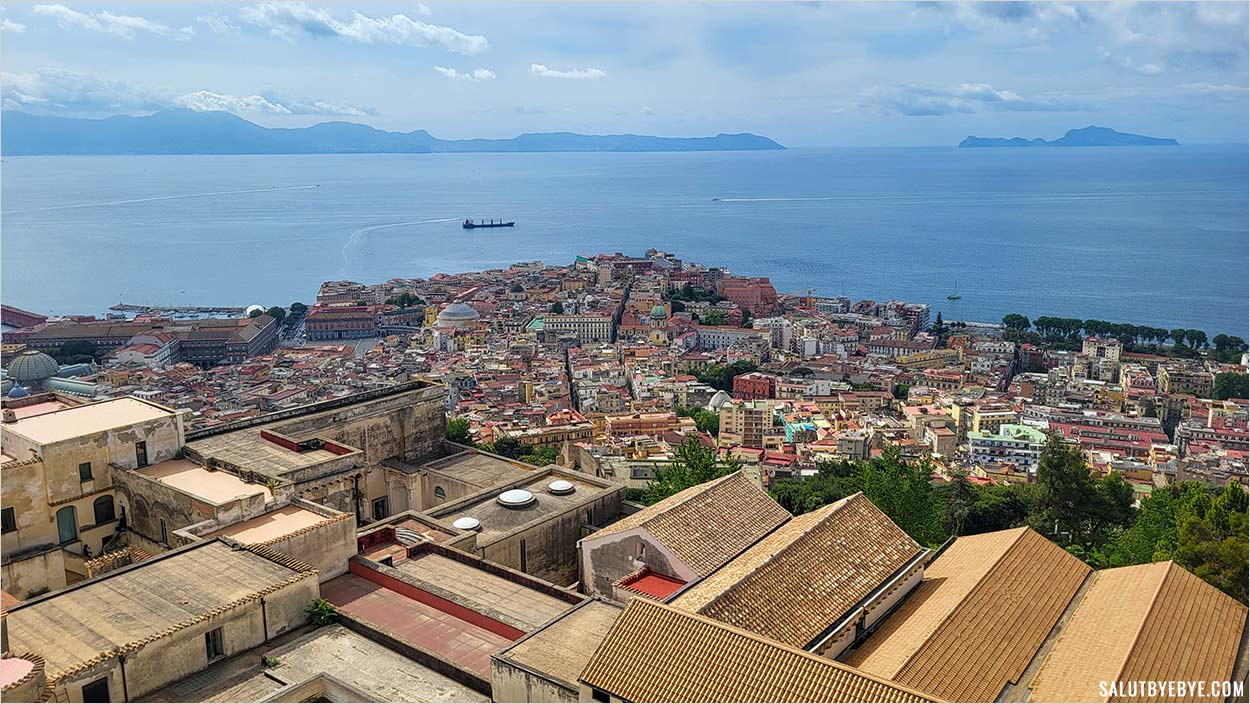
It is really lovely, and another big advantage is the amount of space: you can enjoy the view without feeling like you have to line up for it.
The military architecture of Castel Sant'Elmo
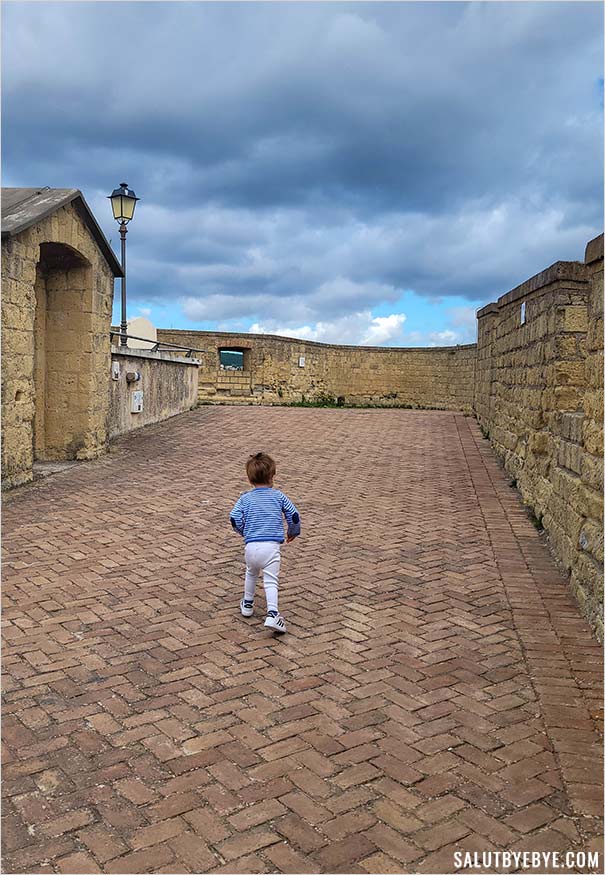
Beyond the view, a visit to Castel Sant'Elmo also gives you the full fortress experience, with its moats, thick walls, a rampart walkway, and arrow slits...
If you are visiting with young children, as I was, the fortress gives them a very tangible way to understand how it worked.

The Museo del Novecento: modern art inside the fortress
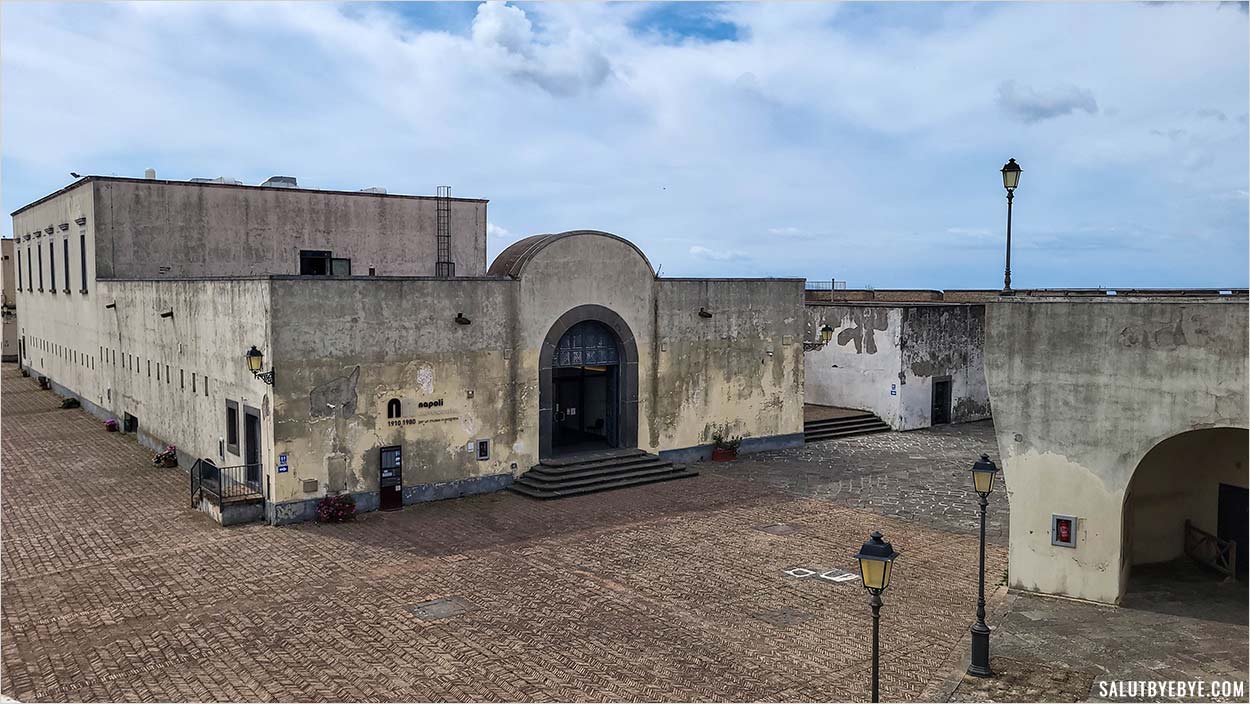
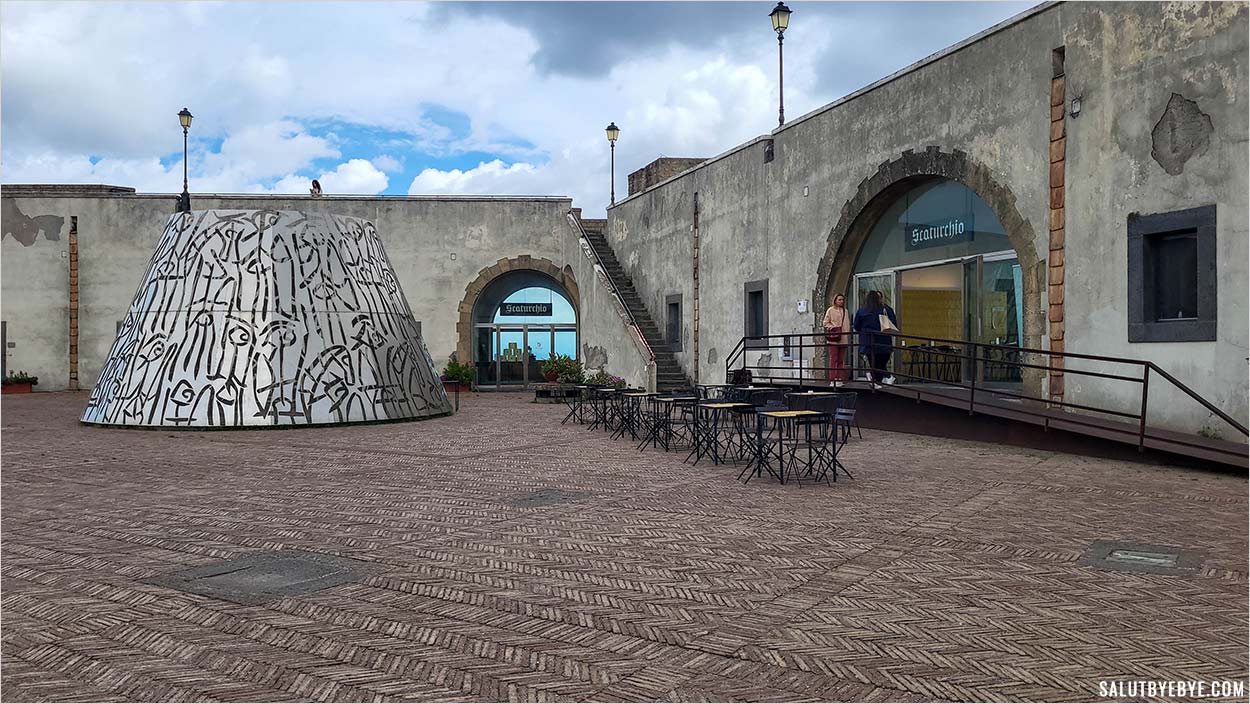
Inside Castel Sant'Elmo, you can visit the Museo del Novecento, devoted to 20th-century Neapolitan art. Its collection includes works by Neapolitan artists and other artists connected with Naples, covering the period 1910–1980.
A modern art museum is not necessarily what you expect to find inside a fortress. I found the collection fairly modest and would not consider it essential. Although the museum only opened in 2010, it does not feel especially geared toward international visitors: the information panels are in Italian only, so you may need to rely on a translation app. I also found the layout a little hard to follow.
There is, however, an interesting section on the Futurist movement.
Access to the museum does not require an additional ticket: admission is included with your Castel Sant'Elmo ticket.
Visiting Castel Sant'Elmo: tickets, opening hours and access
Below, you'll find practical information to help you plan your visit to Castel Sant'Elmo, including details on getting there from central Naples, buying tickets, opening hours, and ways to combine the castle with the rest of Vomero.
How to get to Castel Sant'Elmo
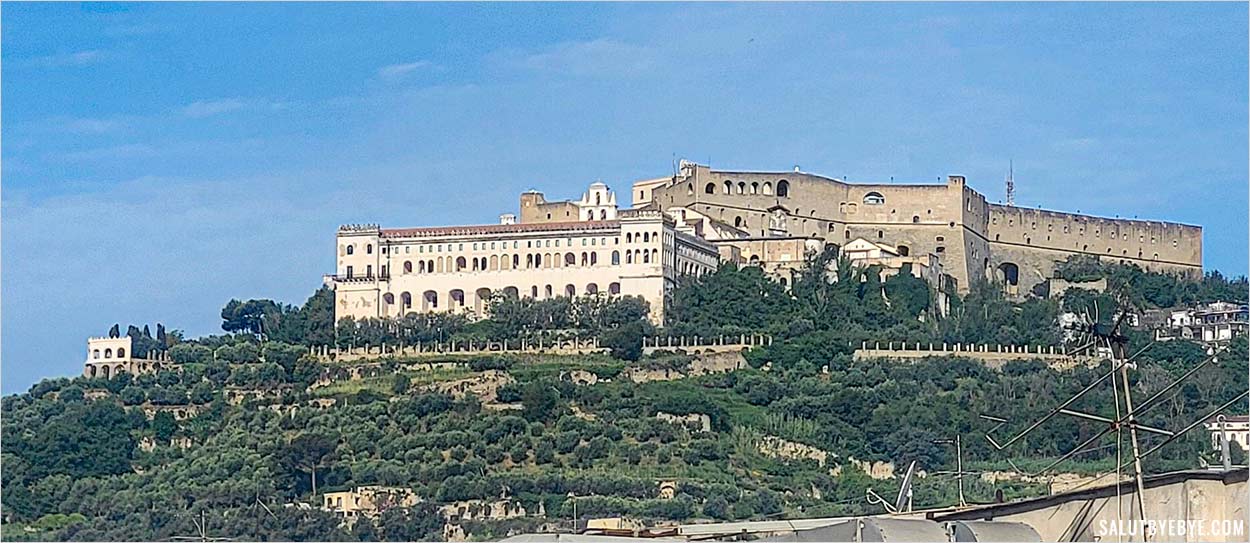
Castel Sant'Elmo sits high above Naples in the Vomero neighborhood. You can easily get there from the center of Naples by metro or funicular... because on foot, it is more of a workout! The walk up can be quite steep.
The simplest option is probably to take metro line 1 to Vanvitelli station, in the heart of Vomero. From there, a series of long escalators takes you uphill toward the castle. That is what I did, with my son in a stroller.
Another good option is to take a funicular. You can choose between two lines:
- The Montesanto funicular, accessible from the lively Montesanto neighborhood, close to the historic center: from Montesanto station, ride up to Morghen. You then continue on foot (a 5–10 minute walk);
- The Chiaia funicular, convenient if you are staying near the waterfront or in the Chiaia district: it departs near Piazza Amedeo and goes up to Cimarosa. From there it is about a ten-minute walk to reach the castle.
The funicular is part of Naples' urban transport network. Remember to validate your ticket as you would for the metro or bus, and try to avoid rush hours if you are traveling with a stroller.
Finally, the castle is accessible by bus, but this option is often harder for visitors to figure out and more affected by traffic conditions. Bus C37 gets you closest to the castle.
For a first visit, I'd choose the metro or funicular combined with the escalators. It is usually the easiest and most comfortable option, especially if you are traveling with children or a stroller.
Opening hours and ticket prices
Opening hours
The castle and museum have different opening hours:
- Castel Sant'Elmo is generally open every day from 8:30 am to 7:30 pm;
- The Museo del Novecento is open from 9:30 am to 5 pm, with last entry at 4 pm; it is closed on Tuesdays.
The fortress is closed on December 25 and January 1.
The information above comes from the official website of the Italian Ministry of Culture, which manages Castel Sant'Elmo and the Museo del Novecento. Check the official website before your visit for the latest opening hours and prices.
In bad weather, especially during strong winds or heavy rain, the site may close temporarily for safety reasons.
Ticket prices
Full-price ticket: €5 (about $5.50 / £4.25)
Reduced-price ticket: €2 (about $2.25 / £1.75)
The reduced price is for EU citizens aged 18 to 25. Visitors under 18 are admitted free.
The ticket gives access to Castel Sant'Elmo as well as to the Museo del Novecento, subject to the separate opening hours of the castle and museum. Admission is free on the first Sunday of the month.
Good to know: If you have a Campania Artecard, it may include free admission or a 50% discount, depending on the pass. The Campania Artecard is an official tourist pass that includes admission to many museums and cultural sites in Naples and the region, with public transportation included on some versions. It is available in several versions, including 3-day and 1-week passes, and can save you money if you plan to visit several attractions. You can order it in advance here.
Where to buy tickets
Tickets can be purchased in several ways:
- At the castle ticket office: the ticket office closes one hour before the castle;
- Online on the official Musei Italiani website (or via the Musei Italiani app): you first need to choose the type of ticket you want (castle and museum or combined ticket castle + Certosa di San Martino, located right next door), then the date of your visit and finally the ticket category. The site also allows you to reserve free or discounted Artecard tickets.
Advance booking is not required, but buying your ticket in advance can save time in high season or on weekends, especially if you are visiting Naples with a tight schedule.
How to combine Castel Sant'Elmo with the rest of Vomero
Visiting Castel Sant'Elmo is easy to combine with other sights in the hills above Naples. In fact, right next to the castle you will find the Certosa di San Martino, a former Carthusian monastery converted into a museum, with an impressive cloister and panoramic terraces. Its collections explore the history of Naples, with a particularly interesting section dedicated to Neapolitan Nativity scenes.
Visiting both sites lets you make the most of your time in the Vomero neighborhood, without spending extra time getting around.
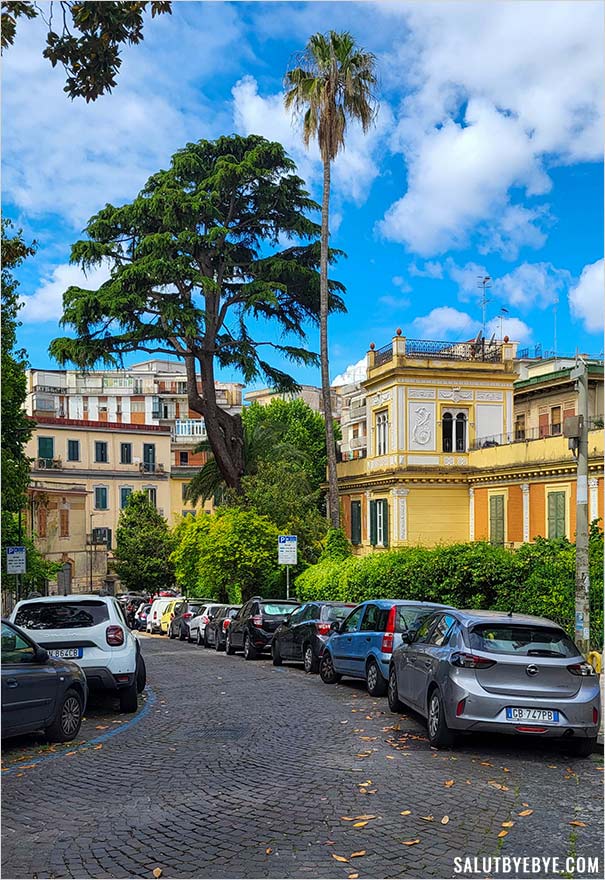
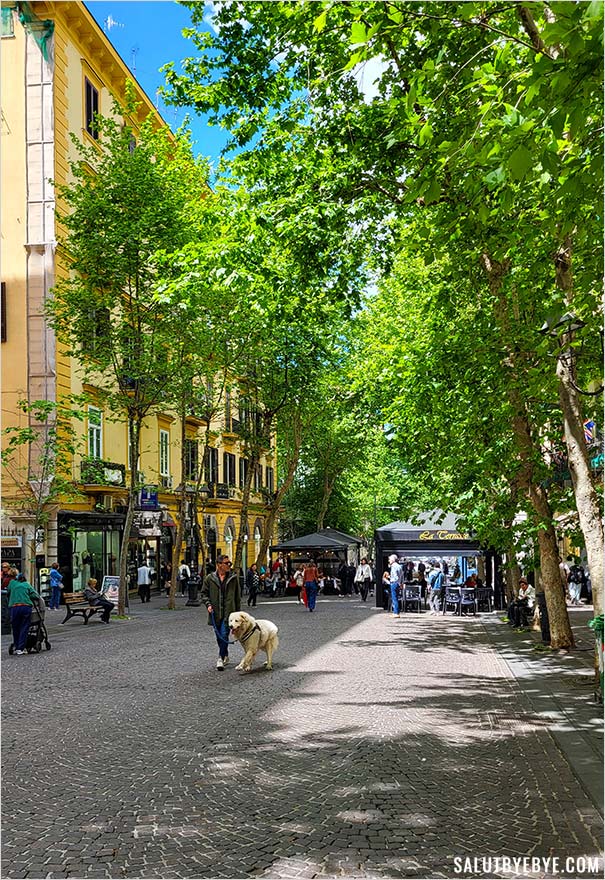
After visiting both sites, I'd also suggest taking some time to soak up the atmosphere in Vomero. It's a residential neighborhood with plenty of shops that feels more spacious than the historic center, and it's also much calmer and a bit more upscale. You could, for example, wander along the pedestrian-friendly streets such as Via Scarlatti and Via Luca Giordano, stop for ice cream or a coffee, or do a bit of shopping there.
It's also a good spot for lunch or dinner before heading back down to the city center by funicular or metro.
Frequently asked questions about visiting Castel Sant'Elmo
My experience at Castel Sant'Elmo: seeing Naples from above
A visit to Castel Sant'Elmo gives you a different perspective on Naples, away from the hustle and bustle of the historic center. From above, the city's geography suddenly makes more sense: the sea, hills, and volcano all fall into place.
It's a great place for photography. The ramparts offer superb photo spots, both for views and for portraits with the city (or Vesuvius!) in the background. Moving along the ramparts walkway changes both your viewing angle and the light, so there is plenty of variety for photos!
Easy access and the fact that the Certosa di San Martino is right next door make the visit even more appealing. Visiting both sites lets you make the most of your time in the Vomero neighborhood, which is a little removed from the heart of Naples but is well worth exploring!
Finally, in a city where panoramic viewpoints are relatively rare, Castel Sant'Elmo offers a welcome break from the intensity below. It's a chance to step back from the chaos and see the city as a whole, which makes Naples easier to read and understand. You leave with a broader, calmer perspective on the city, without losing any of its intensity.


