

If you are planning a visit to Naples, you will quickly discover that beneath its lively, noisy narrow streets lies another city, carved into the tuff. It is an underground world where tunnels, cisterns, shelters, and remains from different eras sit side by side. With so many underground tours available, it can be hard to know which one to choose.
Each offers a very different experience, from "Napoli Sotterranea" on Via dei Tribunali to the catacombs (San Gennaro, San Gaudioso), and the Bourbon Tunnel, which I'll focus on today.
I faced the same choice, and in this article I'll take you inside the Bourbon Tunnel and compare it with other underground tours in Naples, to help you decide which one suits you best!
The Bourbon Tunnel is an extensive underground complex with a history that spans both the Bourbon period and World War II. It offers several different tour routes, which means everyone can find something that suits them, even if you're traveling with children.
- Quick comparison of Naples underground tours
- Why are there so many underground passages in Naples?
- The fascinating history of the Galleria Borbonica
- Which Bourbon Tunnel tour should you choose?
- Highlights of the tour (standard route)
- Traveler's memo for visiting the Bourbon Tunnel in 2026
- What to see near the Bourbon Tunnel
Quick comparison of Naples underground tours
Naples' underground is incredibly varied, from Greco-Roman aqueducts and Early Christian catacombs to tuff quarries and ruins. Here is a brief comparison to help you choose the one that best matches what you’re looking for.
| Name of the tour | Why go? | For whom? | Average price per person | Book |
|---|---|---|---|---|
| Naples Underground (Napoli Sotterranea) | Greco-Roman aqueduct, remains of a Roman theater. | Ideal for first-time visitors, great mix of ancient history and hands-on experience. Tour in English. | About €18 (about $20 / £15) | See tickets |
| Catacombs of San Gennaro | The largest Christian catacombs in Naples, frescoes and monumental tombs of the first bishops. | Visitors interested in religious art and funerary traditions, families (wide passages that are relatively easy to navigate). Tour in English. | About €13 (about $14 / £11) | See prices |
| Catacombs of San Gaudioso | More intimate atmosphere, Baroque frescoes and impressive burials. | Visitors interested in religious art and funerary traditions. Tour in English. | About €13 (about $14 / £11) | See prices |
| Neapolitan aqueduct and underground of the Spanish Quarters | Descent into the ancient aqueduct and exploration of the galleries under the Quartieri Spagnoli. | Travelers who enjoy narrow passages and urban adventure. Tour in English. | About €15 (about $16 / £13) | See tickets |
| 3-hour underground tour – Purgatorio ad Arco + Neapolis Sotterrata + Ipogeo dei Cristallini | Comprehensive tour combining an underground church, historical excavations, and Hellenistic tombs. | Archaeology enthusiasts and visitors looking for a more in-depth experience. Tour available in English. | About €100 (about $108 / £85) | See availability |
| Galleria Borbonica – Bourbon Tunnel | A 19th-century escape tunnel later used as a World War II air-raid shelter, with surprising historical remains and a cistern. | Visitors who want to understand the recent history of Naples, experience one of the city’s most unusual underground sites, or are traveling as a family. | €15 (about $16 / £13) for the classic routes | Info & booking |
In short, if you want a fairly spectacular and very old underground tour, Napoli Sotterranea is ideal. Choose the catacombs if you're particularly interested in religious history. And choose the Galleria Borbonica if you want an accessible, history-focused tour that works well for families.
Why are there so many underground passages in Naples?
Naples is a city with as much to explore below ground as above it: with the legacy of Greek and Roman aqueducts, tuff quarries that supplied stone for the city, catacombs, and royal tunnels, there are many reasons for that.
Much of Naples was quarried from the yellow tuff beneath the city, a porous but durable rock formed from volcanic deposits. Those quarries and cavities were later reused as reservoirs, tunnels, and shelters. Naples effectively grew in layers, one above another.
In addition, the Greeks, followed by the Romans, also developed underground water networks very early in the city's history to supply different parts of the city with water, using cisterns, vertical wells, and aqueduct systems. This elaborate underground hydraulic system shows just how sophisticated the engineering was more than 2,000 years ago.
The fascinating history of the Galleria Borbonica
The Bourbon Tunnel is an extensive underground complex with a history that spans both the Bourbon period and World War II. King Ferdinand II of Bourbon commissioned the tunnel as an escape route in case of another uprising.
The story begins in 1853. Memories of the 1848 uprisings were still fresh, and the monarchy feared renewed unrest. The king therefore decided to have a tunnel built between the Royal Palace (located opposite the basilica on Piazza del Plebiscito) and the sea.
The planned tunnel would cut through the Pizzofalcone hill and allow the king to escape safely and discreetly in the event of another uprising.
Although it was inaugurated two years later and briefly opened to the public for the occasion, the tunnel was never completed…
For decades, the Bourbon Tunnel was largely forgotten… until World War II, when it became a major air-raid shelter for Neapolitans during the bombings. Electricity was installed there, along with rudimentary sanitation and camp beds. Entire families sheltered underground during the bombing raids.
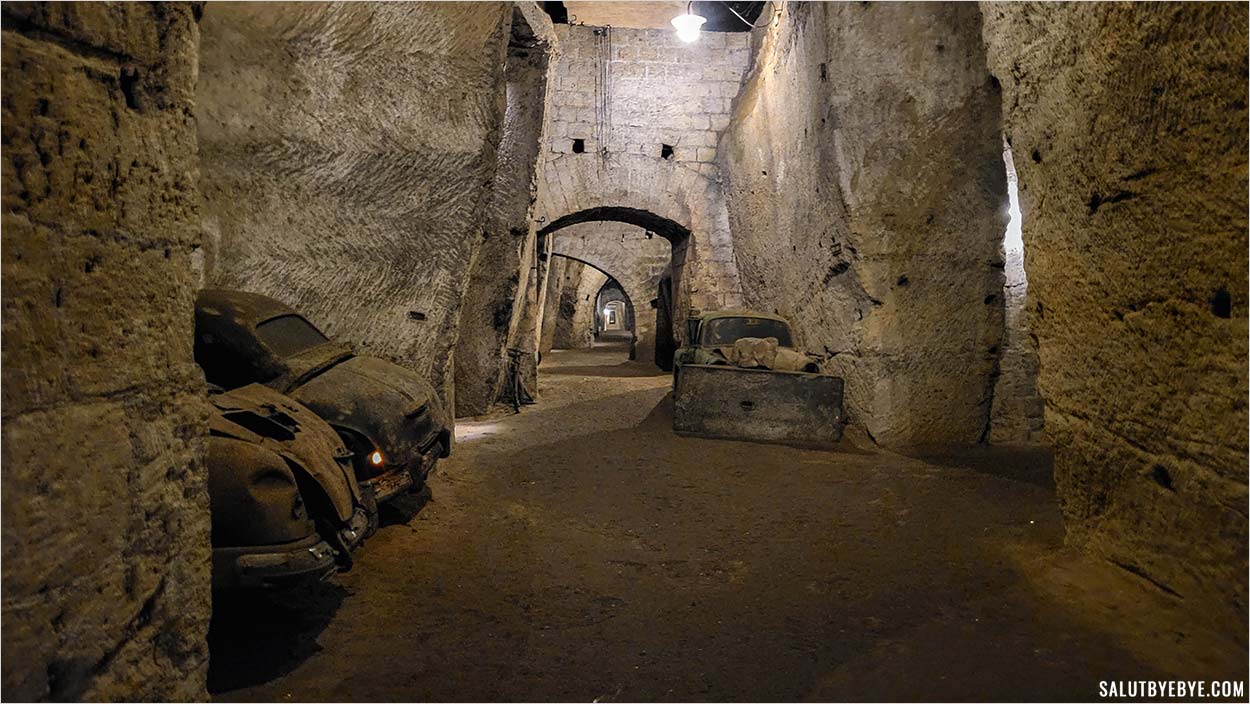
Once the conflict was over, the site took on yet another role and became a storage area for confiscated and abandoned property, especially motorcycles and cars seized by the authorities. Some cavities were used as parking lots, while on the surface some residents used the wells as dumping sites...
In the 2000s, geologists and volunteers from the Borbonica Sotterranea association decided to clear out the huge accumulation of debris and abandoned objects that had piled up over the years and restore the spaces and make them accessible again. It was a huge undertaking, especially considering that it was carried out with very little public funding. Their work eventually allowed the Bourbon Tunnel to open to visitors in 2010.
Which Bourbon Tunnel tour should you choose?
There are several different routes for visiting the Bourbon Tunnel, and each suits a slightly different type of visitor.
- The standard tour (duration: about 1 hour) is the most accessible option, especially if, like me, you are going with a young child. It is the most comprehensive option for a first visit: you see the cisterns from the Bourbon era, the graffiti dating from World War II, and you finish the tour in the "car cemetery." Ideal if you do not have much time or are traveling as a family. Price: from €15 (about $16–$17 or £13). You can book online in advance here.
- The Via delle Memorie tour (duration: about 1 hour as well) is more intimate and moving, focused on the everyday objects left behind by war refugees: shoes, letters, toys. Price: from €15 (about $16–$17 or £13). Online advance booking here.
- The adventure tour (duration: about 1 hour 25 minutes) is only for adults and children over 10 years old. Equipped with a helmet and headlamp, you explore the complex system of ancient aqueducts, partly on foot and partly by raft in an old abandoned metro tunnel that is partially flooded. Available from Friday to Sunday and during school vacations, it may be suspended at certain times of the year. Photos are allowed only in certain parts of the route. Price: €20 (about $22 or £17–£18). Information and booking here.
- The Speleo Light tour, finally, takes you through the tunnels with a helmet and headlamp and lasts about 1.5 hours. It is a more rugged exploration of the aqueduct system, in less developed areas. It runs Friday through Sunday and is for adults only. Price: €20 (about $22 or £17–£18). Information and booking here.
Highlights of the tour (standard route)
The standard Bourbon Tunnel route lasts about an hour and covers the site's main highlights. This guided tour combines military remains, traces of World War II, cisterns from the former Neapolitan water system, and a cemetery of vintage cars. It is a good choice for a first visit because it offers a good balance between underground architecture and history, without any particularly challenging sections. Here are the main highlights.
Diving into the depths
Before going down, the whole group gathers in a waiting area. Tours leave at fixed times with a guide, so you cannot explore independently. Near the entrance, you can look down into a well located at ground level, where you can see water far below, which immediately gives you a sense of how deep the underground network goes. Some sections lie as much as 40 meters below street level (about 130 ft).
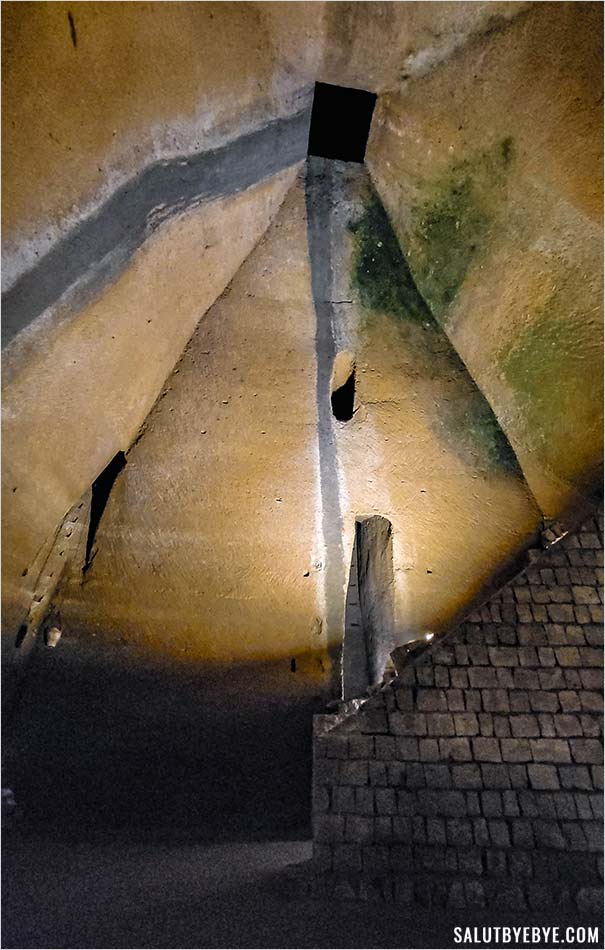
The various wells around the site served several purposes: extracting material, providing ventilation, and accessing the old cisterns connected to the Carmignano aqueduct, a 17th-century water network that supplied the city with drinking water.
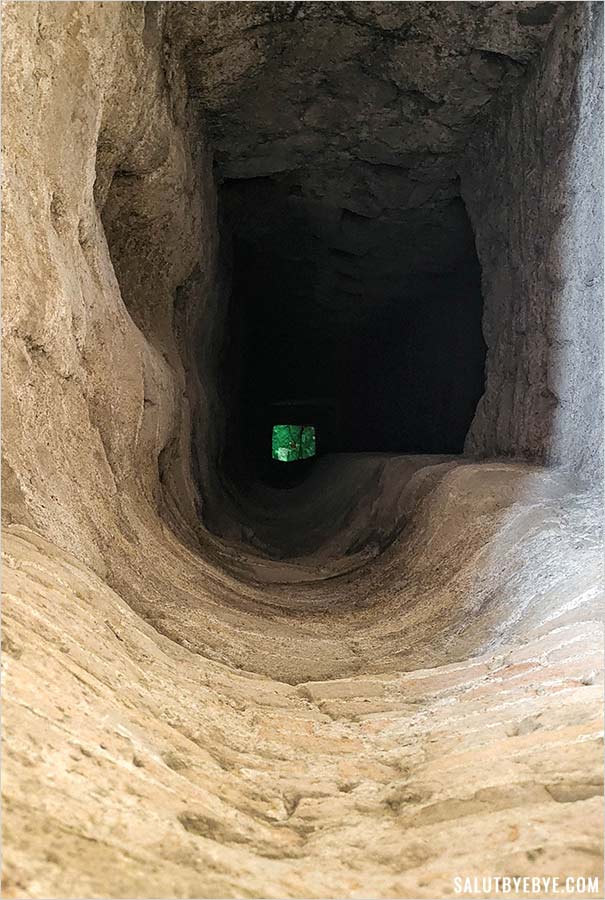
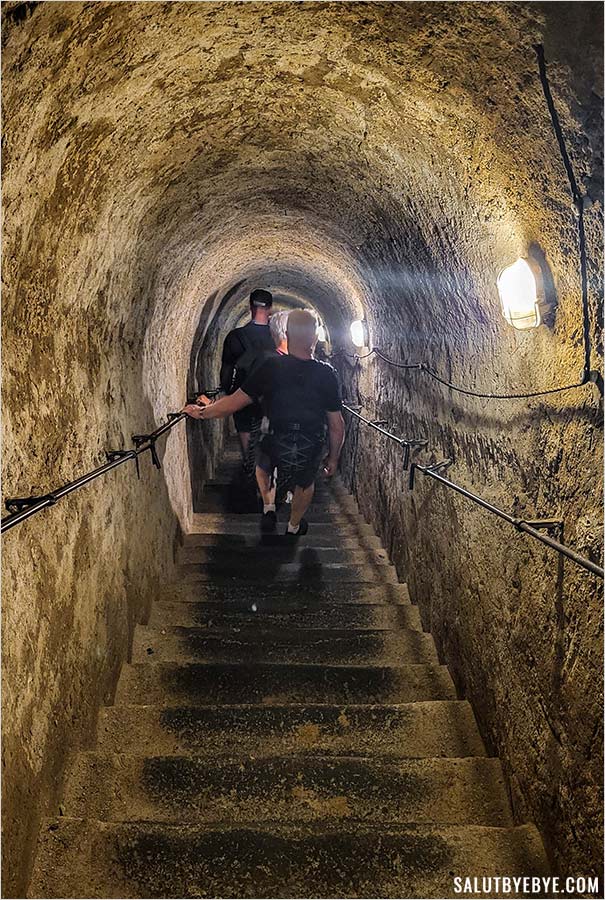
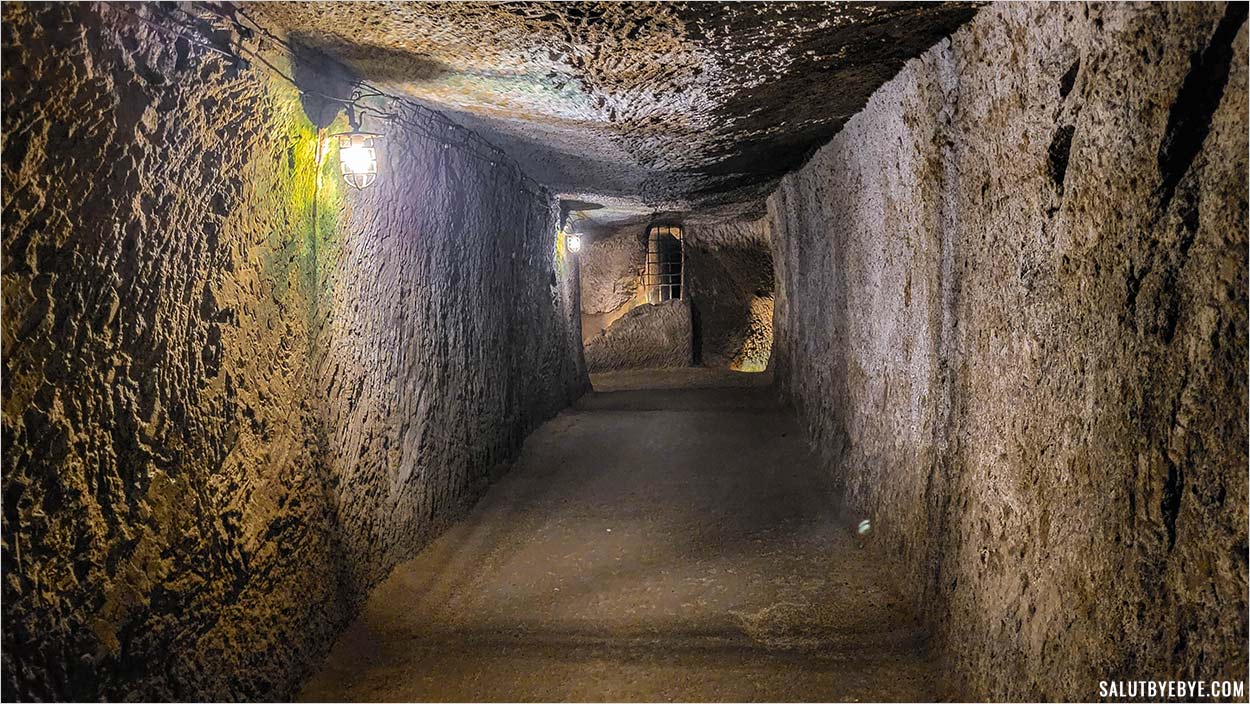
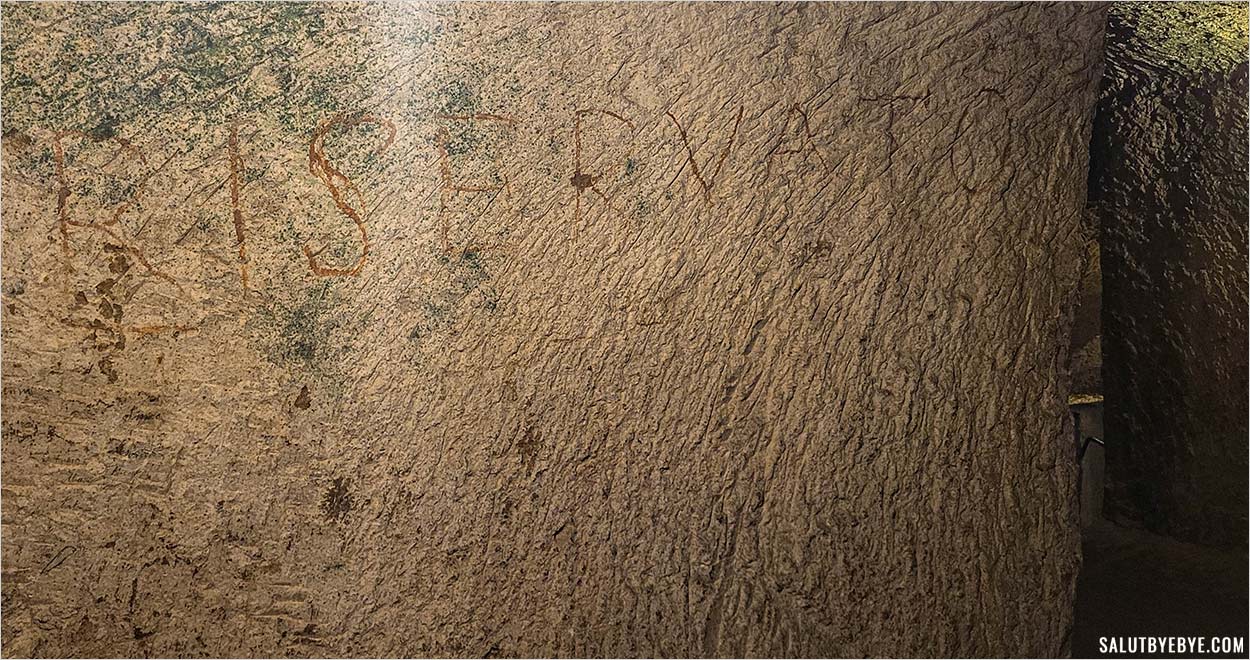
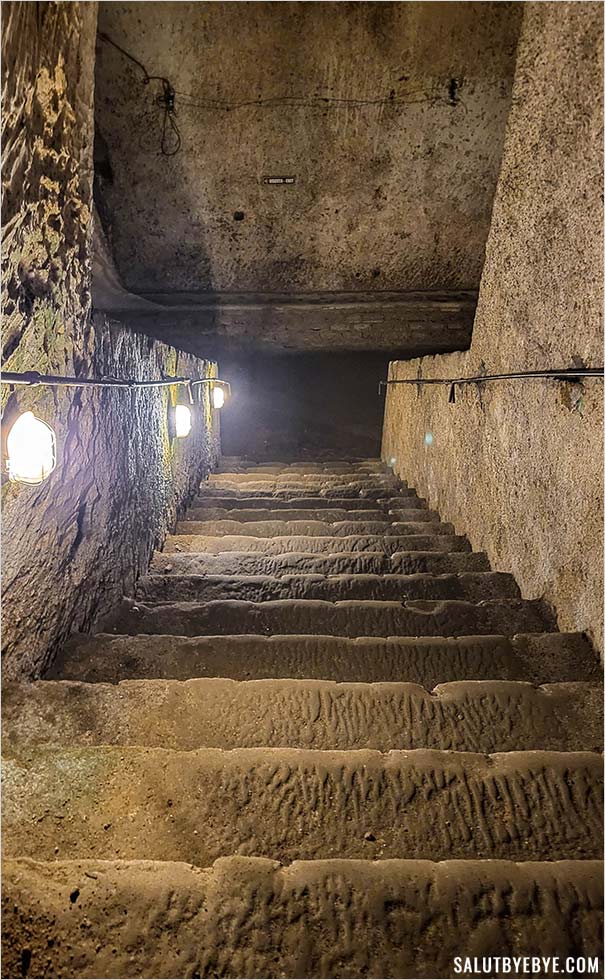
Early in the tour, you head down a long staircase leading to the first underground chambers. There you come across remnants of World War II: a "Riservato" painted on a wall, indicating that the area was reserved for the military.
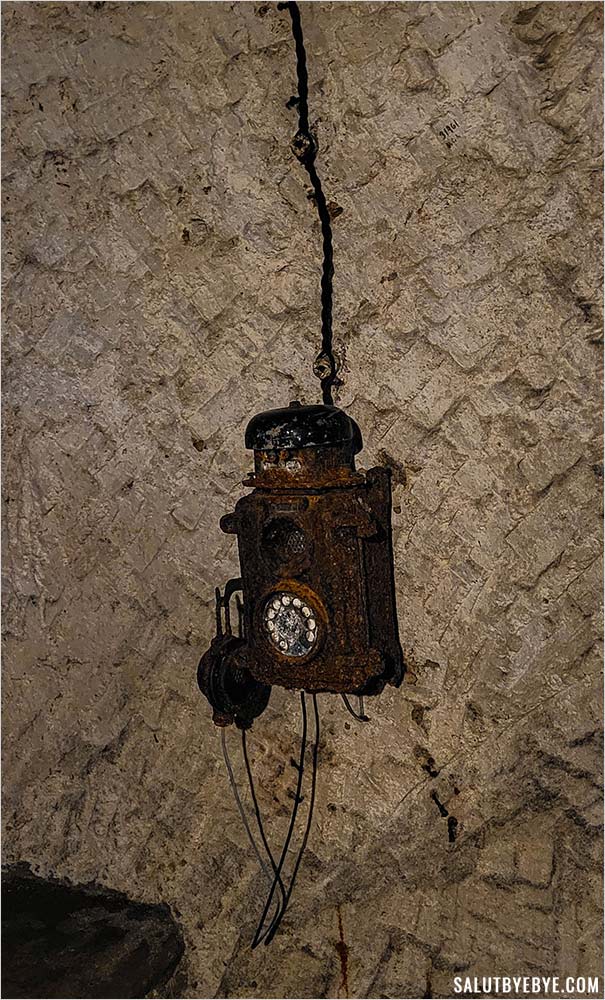
An old UNPA (National Union for Protection Against Air Raids) service telephone is still there: the organization was responsible for organizing shelters during the bombings. The telephone allowed shelter staff to stay in contact with the outside world and coordinate alerts.
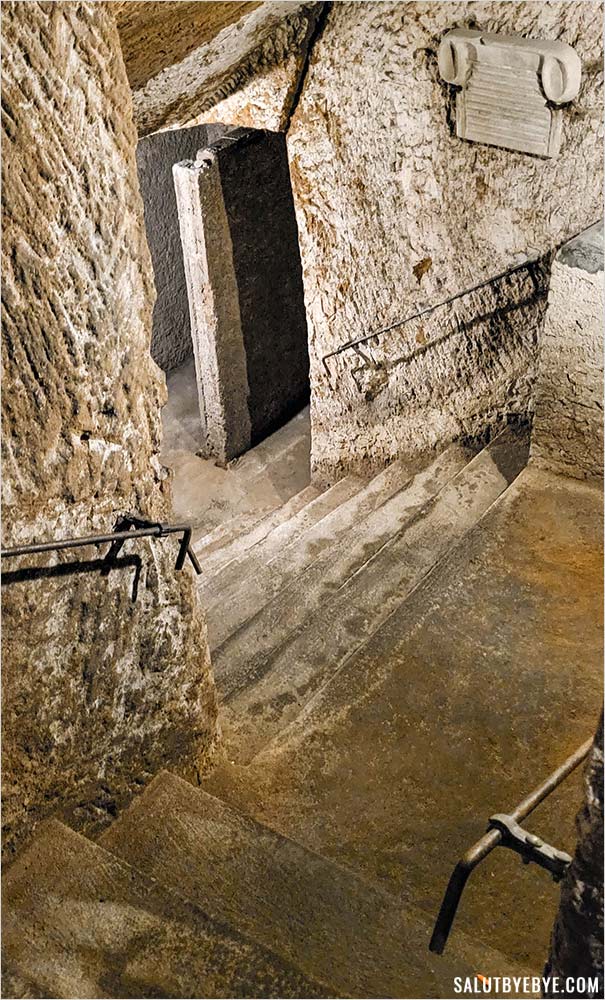
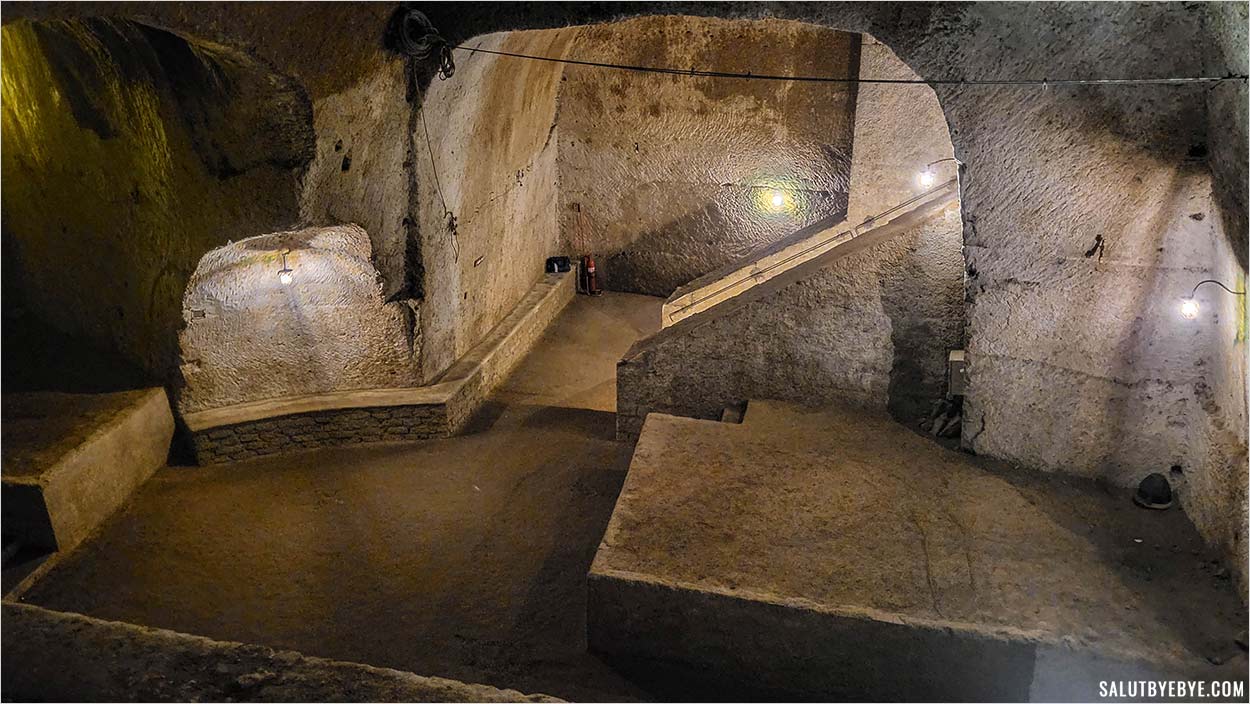
During the war, the walls and ceilings were covered with white lime to help prevent the porous tuff from flaking and crumbling… and to reflect more light throughout the underground spaces, which were being used as air-raid shelters for Neapolitans during the bombings. You can still see on the walls the chisel marks left by quarrying.
The rooms are carefully lit to highlight the spaces and emphasize the impressive height of some chambers, so the tour never feels uncomfortably dark.
Traces of the war
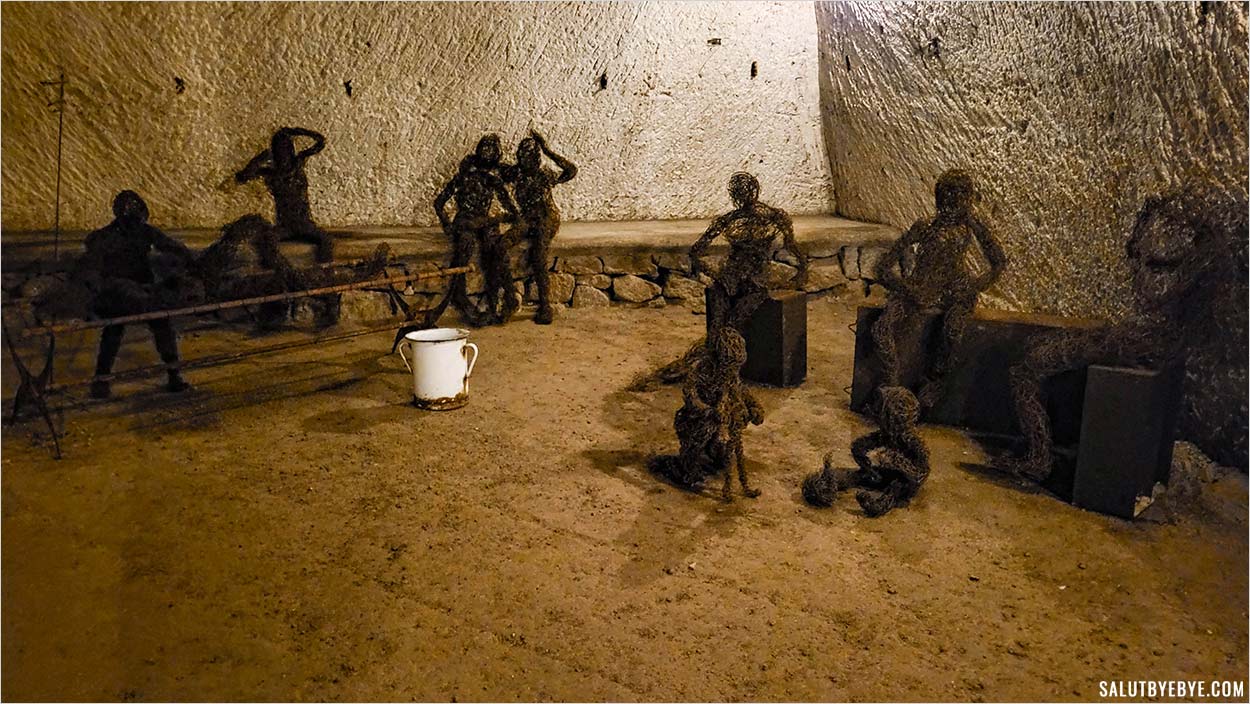
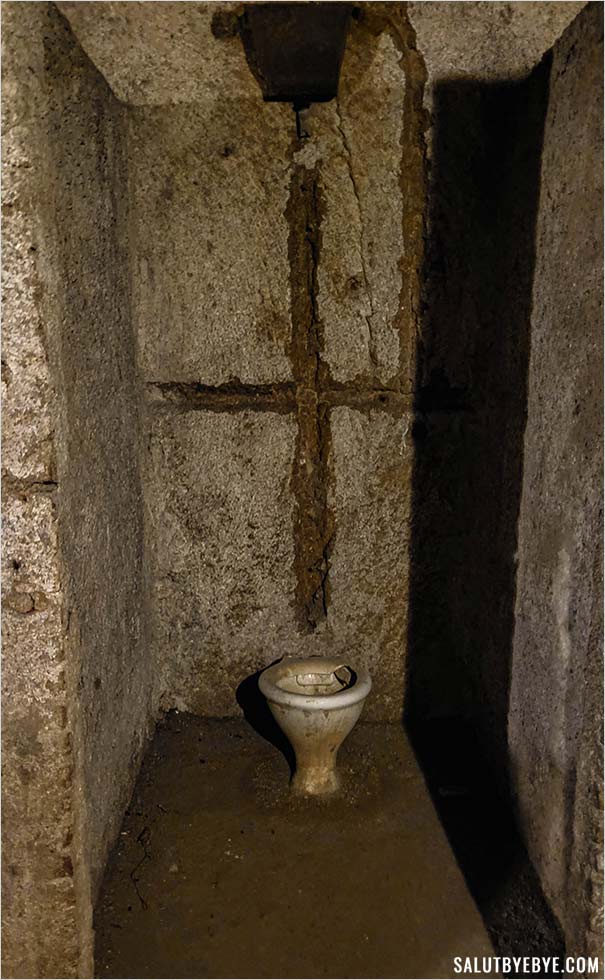
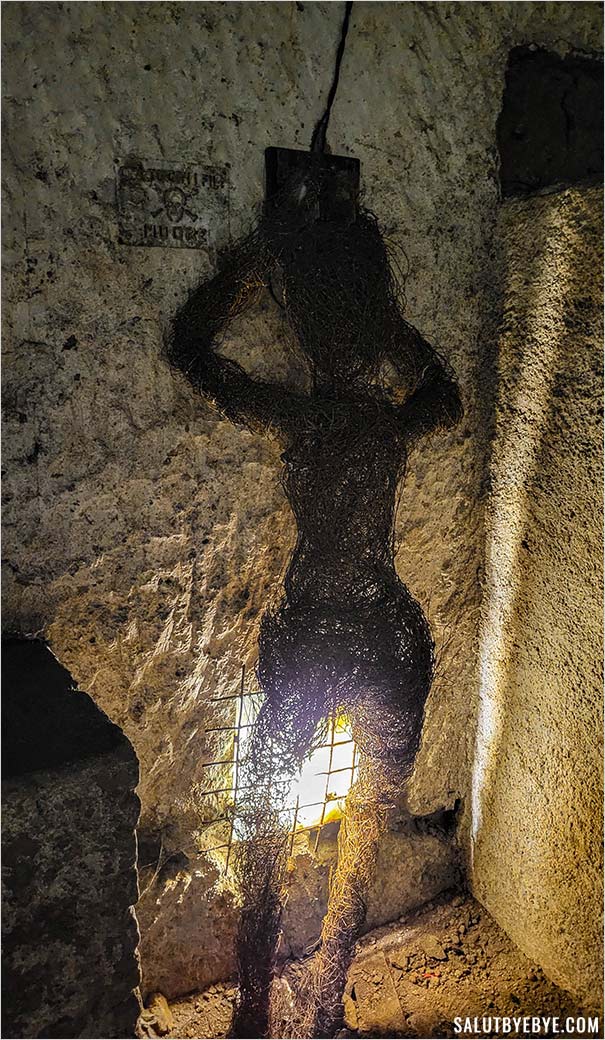
As you move through the Bourbon Tunnel, you get a sense of how people lived underground during the war through surviving objects, installations, and wartime remains. Many left evidence of their time here, through graffiti, engraved names, dates… Once the tunnels had been converted into an improvised air-raid shelter, electric lighting, camp beds and even toilets were installed, traces of which remain today.
Between 5000 and 10000 Neapolitans found refuge here during the bombings, in the tunnel and the neighboring cisterns. It is easy to imagine the hell of living in such close quarters, with only a few toilets to share…
Some people stayed here until 1947, having lost everything during the war. For those who had lost their homes, returning to the surface meant facing a devastated city. For some, life underground may have felt safer than what awaited them above, despite the terrible conditions.
Mosaics and decorative remains
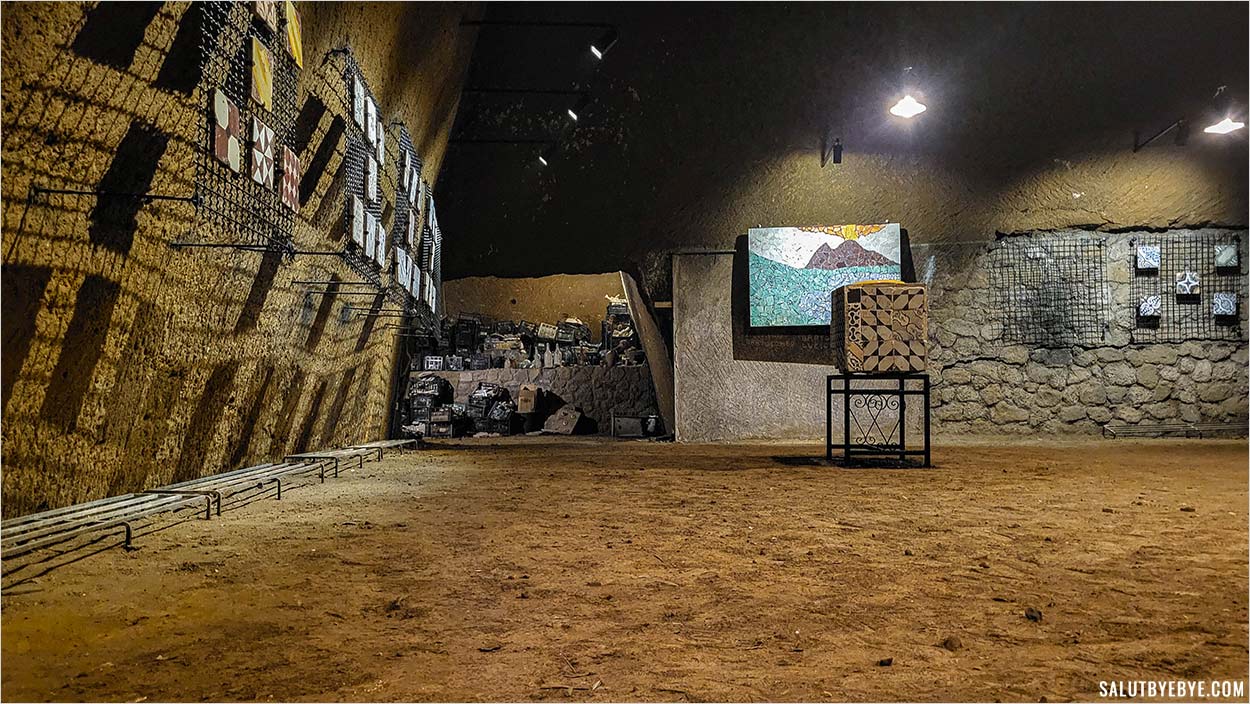
The route also gives you a chance to see architectural and decorative fragments recovered during construction projects around Naples: pieces of mosaics, carved stone fragments, remains that were stored here at different times. As the tunnel was used as a storage space, it inadvertently helped preserve them.
These surviving fragments add another layer to the site's history. The earthenware tiles you can see here mostly date from the 18th and 19th centuries and were found during excavations.
The large cistern and its hanging amphora
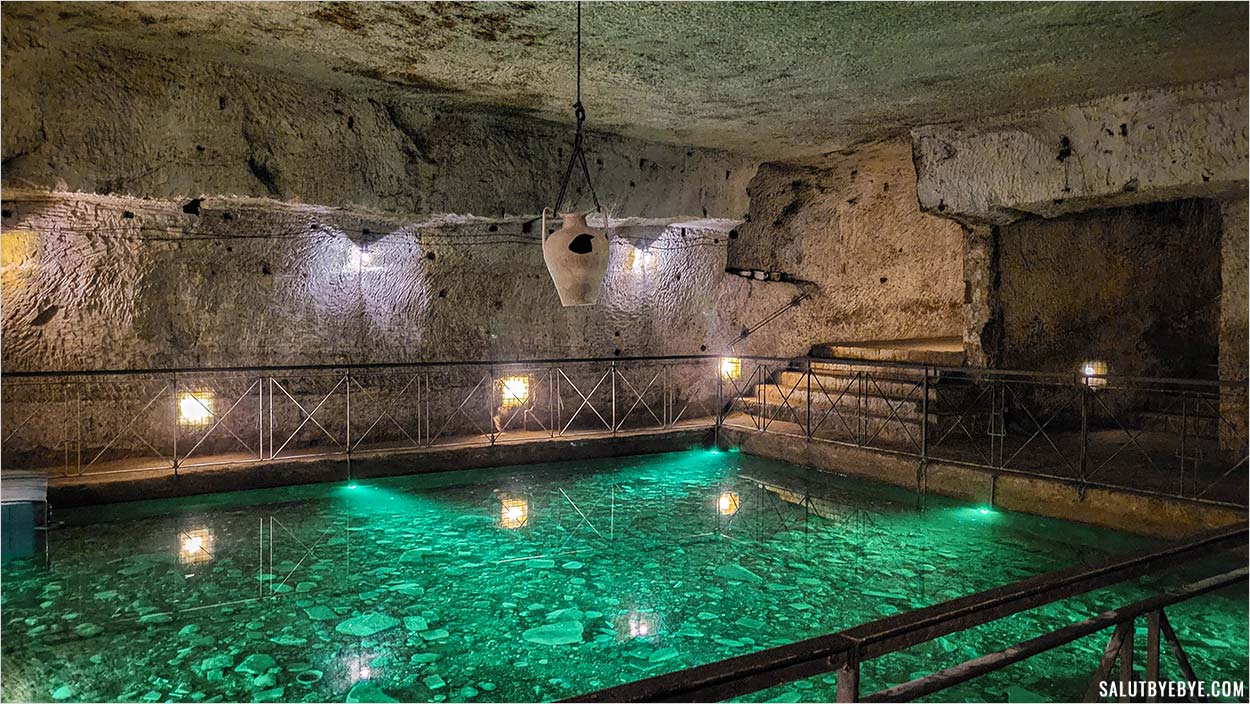
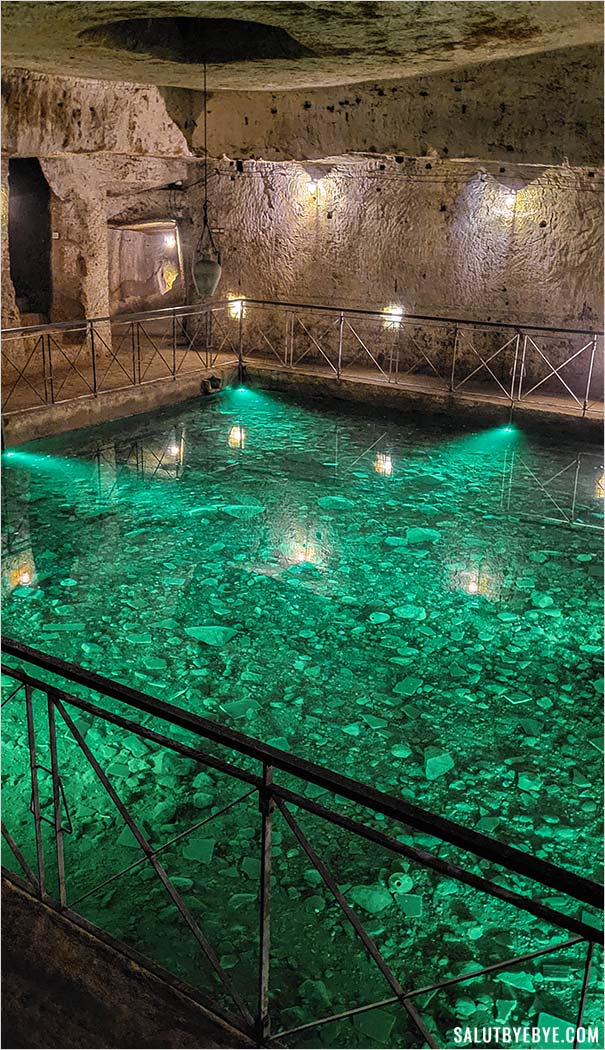
Further along the standard route, you come across a large cistern partially filled with water. Under the artificial lighting, it often appears turquoise, a striking splash of color against the otherwise muted underground surroundings.
The cistern reveals another function of Naples' underground network: historically, Naples' underground tunnels were also used to collect and distribute water to the surrounding neighborhoods. Up until the 19th century, part of the city still depended on this distribution network. Each building had a vertical access well and people would lower amphora-like terracotta containers ("mummarelle"), like the example displayed here, to draw water.
The old car cemetery
As the visit comes to an end, you reach one of the Bourbon Tunnel's most memorable sights: dozens of vehicles left here between the 1950s and 1970s still fill a vast underground chamber. Old Italian sedans, Vespas, and badly damaged cars now sit rusting in the dark.
It creates a somewhat strange atmosphere when you imagine that every vehicle once belonged to someone and carries a little piece of another era…
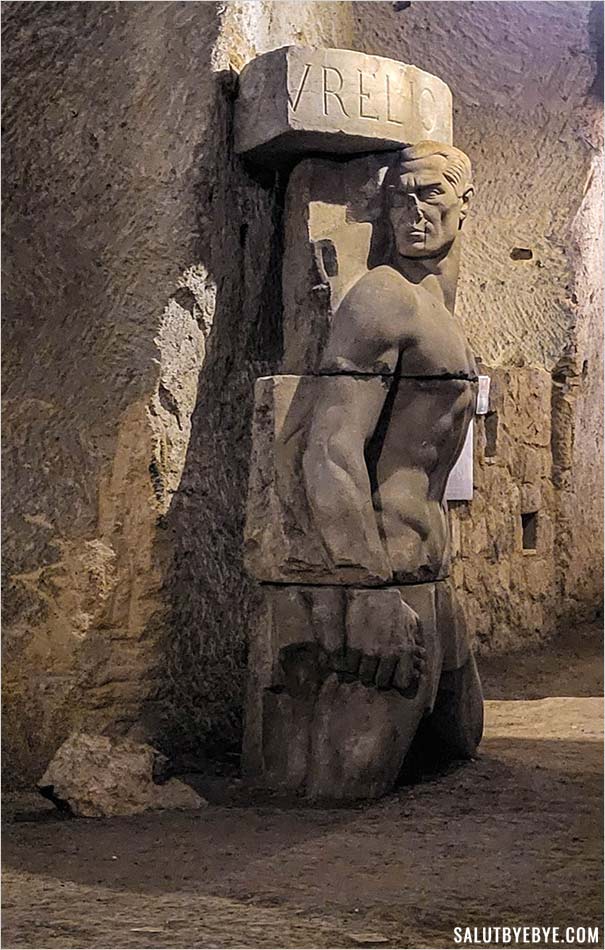
While clearing roughly 8 meters (about 26 ft) of accumulated rubble, volunteers from the association also uncovered many sculptures and even a funerary monument dedicated to Aurelio Padovani, a prominent figure in Neapolitan Fascism. It adds a more political and unsettling layer to the site's history.
The standard route ends here… The tunnel never reached the Royal Palace. It extends for 431 meters (about 1,415 ft), and it never had a working exit before World War II (you can find out more on the official website of the Bourbon Tunnel).
The exit, via the Morelli parking lot, feels a bit abrupt. After spending time in such a quiet place, with that slight mineral smell of damp rock and a temperature of around 18°C (about 64°F), the hustle and heat of Naples can feel overwhelming!
Traveler's memo for visiting the Bourbon Tunnel in 2026
The tunnel has 3 different entrances and booking is strongly recommended. To help you prepare for your visit, here are a few additional practical tips!
- Vico del Grottone, 4 (behind Piazza del Plebiscito)
- Via Domenico Morelli, 61 (entrance via the Morelli parking garage, near Piazza Vittoria)
- Via Monte di Dio, 14 (Palazzo Serra di Cassano)
The nearest metro stations are Municipio (line 1), about a 10–15 minute walk, and Toledo (line 1), also about a 15-minute walk away. From the port (Molo Beverello) or Piazza Municipio, you can easily walk there or take a bus.
What to see near the Bourbon Tunnel
The Chiaia district is one of the most pleasant parts of Naples if you feel like strolling before or after your visit to the Bourbon Tunnel. Piazza del Plebiscito is just a stone's throw away, with the famous Royal Palace that the tunnel never quite reached, and the Basilica of San Francesco di Paola, a great backdrop for photos!
You can reach the port in a few minutes on foot, stop by the beautiful Galleria Umberto I, or grab something sweet at Pasticceria Poppella (whose specialty is the "Fiocco di Neve," a kind of doughnut filled with cream). There are also plenty of trattorias and cafés where you can stop to enjoy a pizza or a strong Neapolitan espresso...
I hope you get the chance to explore this underground side of Naples, which is such an important part of the city's history.
At the Bourbon Tunnel, the standard route is relatively accessible, the one-hour format works well for families, and it avoids the potentially unsettling atmosphere of the catacombs for younger children. That makes it a good first introduction to Naples' underground history.


