

Are you looking for slightly different ideas for visiting Kraków, stepping away from the classic routes around the Old Town and Wawel Castle? The mounds of Kraków, locally called the "Kopce," are among those curiosities that have shaped the city's landscape for centuries.
Climbing them lets you enjoy unobstructed views over Kraków, discover important chapters of Polish history, and explore less touristy areas like Nowa Huta or the Wolski Forest.
In this article, I offer a complete guide to the Krakus Mound, Wanda Mound, Kopiec Kościuszki, Kopiec Piłsudskiego, and Kopiec Jana Pawła II. For each one, you'll find detailed access information, the highlights of the visit, a bit of historical or legendary background, and my opinion to help you easily decide which ones to include in your stay.
- The burial mounds of Kraków offer 360° views over the city and a dive into Polish history, while remaining very quiet spots compared to the tourist center.
- Krakus Mound and Wanda Mound are ideal if you enjoy legends and unusual perspectives on Kraków, and they are free to access.
- Kopiec Kościuszki is the most interesting if you want to combine a panoramic view, a museum, and a fortress-like atmosphere, but there is an entrance fee.
- Kopiec Piłsudskiego is well suited to those who enjoy walking in nature, with a strong historical dimension linked to Poland's independence.
- Kopiec Jana Pawła II is a very secondary visit; I only recommend it if you are already in the area and feel a particular connection to the figure of John Paul II.
- Understanding Kraków's burial mounds (Kopce) before visiting them
- The Krakus Mound (Kopiec Krakusa): founding legend and city view
- Kopiec Kościuszki: panorama, citadel, and the memory of Tadeusz Kościuszko
- Kopiec Piłsudskiego: large mound in the heart of the Wolski Forest
- Kopiec Wandy (Wanda Mound): between Nowa Huta and a tragic legend
- Kopiec Jana Pawła II: a small mound dedicated to John Paul II
- Comparing the main burial mounds in Krakow to choose which ones to visit
- Practical tips for planning your discovery of the Kopce
Understanding Kraków's burial mounds (Kopce) before visiting them
The burial mounds of Kraków are artificial hills scattered around the city, at the crossroads of legend, national memory, and scenic walks.
What are the Kopce and why should you care about them during a stay in Kraków?
The "Kopce" are man-made mounds, often built to honor a real or legendary figure, sometimes for reasons that remain mysterious. In Kraków, there are five main ones: Krakus Mound (Kopiec Krakusa), Wanda Mound (Kopiec Wandy), Kopiec Kościuszki, Kopiec Piłsudskiego, and Kopiec Jana Pawła II.
They offer a unique thread for discovering the city differently, blending several dimensions: a touch of mythology with King Krakus and his daughter Wanda, clear views over the Old Town, the Vistula River, or the airport, as well as tributes to emblematic figures such as Tadeusz Kościuszko, Józef Piłsudski, and Pope John Paul II. During my stays in Kraków, I quickly noticed how much these small "mountains" shape the skyline, especially at sunset.

Where are the main burial mounds in Kraków located?
The mounds are spread around Kraków, each in a different setting, which also lets you vary the atmosphere of your visits.
Krakus Mound overlooks the south of the city, close to the site of the former Płaszów camp. Wanda Mound marks the eastern edge of Kraków, at the gateway to Nowa Huta, the former communist district.
Further west, in a large green area, you'll find Kopiec Kościuszki and Kopiec Piłsudskiego, both set in the heart of the Wolski Forest, not far from Kraków Zoo. As for Kopiec Jana Pawła II, it is a bit more discreet, near Zieliński Street, at the southwestern edge of the city. Because of this distribution, you will easily come across at least one of these mounds if you plan to venture beyond the historic center.
Which burial mounds to prioritize depending on how long you stay?
If you are only in Krakow for a short time, I recommend focusing on two Kopce: the Krakus Mound for its blend of legend and views of the city center, and the Kościuszko Mound for its museum, citadel, and spectacular panorama. Both offer a very complete experience, with relatively easy access from the center.
With a bit more time, you can add the Piłsudski Mound for the walk in the Wolski Forest and for its historical dimension linked to the struggles for Polish independence. Wanda Mound is a good choice if you want to explore Nowa Huta or join a guided tour of this district. As for the John Paul II Mound, I would rather reserve it for travelers who have already visited the others and want one more nod to the figure of John Paul II.
The Krakus Mound (Kopiec Krakusa): founding legend and city view
The Krakus Mound is one of the oldest mounds in Krakow, associated with the legend of the city's founding king and much appreciated for its unobstructed view of the center.
Location, access, and characteristics of the Krakus Mound
The Krakus Mound is located south of Krakow, on a hill overlooking the Podgórze neighborhood and the former Nazi camp of Płaszów (initially a forced labor camp, later integrated into the concentration camp system). Today, the site is the focus of memorial enhancement work, with explanatory panels and an outdoor route, which makes it easier to understand the history of the place during your visit.
I personally reached the mound after visiting the KL Płaszów area, passing through the stone quarry where the filming of "Schindler's List" took place, which gives the climb a very particular atmosphere.
The mound is about 16 meters high (about 52 ft), with a spiral path that winds around it up to the top. This path is not secured, with no safety barrier, which may be surprising if you are used to highly regulated sites. However, the climb is still short and manageable, provided you wear good shoes, especially in wet weather.

Legend of King Krakus and archaeological hypotheses
According to tradition, this is the mound where King Krakus, the legendary ruler said to have founded Krakow on Wawel Hill after defeating the dragon that terrorized the city, is buried. This is where its common nickname "Krakus Mound" comes from, even though no archaeological evidence confirms this version.
Excavations carried out in the 1930s uncovered, at the base of the mound, remains from the Lusatian culture, dated between 1300 and 500 BC. As these traces lie beneath the mound itself, they suggest that at that time, the tumulus did not yet exist. Researchers remain divided: some argue for a prehistoric construction, others date it instead between the end of the 6th and the end of the 7th century.
Another, more original hypothesis suggests that the Krakus Mound was part of an astronomical system developed by Celtic peoples, in connection with Wanda Mound. Standing at the top of Krakus Mound on May 2 or 10, you would see the sun rise very precisely above the Kopiec Wandy, while from the top of Wanda Mound, on February 6 or November 4, the sun would set above Krakus Mound. These dates approximately match important Celtic festivals such as Samhain (early November), Imbolc (early February), and Beltane (early May).
View from the Krakus Mound and why it's worth visiting
Once you reach the top, you get an unusual perspective over downtown Krakow, with the main landmarks etched along the horizon: the Old Town, the towers of St. Mary's Basilica, Wawel Castle… The view is all the more enjoyable because the spot is still relatively quiet compared to the major sights in the city center.

If you've already planned to visit the former Plaszow camp, I recommend setting aside a bit of extra time to climb up to the mound. It gives you some distance from the emotional weight of the site and lets you take in the city as a whole. The visit is free, open continuously, and works well as a late-afternoon stop.
Each year, the Krakus Mound also hosts the traditional Rękawka festival, a folkloric event that combines historical re‑enactments and local traditions, and that draws many Krakow residents.
Kopiec Kościuszki: panorama, citadel, and the memory of Tadeusz Kościuszko
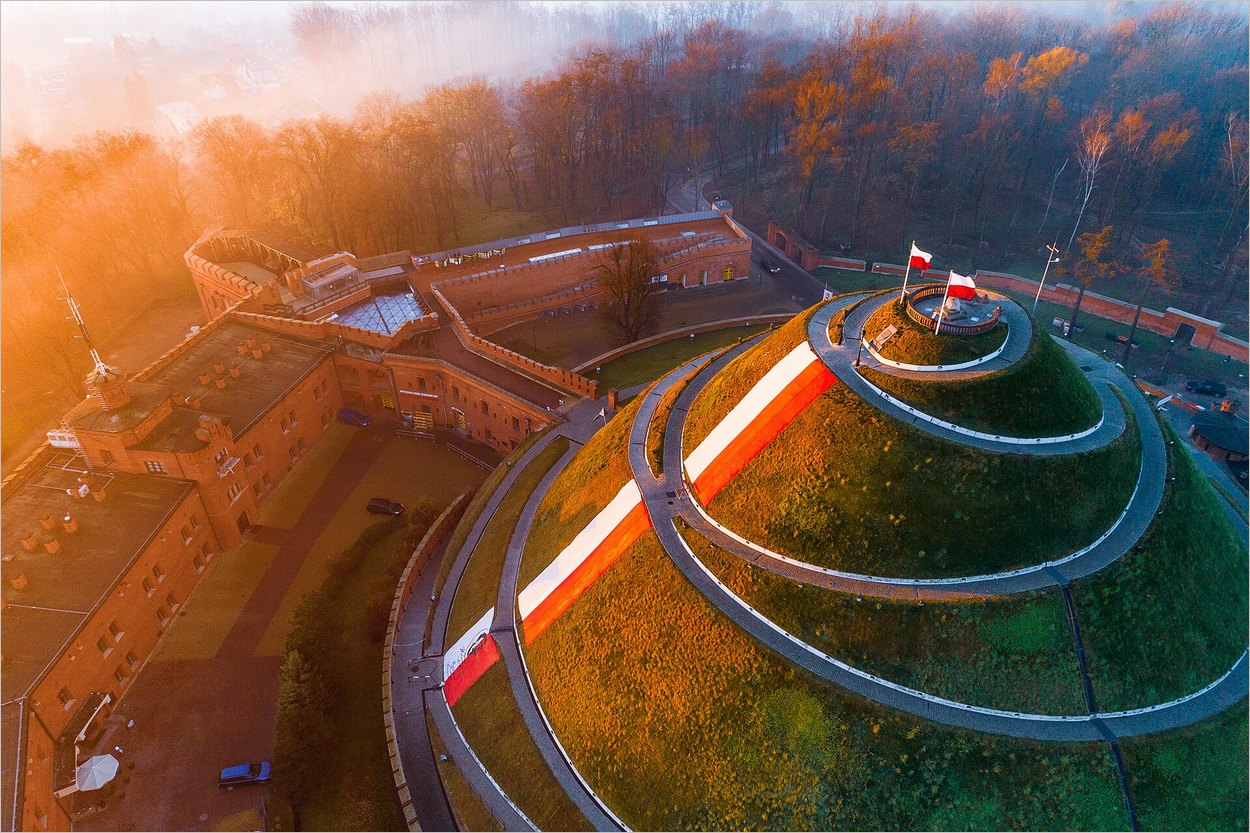
Kopiec Kościuszki is one of Krakow's most iconic mounds, combining a 360° view, a museum, fortifications, and a tribute to a Polish national hero.
How to get to Kopiec Kościuszki from downtown Krakow
Kopiec Kościuszki is located to the west of Krakow, in a large wooded park overlooking the city. To get there by public transport, the simplest option is to take the tram to the Salwator terminus. From there, you have two options: walk about 25 minutes uphill through the park, or take a local bus (notably lines 100 or 101), which drops you off very close to the entrance. Routes can change, so don't hesitate to check the easiest way on an app like Jakdojade.
The site is also included on the route of some of Krakow's tourist buses, which is convenient if you already have that kind of ticket. The mound itself is about 35 meters high (about 115 ft) with a base 73 meters wide (about 240 ft), making it one of the largest in the city.

Visiting conditions, safety, and what it's like at the top
Climbing all the way up these mounds in Krakow can feel a bit unsettling: here, there are no railings along the narrow path that winds up to the top, even though it rises to over 30 meters high (about 98 ft). If you suffer from vertigo, this is clearly not the most comfortable ascent, even though the path is wide and well maintained.
At the top, you arrive at a small observation platform equipped with a telescope. It offers a detailed view over Krakow, with its districts clearly outlined, the Vistula River, the surrounding hills, and, on very clear days, sometimes a distant glimpse of the mountains to the south.
The site is open from 9 a.m. to 6 p.m. and there is an entrance fee; the ticket price usually includes the climb up the mound, entry to the citadel, and access to the museum. Prices change regularly but stay around ten euros per adult in 2026 (about US$11 / £9). The ticket includes the climb up the mound as well as access to the exhibitions and collections housed in Fort 2 "Kościuszko." I still recommend checking the official opening hours before your visit.
History of Kopiec Kościuszki and the role of the citadel
The mound was built between 1820 and 1823 in honor of the military leader Tadeusz Kościuszko, a major figure in Polish history who also took part in the American War of Independence. Inside the mound, soil collected from various battlefields where he distinguished himself, both in Poland and in the United States, was buried. At the top, a granite block weighing about 540 kilos (about 1,190 lb), brought from the Tatra mountain range, bears his name.
In the mid-19th century, the Austrian authorities had a fortified citadel built around the mound, with a chapel. This military complex, later remodeled, now houses a museum dedicated to Tadeusz Kościuszko and the history of Poland. The site was hit by heavy rains in 1997, which weakened the structure and triggered landslides, leading to major stabilization work, including the installation of a more sophisticated drainage system.

Why choose Kopiec Kościuszki for a short stay?
If you have to pick just one mound outside the center, Kopiec Kościuszki is, in my view, the most complete mound to visit. It combines a beautiful green setting, a strong historical dimension, a well-designed museum, and a beautiful view over Krakow. The tram ride and then the walk (or bus ride) fit easily into an afternoon, and you can even finish with a stroll along the Vistula on the way back.
I especially recommend it if you are traveling with teens who are interested in history, or if you enjoy places where you can learn, walk a bit, and take in a great viewpoint all at once. It is also ideal for sporty visitors, after a run in the park that borders the mound!
Kopiec Piłsudskiego: large mound in the heart of the Wolski Forest
Kopiec Piłsudskiego is the largest mound in Poland, nestled in the Wolski Forest near Krakow Zoo, with powerful symbolic value tied to the struggles for independence.
Location, surroundings, and view from Kopiec Piłsudskiego
Kopiec Piłsudskiego is located just steps from Krakow Zoo, in the same wooded massif that is home to Kopiec Kościuszki, in the heart of the Wolski Forest. Here you move farther away from the urban center, to the point where you almost feel as if you were in the countryside, with paths winding between the trees and a very peaceful atmosphere.
From the mound, the view gives you more of a sweeping panorama of the Krakow region than detailed views of the old town. As you climb, you can see the airport, located about 5 km (about 3 miles) away as the crow flies, as well as the surrounding hills. The site is sometimes described as one of the most difficult mounds to access in Krakow, partly because it is less well signposted and farther from major transport routes.

Origin of the mound and symbolic dimension
Built between 1934 and 1937, Kopiec Piłsudskiego was erected as a symbol of all the battles fought by Poland for its independence. It bears the name of Marshal Józef Piłsudski, a key figure in the rebirth of the Polish state after the First World War, who died in 1935. At the base of the mound, soil from numerous First World War battlefields in Poland was deposited.
With its 35 meters in height (about 115 ft) and a base 111 meters in diameter (about 364 ft), it stands out as the largest of the mounds in Krakow and in Poland. Its construction mobilized thousands of volunteers, which further reinforces its status as a national monument.
A monument that long made successive regimes uncomfortable
When the Nazis invaded Poland in 1939, Kopiec Piłsudskiego quickly became an awkward monument because of what it represented. Hans Frank, Governor-General of the General Government of Poland, considered razing it entirely to erase this symbol, but the plan was abandoned because the demolition would have been too expensive. The mound thus survived World War II.
Barely had the war ended when the tumulus once again found itself in the crosshairs, this time of the communist government. It embodied a vision of the Republic and of national independence that did not align with the new political line. Trees were planted to hide it, it was allowed to deteriorate, and it gradually fell into oblivion. It was only after the fall of the communist regime that a thorough restoration was launched, during which soil from World War II battlefields was added.
The mound has also suffered several instances of damage during episodes of torrential rain, notably in 1997 and 2010, but it still stands proudly, more discreet than its neighbor Kościuszko and yet important for Polish memory.
For whom is Kopiec Piłsudskiego a good idea to visit?
I especially recommend Kopiec Piłsudskiego to travelers who enjoy long walks in the forest, who have a relatively flexible day in Krakow, and who are interested in 20th‑century history in Poland. The walk to get there is an integral part of the experience: you take the time to step completely out of the city's rhythm before reaching this gigantic mound standing in the middle of the trees.
For a short stay, if you have to make choices, it will often come in second or third place after Krakus Mound and Kopiec Kościuszki, which are easier to fit into a classic itinerary.
Kopiec Wandy (Wanda Mound): between Nowa Huta and a tragic legend
Wanda Mound is a small mound in the east of Krakow, associated with the daughter of King Krakus and located on the edge of the Nowa Huta district.
Locating Wanda Mound and including it in a visit to Nowa Huta
From the top of Krakus Mound, you can make out Wanda Mound if you know where to look, but you'll more easily have the chance to discover it while exploring the former communist district of Nowa Huta.
Who was Wanda and why does she have her own tumulus?
In the legend, Wanda is the daughter of King Krakus, founder of Krakow. Upon her father's death, she is said to have taken over from him as the head of the city. The story goes that a German invader tried to seize the region and asked for her hand in marriage in exchange for peace. To escape him and preserve her people's freedom, Wanda is said to have thrown herself into the Vistula, choosing to lose her life rather than her sovereignty.
She is said to have been buried on this small 14 meter high mound (about 46 ft), which has since become Kopiec Wandy. As with Krakus Mound, the line between legend and history remains blurry, but the site has established itself as a symbol of courage and resistance.
The mound is accessible by public transportation from the center toward Nowa Huta, even though routes may vary depending on the period; here too it is advisable to check the route on a local app such as Jakdojade.

For what type of visitor is Wanda Mound worth the detour?
Wanda Mound is not the most spectacular of the Kopce in terms of views over Krakow, but it truly comes into its own if you include it in a broader exploration of Nowa Huta. It will mainly interest travelers who are curious about communist urban planning, Polish national symbols, and the sometimes subtle connections between the old regime, mythology, and propaganda.
In practice, I recommend it if you have a bit of time and the desire to get off the beaten path, or if you are already taking a tour that includes it. For a very short first stay, however, it comes after the more central or more panoramic mounds.
Kopiec Jana Pawła II: a small mound dedicated to John Paul II
Kopiec Jana Pawła II is a small, recently built mound honoring Pope John Paul II, but it remains a very minor stop for a first trip to Krakow.
Origin and location of Kopiec Jana Pawła II
Kopiec Jana Pawła II was built in the spring of 1997 to pay tribute to Pope John Paul II during his sixth pilgrimage to Poland. The pope, originally from Wadowice near Krakow, enjoys exceptional popularity throughout the country, and especially in this region.
This mound is about 7 meters high (about 23 ft) and is topped with a large cross. Located within a religious congregation at 1 Księdza Pawlickiego Street, Kopiec Jana Pawła II is freely accessible during the day, but there are no specific tourist facilities or signs. Access is discreet, and the visit feels more like a brief stop on private grounds than a true sightseeing attraction. Unlike the other Kopce, it does not really offer a distinctive panorama of Krakow.

Should you plan a visit to Kopiec Jana Pawła II?
Given its modest size and lack of a striking view over the city, Kopiec Jana Pawła II is often overlooked by tourists. In my view, this is quite logical: even for travelers who are believers, Krakow offers other, more compelling places to reflect or to evoke the figure of John Paul II, starting with Wawel Cathedral, where he long served as archbishop, or the sanctuary of Łagiewniki.
I would therefore recommend it only to travelers who have already discovered the other Kopce, who feel a very strong personal connection to John Paul II, or who happen to be passing very close by for another reason. Otherwise, you will make better use of your time by focusing on the more emblematic mounds or on the major historical sites in the city.
Comparing the main burial mounds in Krakow to choose which ones to visit
The five main Kopce in Krakow do not all offer the same experience; the table below helps you quickly identify the ones that best match your travel style.
Comparative table of Krakow's Kopce
Here is a summary to help you decide based on how much time you have, how much you feel like walking, and your interest in history or viewpoints.
| When should you choose this mound? | Name of the Kopiec | Approximate height | Type of view | Access | Time to allow on site |
|---|---|---|---|---|---|
| View of the center after Plaszow / Podgórze | Kopiec Krakusa (Krakus Mound) | 16 m (about 52 ft) | Unobstructed view of central Krakow and Wawel. | Short walk from Plaszow or the surrounding area, free access. | 45 min to 1 hr |
| Quick stop in Nowa Huta | Kopiec Wandy (Wanda Mound) | 14 m (about 46 ft) | Modest view over the surroundings of Nowa Huta. | Access by public transport, often on a guided tour. | 30 to 45 min |
| Panorama + museum | Kopiec Kosciuszki | 35 m (about 115 ft) | 360° view over Krakow and the region. | Salwator tram + walk or bus 100/101, paid entry. | 1 hr 30 to 2 hrs |
| Nature walk + history | Kopiec Pilsudskiego | 35 m (about 115 ft) | Wide panorama over the region. | Long access via the Wolski Forest. | Minimum 2 hrs |
| Symbolic stop | Kopiec Jana Pawla II (John Paul II Mound) | 7 m (about 23 ft) | Limited view, mostly symbolic. | Within a religious compound, discreet access. | 30 min max |
Practical tips for planning your discovery of the Kopce
A few simple pointers will help you easily work one or more burial mounds into your Krakow itinerary without overloading your schedule.
Combining the mounds with other visits in Krakow
The easiest option is to include each mound in a themed day. Krakus Mound naturally pairs with a visit to the former Plaszow camp and the quarry used during the filming of "Schindler's List." Wanda Mound goes well with a route through Nowa Huta, especially if you take a guided tour of the neighborhood.
Kopiec Kosciuszki and Kopiec Pilsudskiego, for their part, are ideal for a more "nature and remembrance" day, from the Salwator district to the Wolski Forest. Depending on your energy level and who you're traveling with, you can stop at Kopiec Kosciuszki or continue on to Pilsudski Mound.
Bringing the right gear and choosing the right time of day
Even though the climbs are relatively short, it's a good idea to plan on sturdy closed-toe shoes, especially in rainy weather or in winter, as the dirt paths can get slippery. A windbreaker is also useful at the summits, which are often more exposed than the city center.
To get the most out of the views, I recommend going toward the end of the day or in late afternoon, when the light softens and the city starts to light up. In summer, however, be mindful of the heat in full sun, as most of the paths up to the mounds offer little shade once you leave the forest.
The Traveler's Checklist for Krakow's burial mounds
Here are the answers to the most frequently asked questions about Krakow's Kopce, to help you prepare your visit with complete peace of mind.
Krakow's burial mounds often stay off standard itineraries, and that is precisely what makes them so appealing if you like to get a bit off the beaten path. They offer a different point of view on the city, both literally and figuratively: panoramic views, legendary tales, memories of struggles for independence, traces of communism, and a tribute to John Paul II. During my trips to Krakow, I found that these mounds invite you to lift your eyes from the cobbled streets and look at the city as a whole.
You will not necessarily have time to see them all, but even a single Kopiec can nicely round out a program focused on the historic center.


