

Looking for a European destination that's full of charm, easy to explore on foot, rich in history, culture, and powerful emotions? Visiting Krakow is an excellent idea for a long weekend, a first trip to Poland, or a longer stay in the south of the country. On this travel blog, I help you plan your stay in a simple, realistic way: how many days to allow, which neighborhoods to explore, which excursions are really worth it, where to stay, and how to get around without any hassle.
I fell in love with this city on my very first trip. Krakow won me over with its warm atmosphere, its heritage, its diverse neighborhoods, and its excellent balance between cultural richness and the budget you need to plan. It's also a destination that works very well if you like to alternate between major highlights, memorial sites, urban walks, and day trips.
- Krakow is one of the easiest cities to visit in Central Europe, with a compact, largely pedestrian historic center.
- Two to three days are enough to see the essentials like Wawel, St. Mary's Basilica, the Rynek Główny, and the Jewish quarter of Kazimierz.
- If you stay longer, you can add major excursions such as Auschwitz-Birkenau, Wieliczka, or Zakopane.
- For accommodation, the most convenient areas are generally Stare Miasto or Kazimierz, so you can visit the main sights on foot.
- From the airport, the train is still the easiest option to reach the center, with a journey of about 20 minutes.
Why visit Krakow?
Krakow is worth the trip because it combines a UNESCO-listed historic center, a castle shrouded in legends, a fascinating former Jewish quarter, memorial sites that call for time and reflection, prices that are often lower than in Western Europe, and a lively atmosphere shaped by street music, markets, traditions, and a genuine sense of ease in everyday life.

Some people still imagine Poland as a gray, austere destination. That's an outdated cliché.
Among its strengths:
- The heritage, with the Rynek Główny, St. Mary's Basilica, Wawel Castle, the Jagiellonian University, and its many churches.
- The memorial sites, which give your stay a special depth.
- Easy, varied excursions in the surrounding area (salt mines, mountain villages, thermal baths).
- The budget, which is still often reasonable for accommodation, restaurants, and many attractions, even though prices have risen in recent years.
- The comfort, with good accommodation, a wide range of restaurants, an efficient tram and bus network, and a center that's very easy to explore without a car.
Krakow is also about emblematic figures like Tadeusz Kościuszko and Copernicus, the imprint left by Schindler's List, filmed here by Steven Spielberg, and a local cuisine that deserves your attention without limiting yourself to pierogi.
Geographically, the city is located in the south of Poland, about 290 km (about 180 miles) from Warsaw and 80 km (about 50 miles) from Katowice. It's the country's second-largest urban area and, for many, its most endearing city.

How many days should you plan in Krakow?
Two to three days are enough to see the main highlights. If you want to add a major excursion or take the time to visit memorial sites, it's better to plan for four days or more.
| When to choose this length of stay? | Trip duration | Realistic trip content |
|---|---|---|
| If you have a long weekend and want the essentials | 3 days | Stare Miasto, Wawel, Kazimierz, Podgórze, 1 or 2 museums, a Vistula River cruise, one concert evening. |
| If you really want to include Auschwitz-Birkenau | 4 days | 3-day program + 1 full day dedicated to Auschwitz, without any other demanding activity that day. |
| If you like to travel slowly and use the city as a base for day trips | 5 to 7 days or more | Krakow in depth + several excursions (Zalipie, Pieniny, Wadowice, Tarnów…) with quieter days to enjoy cafés, parks, and concerts. |
In practice, everything depends on two factors:
- Do you want to focus on Krakow itself or add excursions in the surrounding region?
- How important are memorial sites to you during your stay, knowing that they often require time and a certain emotional availability?
The must-sees in Krakow
If this is your first visit, start by focusing on the city's main landmarks: the historic center, Wawel, the Kazimierz district, and the emblematic monuments that will shape your stay.
Krakow's Old Town, Stare Miasto
The heart of Krakow is very easy to explore on foot. You will inevitably pass through Stare Miasto, the historic center, around Rynek Główny, one of the largest medieval squares in Europe. It's impossible to come to Krakow without feeling something special here: the horse-drawn carriages, the street performers, the basilica, the Cloth Hall, the cafés, the little streets radiating out in every direction… It has been the heart of the city since the Middle Ages.
Among the places not to miss in this area:
- Rynek Główny, essential for feeling the city's soul.
- The Cloth Hall (Sukiennice), a defining feature of Krakow's skyline and closely tied to the city's trading history.
- St. Mary's Basilica, whose interior really deserves a visit, even if you don't usually go into many churches.
- The Collegium Maius, if you like scholarly places, old courtyards, and intimate museums.
- The Planty, this 4 km (about 2.5 miles) green belt that follows the former city walls and offers a real breath of fresh air between visits.
I also really enjoyed the more discreet details of Stare Miasto: the Barbican, St. Florian's Gate, the small secondary squares, some lesser-known museums, the tree-lined paths along the old ramparts.
Practical tip: if you plan to visit several museums (Rynek Underground, history museums, exhibitions), consider checking out the Krakow Card. This tourist pass gives access to many museums and can include public transportation depending on the option. It quickly becomes good value if you're planning several cultural visits.

Visiting Krakow: what to see, what to do and how to plan your stay in 2026?
Wawel Hill
Wawel Hill and its castle are among the major symbols of Poland. The site overlooks the Vistula and includes several buildings:
- The Royal Private Apartments and the State Rooms, which bear witness to court life.
- The cathedral, burial place of kings and major Polish figures such as Adam Mickiewicz, Juliusz Słowacki, and former president Lech Kaczyński.
- The ramparts, the inner courtyards, and an impressive collection of art objects.
Good to know – Wawel is not a single monument with one simple ticket. Each exhibition and visitable area has its own opening hours, visitor limits, and separate tickets. If you want to explore several parts of the site, it's best to plan your visit in advance and check the exact conditions on the official website.

The vibrant Jewish district of Kazimierz
Kazimierz is one of the liveliest and most endearing districts in Krakow. Formerly the city's Jewish enclave, today it combines heritage, synagogues, lively cafés, street art, and a very distinctive bohemian atmosphere.
It is sometimes compared to alternative Berlin for its creative and cosmopolitan side. The district very naturally blends sacred, cultural, and festive aspects, and it is precisely this contrast that makes it so appealing. Take the time to stroll through its streets: the atmosphere matters almost as much as the monuments.
A few landmarks:
- Szeroka Street and Square, the historic heart of the Jewish district, lined with synagogues and restaurants.
- Nowy Square, known for its central hall and its famous zapiekanki, hugely popular toasted open-faced sandwiches.
- The historic synagogues, such as the Old Synagogue, Remuh, or Tempel.
- The Remuh Cemetery, a particularly striking place of remembrance.
The district is also very popular with urban photography enthusiasts: murals, graffiti, and collages are scattered across the neighborhood's walls.
Learn more about Krakow's must-sees
Would you like to go further in preparing your trip? Here are detailed articles about the must-sees in Krakow to discover. If you are planning a first stay, these are really the places I'd suggest you prioritize in your itinerary.

Visiting Krakow’s Rynek Główny: a complete guide to the main square and the Cloth Hall
Lire la suite
Visit to St. Mary’s Basilica in Krakow, Poland
Lire la suite
Exploring Kazimierz, the vibrant Jewish quarter of Krakow
Lire la suite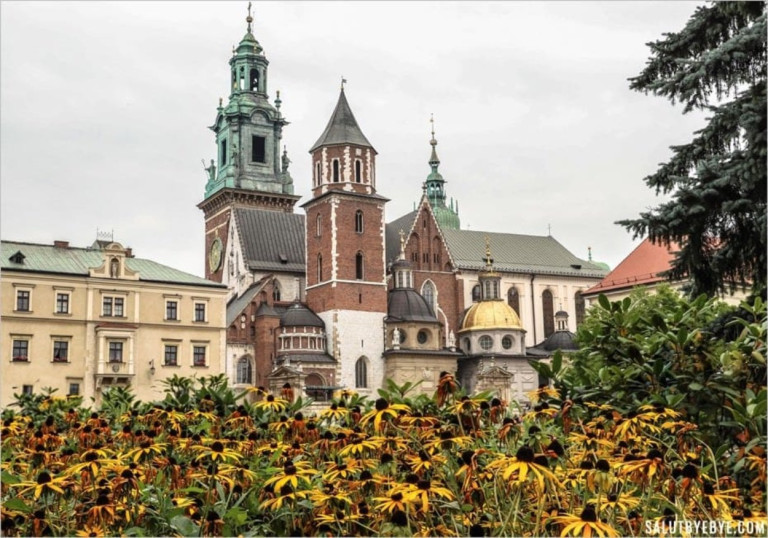
Tour of Wawel Castle in Krakow: A complete guide to planning your visit
Lire la suite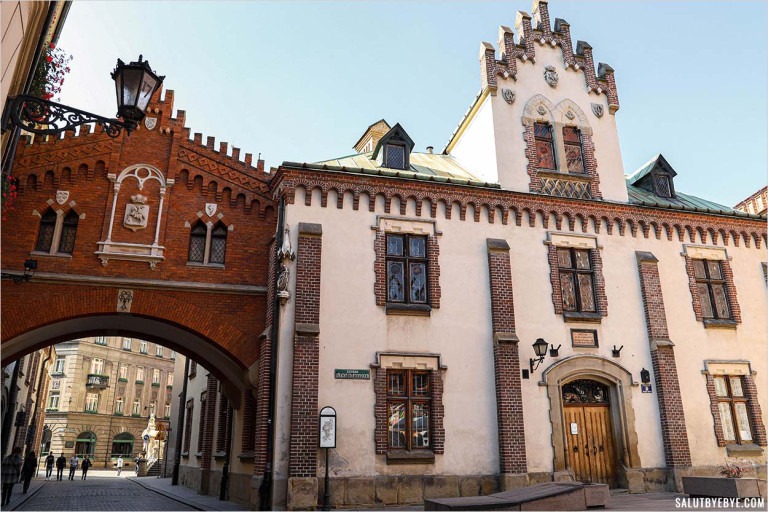
Visiting Krakow’s old town, Stare Miasto: what to see and know
Lire la suiteItineraries for visiting Krakow
To plan your trip to Krakow, it is helpful to adapt your itinerary to the length of your stay. Between the historic center, the districts, the museums, and day trips, your days fill up very quickly.

Sites of remembrance in Krakow
Krakow is home to several key sites for understanding the history of the German occupation, the ghetto, and the destruction of the Jewish community. These are important visits that, in my view, call for taking your time and having a certain mental space available.
In the city, these sites of remembrance are not limited to a single isolated museum. They are scattered across several districts and highlight different facets of this history: Kazimierz helps you understand what Jewish life in Krakow was like before the war. Podgórze tells the story of the ghetto and confinement. Several museums such as Oskar Schindler's Factory, the Eagle Pharmacy, the site of Plaszow, and the former Gestapo HQ on Pomorska Street then allow you to deepen your understanding of the occupation and repression.
Podgórze and the Krakow ghetto
Located on the opposite bank of the Vistula, Podgórze is one of the most important places for understanding the history of World War II in Krakow: this is where the Nazis established the Jewish ghetto in 1941.
Today, several sites help you grasp what it was really like. Ghetto Heroes Square, with its empty chairs, remains one of the city's most striking memorials. Just a few steps away, the Apteka pod Orlem (Under the Eagle Pharmacy) recalls the role of pharmacist Tadeusz Pankiewicz, who risked his life to help the residents confined inside the ghetto.

Museums and sites related to the occupation
Several museums then allow you to deepen your understanding of this period.
Oskar Schindler's Factory is undoubtedly the best-known site to visit. I found the museum (photo below) particularly well designed: modern, educational, and very immersive. It helps you understand daily life in Krakow under German occupation.
A little farther south, the site of Plaszow, a former concentration camp on the hills overlooking the city, remains a very distinctive place of remembrance. Long difficult for visitors to interpret, it is now the focus of a development project with interpretive trails and a permanent exhibition.
Finally, the museum housed in the former Gestapo headquarters on Pomorska Street focuses more specifically on repression and the Polish resistance.

Exploring Krakow's memorial sites in detail

Pomorska Street museum in Krakow: tour of the former Gestapo headquarters
Lire la suite
Visiting the Eagle pharmacy (Apteka pod Orłem), former pharmacy of the Krakow ghetto
Lire la suite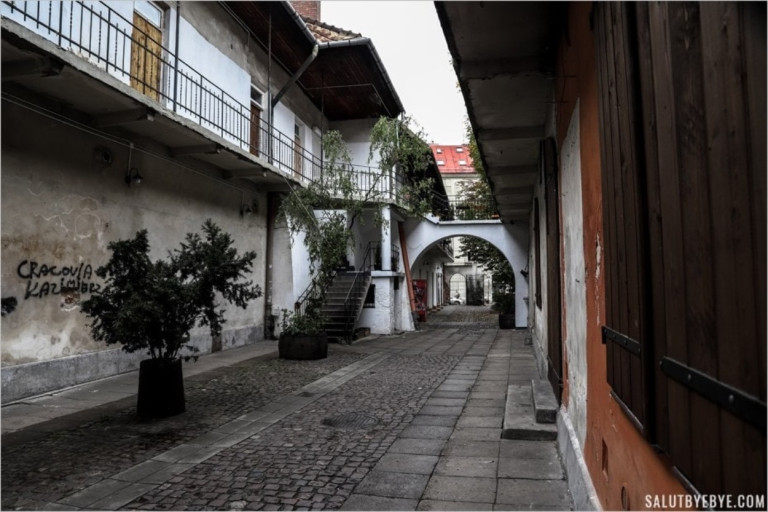
Visiting the filming locations of Schindler’s List in Krakow
Lire la suite
Visiting the Płaszów Camp in Krakow, a little-known concentration camp
Lire la suite
Visiting the Podgórze district and memorial sites around the former Jewish ghetto of Krakow
Lire la suite
Visiting Schindler’s factory in Krakow: complete guide and practical tips
Lire la suiteAfter these emotionally demanding visits, the region also allows you to discover other sides of Lesser Poland.
Excursions to take around Krakow
If you are staying several days in Krakow, I recommend planning at least one excursion in the surrounding area. Some of them are among the most visited sites in Poland and are easily accessible in half a day or a full day from the city.
Three excursions appear very often in itineraries:
- The Wieliczka Salt Mines;
- Auschwitz-Birkenau;
- Zakopane and the Tatra Mountains.
Three very different experiences: unique underground heritage, a major site of remembrance, or a nature getaway in the mountains.
The Wieliczka Salt Mines
The easiest to include in a short stay is generally Wieliczka. The mines are located about fifteen kilometers (about 9 miles) from Krakow and the visit takes around half a day.
You head underground to walk through an immense network of galleries, chapels carved out of salt, and underground lakes. The site is impressive and very well organized for visitors.
The visit must be done as part of a group and at a specific time. If you want a tour offered in English, it is recommended to book in advance.

Auschwitz-Birkenau
Visiting the camps requires a slightly different kind of planning. The memorial is located about 1 hr 15 min by road from Krakow (about 75–80 km / 45–50 miles), and the visit is long and emotionally intense. It is essential to book in advance, as access to the site is limited and in very high demand.
Self-guided access is only possible at certain times and with a prior reservation. Many travelers therefore opt for an organized tour from Krakow, which makes transportation and logistics easier.
- Hello Cracow tour with pickup, offered in English.
- Poland Explore tour with hotel pickup or meeting point, available in English.
- Royal Cracow tour with central departure point, offered in English.

Zakopane and the Tatra Mountains
If you would prefer a more nature-focused excursion, you can also head to Zakopane and the Tatra Mountains. Located near the Slovak border, this small town is known for its wooden architecture, its markets, and its mountain scenery.
The atmosphere is completely different from that of Krakow. Allow about 2 hr 30 min of travel time in good conditions (roughly 100–110 km / 60–70 miles).

Below you will find detailed ideas as well as other places to discover: small towns, villages, religious sites, and natural landscapes around Krakow.

How to visit Auschwitz from Krakow in 2026?
Lire la suite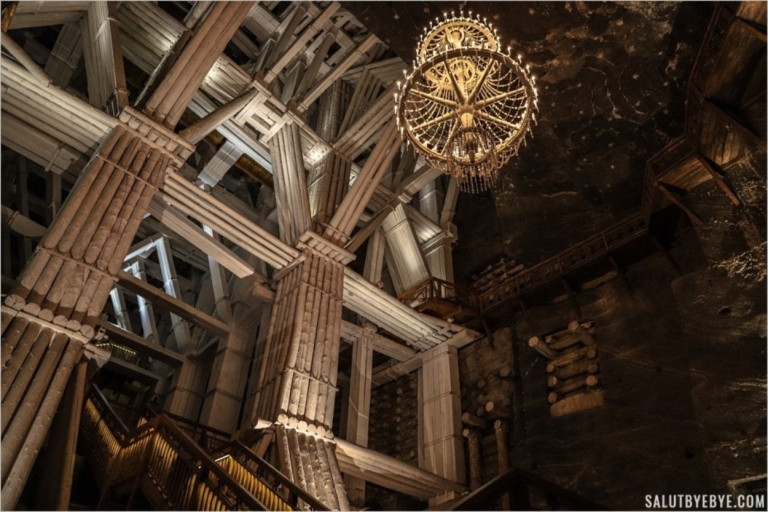
Visiting the Wieliczka salt mine from Krakow: complete guide & review (2026)
Lire la suite
What to do around Krakow? 10 day trips
Lire la suite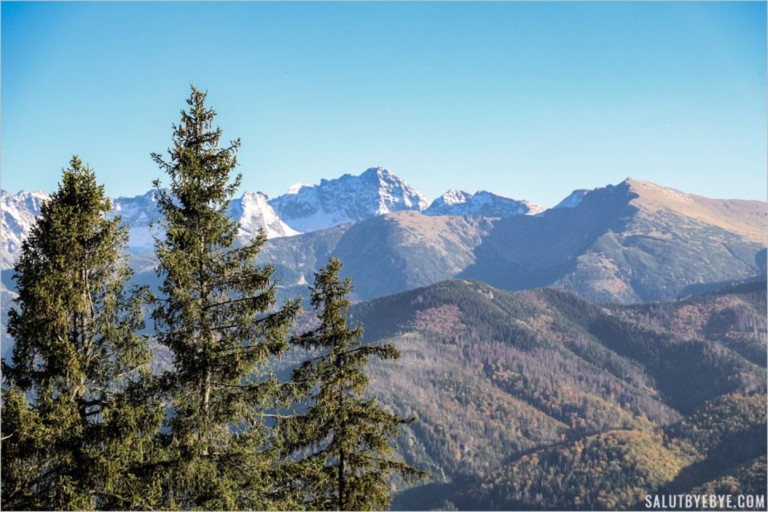
Visiting Zakopane from Krakow: best things to do in this mountain resort
Lire la suiteHow to get around Krakow
Krakow is very easy to explore on foot, and the dense network of trams and buses also makes day-to-day travel very straightforward. In my opinion, the Jakdojade app is still one of the best tools for quickly figuring out which tram or bus to take.
From John Paul II Airport, the most convenient option is usually the train. The station is linked to the terminal by a footbridge, and the trip to the city center takes about 20 minutes. The trains are operated by Koleje Małopolskie. And do not forget that public buses also serve the airport, in particular lines 209, 300 and the night bus 902.
As a reminder, the Krakow Card lets you combine museums and public transport at a price that can sometimes be advantageous depending on your itinerary.
For tickets, you will find 15, 30, 60 and 90 minute tickets, as well as 24 h, 48 h, 72 h and 7 day passes. At the time of writing, the full-fare 30-minute or single-ride ticket is 6 PLN (~1.4€ / about $1.50 / about £1.20), the 24 h zone I pass is 20 PLN (~4.7€ / about $5 / about £4), and the 7 day zone I pass is 65 PLN (~15€ / about $16 / about £13). Prices change, so always check before you leave.
| When to choose this option? | Mode of transport | Key points to remember |
|---|---|---|
| You arrive at the airport and want to get to the center quickly. | Train | About 20 minutes, easy access from the terminal, generally the smoothest option. |
| You are on a tight budget or your accommodation is better served by bus. | Bus | Slower, but useful depending on the time of day and the district you are heading to. Regular lines serve the airport. |
| You are staying several days and expect to travel around a lot. | Transport pass | The 24-hour to 7-day passes can work out better value than single tickets. |
| You are mostly visiting the historic center. | On foot | Very realistic in the central districts if you do not have mobility issues. |

Practical tip: some tram stops are located in the middle of the roadway. It can be surprising the first time. Check carefully where your line departs from and cross with caution.
Where to stay in Krakow
The best option for a first visit is usually to stay near the Old Town or in Kazimierz, so most of the main sights are within walking distance.
The good news is that you can still find good accommodation in Krakow at reasonable prices, even though rates have gone up since Covid and now vary more by season than they did a few years ago. If you want to make the most of your time, I'd suggest focusing on:
- Stare Miasto, to be as close as possible to the main highlights.
- Kazimierz, if you like a livelier, more creative atmosphere, with plenty of places to go out and eat.
- The immediate surroundings of these neighborhoods, if you're looking for better value for money without really being far away.
I've written a detailed article on this, but here are a few useful ideas to start with. These are well-located places, convenient for getting around on foot or by tram, depending on your plans for the day.
- Grand Ascot: a 4-star hotel close to the Rynek, with a sauna and gym.
- Hotel Jan: a solid choice if you're keeping an eye on your budget.
- Hotel Polski Pod Białym Orłem: right next to the Barbican, with traditional Polish decor and a very convenient location.
- Hotel Gródek: charming, central, and often a great option if you're looking for something a little more distinctive.
- Hotel Unicus: very well located, modern, with a restaurant in a vaulted cellar.
For a more unusual stay, Hotel Eden has a remarkable history. It appeared in Spielberg's film before it was renovated. A former residence of the founder of the Isaac Synagogue, it has a salt cave and is the only hotel in Poland with its own mikveh (Jewish ritual bath).

Going further: more ideas for visits in Krakow
Once you've seen the main highlights, Krakow still works very well with additional, secondary visits, walks, viewpoints, and a few experiences that add another dimension to your stay.
You can, for example, explore the city from the water:

Other ideas to consider:
- Krakow's mounds, to see the city from a different angle and gain a bit of elevation.
- The nice viewpoints, if you like urban panoramas and spots that are a little more off the beaten path.
- Nowa Huta, if communist urban planning, historical contrasts, and unusual neighborhoods interest you.
- The filming locations of Schindler's List, if you would like to combine cinema, remembrance, and the contemporary city.
For food, I would recommend reading my dedicated article. Polish cuisine is hearty, sometimes more rustic than in France, but it also holds some very good surprises, especially if you like soups, mushrooms, duck, beetroot, or street food specialties.

Which mounds should you visit in Krakow? Guide to the Kopce and viewpoints
Lire la suite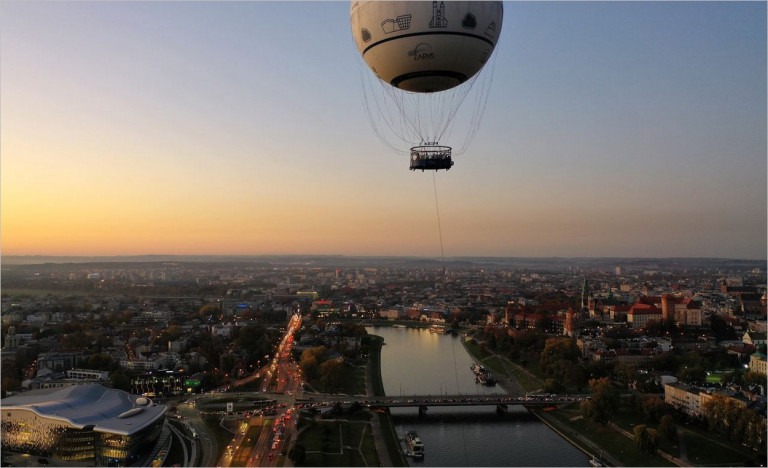
The best views of Krakow: 9 panoramas not to be missed
Lire la suite
What to eat in Krakow: Polish specialties and best restaurants
Lire la suiteWhat is the best time to visit Krakow?
The best time to visit Krakow is often from May to September, when the days are long, the terraces are lively, and overall visiting conditions are more comfortable.
That said, each season has its appeal. Krakow's weather is quite similar to that of northeastern France, with clearly marked seasons:
- In summer, temperatures are often around 15 to 25°C (about 59 to 77°F), with a few possible heatwaves.
- In spring and autumn, the climate is often very pleasant for sightseeing, even though showers and wind can make some days more challenging.
- In winter, the cold is more pronounced, sometimes dry, sometimes snowy, with short days but a distinctive atmosphere.
What you especially need to anticipate is the logistics of certain visits outside the high season.
From mid-October onward, several places switch to "low season" mode:
- The Auschwitz-Birkenau camp closes earlier in winter (last entry around 2 pm in December compared with 7 pm in summer). You can stay up to 90 minutes after the last entry, but the time slots are limited.
- Certain parts of the castle are closed between November and March.
- Outdoor sites (Plaszow, mounds, parks) may be less pleasant to visit if it snows or rains.
Tip – If you would like to visit Krakow in good conditions without making things too complicated, aim for May, June, September, or early autumn. You often get a good balance between weather, daylight hours, and atmosphere.
What you're better off booking in advance for a trip to Krakow
You do not have to book everything weeks in advance, but some sights and excursions are clearly worth planning ahead, especially in high season or if you care about a specific time slot.
| What you're better off booking | Why |
|---|---|
| Auschwitz-Birkenau | Reservation required; English-language time slots can fill up quickly. |
| Schindler's Factory | The museum is very popular and can sell out quickly. |
| The salt mines | Booking is recommended for a tour offered in English. |
| Your accommodation | Well-located hotels and rentals fill up fast. |
| Wawel | English-language options are more limited than those in Polish. |

A few practical reference points before you go
A few simple details can help you avoid hesitation:
- Electrical outlets: no adapter needed if you are coming from France or Belgium.
- Currency: Poland has not adopted the euro. The currency is the zloty (PLN). Even though exchange rates fluctuate, you can divide the price in zloty by four to estimate the price in euros. You can get an idea of current exchange rates on this currency exchange office comparison site.
- Language: knowing English helps a lot (more tour time options, many sites and information only available in English and Polish). But Poles are very kind and really do their best to help you. A smile, a word translated on your smartphone… and communication almost always ends up working despite the language barrier.
The Traveler's Memo for visiting Krakow
Krakow is a city you can get to know quickly, but that you'll also want to take your time exploring. It works very well for a first weekend in Poland, but it really comes into its own when you're ready to go beyond the main sights and also discover its neighborhoods, memorial sites, riverbanks, and the excursions around it.
If you're planning your stay, I hope this page will help you make good choices without getting lost in a mass of conflicting information.

