

Going on a vacation in France without a car – is that really realistic? Yes, as long as you choose your destination carefully. Some cities are great to explore on foot but quickly feel limited after 2 days; others, on the contrary, make it easy to get around by train, bus, boat, or with local shuttles.
I got my driver's license very late… so inevitably, before I even had a choice, I learned to travel differently. Train, tram, bus, boat, walking: over the years, I've tried many options to visit France without a car, whether for a weekend, a week by the sea, or a more itinerant trip.
Today, traveling without a car can also be a real choice: to avoid the fatigue of driving, keep fuel costs down (especially with fuel prices regularly going up), avoid toll and parking fees, or simply enjoy a slower, more relaxing stay.
In this guide, I suggest 25 car-free destinations in France, grouped by what you might be looking for: seaside, hiking, cultural city break, family getaway, wellness stay… Each time, you'll find an idea of the ideal length of stay and solutions for getting around without driving.
- How to choose a car-free vacation destination in France?
- Seaside destinations for car-free vacations in France
- Nature and hiking destinations without a car
- The best cities for car-free vacations in France
- Where to go on a family vacation without a car?
- Where to go for a short stay without a car (2 to 4 days)?
- Traveler's memo for taking a vacation in France without a car
How to choose a car-free vacation destination in France?
Choosing a car-free destination doesn't only depend on what you like and what you're in the mood for… but above all on how easy it is to get around once you're there. That's often where everything is decided.
6 criteria to choose your car-free destination wisely
- Length of stay – For a week, choose a base that lets you explore the surrounding area easily (Nice, Marseille, La Rochelle…). For a weekend, a compact city like Dijon is more than enough.
- Train accessibility – Direct TGV or TER routes make planning much easier and help you avoid tiring connections.
- Local transport – Tram, bus, boat, seasonal shuttles… some cities are very well equipped, others much less so.
- Seasonality – In the off-season, transport can be less frequent: you may need to walk more or plan your routes in advance.
- Location of your accommodation – Staying close to a train station or the city center makes all the difference.
- Flexibility – Plan a small budget for a taxi or an organized excursion if needed. If a place appeals to you but seems hard to reach, some tours with transport included make it easy to get there.
Which car-free destination to choose based on your travel style?
Are you hesitating between several ideas? This table helps you quickly spot the destinations that are best suited to your way of traveling, the length of your trip, and how easy it is to get around once you are there.
| You're looking for... | Where to go |
|---|---|
| A week by the sea + excursions | Nice, La Rochelle, Marseille, Arcachon, Saint-Malo |
| Sea without a car + boat trips | La Rochelle, Quiberon, Saint-Malo, Arcachon |
| A base to easily explore the region | Paris, Bordeaux, Strasbourg, Avignon/Arles, Lyon |
| Nature and hiking | Annecy, Montpellier, Cahors, Laruns |
| Traveling with children | Nantes, Annecy, Carcassonne |
| A short stay (2 to 4 days) | Sète, Toulon, Aix, Dijon, Troyes, Roscoff, Thonon |
| An easy destination to start with | Nice, Paris, Strasbourg, Bordeaux, Nantes |
How to read this table? The destinations suggested here are not only pleasant to visit: above all, they let you get around easily without a car, whether on foot, by train, by bus, or by boat. If you are staying several days, focus on cities that also offer simple excursions in the surrounding area.
Seaside destinations for car-free vacations in France
Want to head to the seaside without relying on a car? Here are destinations where you can spend several days – or even a full week – without driving, thanks to a good transportation network and plenty of excursion options.
Each place presented here works as a base: you can stay there and easily explore the surrounding area by train, bus, boat, or on foot.
On the agenda in this section:
- Nice and the French Riviera
- La Rochelle
- Marseille
- Arcachon and the surrounding area
- Saint-Malo
- Quiberon
- Le Croisic and the Côte Sauvage
1. Visiting Nice and the French Riviera without a car
The French Riviera is an ideal destination for spending a vacation in France without a car, with plenty of places easily accessible from Nice. I was lucky enough to live there for a while… and it is a particularly pleasant city: full of sunshine, color, and superb views... Nice is an excellent base for exploring the entire French Riviera without a car, thanks to a very extensive public transport network.
An easy-to-reach city
Nice is particularly well connected, whether by train or by plane. The city has an SNCF train station right in the center. It also has an airport located by the sea, one of the few in France. It is directly served by a tram line, which makes arriving very smooth when you are not driving. You just have to go up the Promenade des Anglais or the parallel streets to reach the city center. And once you are there, everything is within bus or tram reach!
What to do in Nice?
You can admire the views from Castle Hill, stroll through Old Nice, wander along the Promenade des Anglais, or explore the Cours Saleya market. On the cultural side, do not miss the Matisse Museum, Villa Masséna, the Museum of Modern and Contemporary Art, or Saint Nicholas Cathedral.
Exploring the region without a car
Thanks to the regional train (TER), which runs along the entire coast, and to the buses, you can easily get around without a car, sometimes in under 30 minutes:
- On the coast: Èze, Saint-Paul-de-Vence, Antibes, Cannes, Menton, Monaco, and even Ventimiglia in Italy;
- In the mountains: Saint-Dalmas-le-Selvage, Saint-Étienne-de-Tinée, Isola 2000 via lines 91, 92, or the 100% snow buses set up in winter.
By boat, you can also treat yourself to a day trip to the very beautiful Lérins Islands, a green haven with no road traffic.
Transport in Nice – Managed by Lignes d'Azur. Tram, dense bus network in and around the city.
Why choose Nice? For a very easy car-free week, with the sea, nearby towns, hilltop villages, and excursions to Italy or Monaco.
- Ideal length of stay: 3 to 4 days for Nice, a week or more to explore the French Riviera.
- Ease of access without a car: excellent, with a central train station, airport connected by tram, coastal TER, tram, and buses.

2. Visiting La Rochelle without a car
La Rochelle is an ideal destination for a car-free seaside vacation, with plenty of easily accessible day trip options around the city. Between the old harbor, islands, beaches, and bike rides, it makes a very pleasant base for exploring over several days without ever needing to drive.
An easy city to enjoy without a car
Compact and enjoyable, La Rochelle is easy to get around on foot or by public transport. Three iconic towers (Saint-Nicolas, de la Chaîne, and de la Lanterne) watch over the entrance to the old port, the lively heart of the city.
For sightseeing, you can visit the Maritime Museum, the Natural History Museum, or even a former World War II bunker, discreet yet surprising.
Exploring the surroundings without a car
From La Rochelle, you can easily plan several day trips:
- By boat: see Fort Boyard, or head to Île d'Aix or Île d'Oléron;
- By bike or by bus: explore Île de Ré, which is very well developed and easy to reach without a car;
- Along the coastline: enjoy the beaches, the Port des Minimes, or seaside strolls.
You can easily fill several days by alternating visits, boat trips, and time in nature.
Why choose La Rochelle? For a car-free vacation combining the old harbor, islands, boat trips, cycling, and easily accessible beaches.
- Ideal length of stay: 2 to 3 days for the city, up to a week including Île de Ré, Île d'Aix, and the coastline.
- Ease of access without a car: very good, with a train station close to the center, buses, river shuttles, and many boat connections.

Transport in La Rochelle – The Yelo network offers buses, a river shuttle, and the Bus de Mer, which is very convenient for getting around between different districts. The train station is close to the city center.
3. Visit Marseille without a car
Marseille is an ideal destination for spending a car-free vacation in the South of France, with easy access to the sea, the Calanques, and several must-see towns nearby. With its mix of urban atmosphere, spectacular nature, and varied excursions, it makes a very well-rounded base for a one-week stay without driving.
A city that's easy to explore without a car
Head to Marseille, a vibrant, contrasting city where you can go from the alleyways of Le Panier to the trails of the Calanques in just a few bus stops. For sightseeing: stroll around the Old Port, climb up to Notre-Dame-de-la-Garde, visit the Mucem, the Unité d'Habitation (Cité Radieuse), or the colorful streets of the Panier district.
The Prado beaches are easy to reach by public transport, as are the Frioul Islands and Château d'If (shuttle here).
Exploring the surrounding area without a car
From Marseille, it's easy to get to several major sites:
- The Calanques, accessible by bus or boat, for hiking or swimming in spectacular scenery;
- Cassis, a charming harbor reachable by train + bus, perfect for a day trip;
- The Côte Bleue (Niolon, Carry-le-Rouet), accessible by regional TER train with magnificent sea views;
- Aix-en-Provence, less than an hour away by bus, offering a more elegant, cultural atmosphere.
By combining sea, city, and excursions, you can easily change things up every day.
Why choose Marseille? To enjoy a large city, the sea, Calanques, islands, and excursions in Provence without renting a car.
- Ideal length of stay: 3 days for Marseille, 5 to 7 days if you add the Calanques, Cassis, the Côte Bleue, or Aix-en-Provence.
- Ease of access without a car: very good, with Saint-Charles train station, metro, tram, buses, boat shuttles, and regional connections.

Transport in Marseille – Managed by the RTM: metro, tram, buses. The airport–Saint-Charles station shuttle (info here) is very convenient, and the station is directly connected to the metro.
4. Visiting the Arcachon Bay without a car
Arcachon Bay is an ideal destination for a car-free vacation between the ocean, nature, and traditional villages, with many excursion options easily accessible from Arcachon. Between beaches, forests, dunes, and boat trips, it's a perfect place to enjoy a variety of activities over several days without ever needing to drive.
A pleasant base without a car
The town of Arcachon is an excellent base: the SNCF train station is close to the center, and you can easily get everywhere on foot, by bus, or by boat. Beyond the "Ville d'Été" ("Summer Town"), you can explore the Ville d'Hiver ("Winter Town") and its villas with eclectic architecture. If you enjoy viewpoints, the Sainte-Cécile observatory offers a lovely view of the bay.
Exploring the bay without a car
From Arcachon, you can easily plan several day trips:
- The Dune of Pilat, accessible by bus, for a spectacular experience between ocean and forest;
- Cap Ferret, by boat, to discover the other side of the bay and its oyster-farming villages;
- L'Île aux Oiseaux ("Bird Island") and the cabanes tchanquées (stilted cabins), on a boat trip;
- Villages around the bay such as Andernos or Le Canon, accessible by boat or bus.
By alternating between beaches, strolls, boat excursions, and local discoveries, you can easily put together a one-week stay without getting bored.
Why choose Arcachon? For a nature-focused, car-free vacation between the bay, dune, beaches, oyster-farming villages, and boat crossings.
- Ideal length of stay: 3 days for Arcachon, one week to explore the bay at a more relaxed pace.
- Ease of access without a car: good, with a central train station, buses to the Dune of Pilat, and boat shuttles across the bay.

Local transportation – The train station is central, the Baïa buses serve the area well, and the boat shuttles make it easy to cross the bay. You can also plan your routes here.
5. Visiting Saint-Malo without a car
Protected by its ramparts, Saint-Malo is a Breton town steeped in history, once a privateer stronghold. You'll find beautiful beaches, spectacular tides, and a historic center perfect for wandering. It's also an excellent base for spending a car-free vacation in Brittany, alternating between sightseeing, strolls, and excursions along the Emerald Coast.
If you enjoy walking, the famous GR34 trail runs through here and offers magnificent viewpoints.
At low tide, you can walk to Grand Bé, an uninhabited islet where Chateaubriand is buried. And to prolong your escape, several boat trips are available from the port: to Dinard on the opposite bank of the Rance, to Cancale, Cézembre, or the Chausey Islands. The Compagnie Corsaire website lists all the routes.
By combining coastal strolls, trips out to sea, and exploring the surrounding area, it's easy to fill several days without limiting yourself to the town itself.
Why choose Saint-Malo? For an easy car-free base in Brittany, with a mix of ramparts, beaches, coastal path, islands, and boat excursions.
- Ideal length of stay: 2 to 3 days for Saint-Malo, up to a week including the Emerald Coast and nearby islands.
- Ease of access without a car: good, with a train station within walking distance, local buses, and many sea connections in season.

Transportation in Saint-Malo – The SNCF train station is a 15–20 minute walk from the intra-muros center. Local bus routes are operated by the MAT network.
6. Visiting the Quiberon peninsula without a car
Quiberon can be reached by bus from the SNCF train station in Auray. It's an excellent base for exploring the entire peninsula car-free, with its beaches, coastal paths, and sea air. You can easily spend several days there, alternating between strolls, excursions, and nearby discoveries.
It's also a great starting point for visiting the neighboring islands thanks to the Océane ferry routes: Belle-Île-en-Mer, Houat, and Hoëdic are all accessible by boat, making it easy to plan several day trips.
If you're a history lover, don't miss Carnac, with its megaliths and dolmens (Mane Karioned, Ménec Alignments, Kermario Alignments). It's doable without a car, especially in summer: the bus network is expanded and offers more flexibility. Outside the high season, you'll need to be prepared to walk more.
By alternating coastal strolls, island excursions, and visits around Carnac, it's easy to plan a varied week without a car.
Why choose Quiberon? For a car-free vacation in Brittany that combines a peninsula, beaches, coastal paths, islands, and the Carnac megaliths.
- Ideal length of stay: 2 to 3 days for Quiberon, up to a week including Belle-Île, Houat, Hoëdic, and Carnac.
- Ease of access without a car: fair to good, especially in season, with buses from Auray, boats to the islands, and summer shuttles.

Transport in Quiberon – Outside the high season, the BreizhGo 601 line connects Auray to Quiberon via Plouharnel. To get to Carnac from Auray or Plouharnel, also check line 619. In summer, the Tire-Bouchon, a seasonal train between Auray and Quiberon, is a very convenient way to avoid traffic jams. To visit the Carnac alignments, there are summer shuttles, which are very useful because the sites are sometimes far from the center.
7. Visiting the Côte Sauvage and the Le Croisic peninsula without a car
Le Croisic is a small, very charming town that is easy to reach by train. You hear the gentle lapping of the boats, you watch the waves from the coastline, and you end the day facing the ocean. A real breath of salty sea air.
It is also an excellent base for exploring the entire Côte Sauvage and the peninsula without a car. Nearby:
- Batz-sur-Mer and its cliffs;
- Guérande and its salt marshes;
- Le Pouliguen;
- And of course La Baule with its long beach.
Thanks to the train and buses, it is easy to string together strolls between coastal villages, marshes, and beaches, and to change atmospheres over several days.
Why choose Le Croisic?

Local transport – The Aléop network makes it easy to connect the coastal towns. The TER line also runs along the entire coast between Le Croisic, Le Pouliguen, La Baule, and Saint-Nazaire, which makes getting around without a car very simple.
Nature and hiking destinations without a car
Want wide open landscapes, fresh air, and a more unplugged vacation… without spending hours behind the wheel? The good news is that it is entirely possible to enjoy nature in France without a car. Some destinations even make it easy to alternate between hikes, villages, lakes, mountains, or the seaside thanks to regional trains, local buses, and seasonal shuttles.
Whether you enjoy walking for a few hours before heading back to a lively terrace, or getting away to the countryside for several days, these destinations offer a good balance between a change of scenery, accessibility, and ease of planning.
What you'll find in this section:
8. Visit Montpellier and Pic Saint-Loup without a car
If you like mixing an urban vibe, lively café terraces, characterful villages, and big breaths of fresh air, Montpellier is an excellent nature-focused base without a car in the south of France.
You can easily spend a few days enjoying the historic center, the Saint-Roch neighborhood, the Fabre Museum, or the beaches accessible by public transport… then set off to explore the Hérault hinterland without needing to drive.
The star attraction in the surrounding area is still Pic Saint-Loup, an iconic peak visible from parts of the region. Several trails let you explore the area, crossing garrigue scrubland and vineyards, with beautiful panoramic views of the Cévennes and the Mediterranean.
Explore the surroundings without a car
From Montpellier, several getaways are easy to organize:
- Pic Saint-Loup, accessible by bus and then on foot for hiking enthusiasts;
- Saint-Guilhem-le-Désert, one of the most beautiful villages in France;
- The beaches of Palavas-les-Flots or La Grande-Motte;
- Wine tours in the Hérault vineyards.
If you would rather avoid any logistics, there are also organized excursions to Pic Saint-Loup, with tastings and a chance to discover the local landscapes.
Why choose Montpellier? To combine a sunny city break, beaches, villages, and nature without relying on a car.
- Ideal length of stay: 2 to 4 days, depending on how much hiking you want to do and how many excursions you plan.
- Ease of access without a car: good, thanks to the tram, regional buses, and the many organized excursions.
Transportation in Montpellier – The city is served by tram, buses, and interurban shuttles to Sète, Palavas-les-Flots, La Grande-Motte, and the hinterland. Saint-Roch train station is very central, and Montpellier-Méditerranée Airport is connected to the city center by shuttle bus.
9. Visiting the Lot from Cahors without a car
The Lot is one of those regions where you naturally slow down. Hilltop villages, green valleys, hiking trails, local markets, limestone cliffs… it's a perfect destination if you're looking for a nature-focused vacation without a car, far from big cities and mass tourism.
Even though some areas are still easier to reach by car, it's entirely possible to discover a beautiful part of the department without driving by using Cahors as your base.
The town has a pleasant atmosphere, with its old lanes, market, Saint-Etienne Cathedral, and strolls along the Lot River. But above all, it allows you to reach several emblematic sites thanks to the regional bus lines.
Exploring the Lot without a car
From Cahors, you can easily organize several outings:
- Saint-Cirq-Lapopie, listed among the most beautiful villages in France;
- The Lot Valley and its spectacular landscapes;
- The prehistoric cave of Pech Merle, accessible via a hike from Conduché;
- More low-key villages and stages of the GR651.
The Lot department even offers an itinerary designed especially for travelers without a car, with several suggested routes and visits accessible by public transport.
Why choose the Lot? For a peaceful countryside escape with beautiful villages, hikes, heritage, and unspoiled landscapes.
- Ideal length of stay: at least 3 to 5 days.
- Ease of access without a car: moderate, but very doable with a bit of planning around Cahors.

Local transportation – The liO Occitanie website lets you look up regional bus lines and map out your routes within the department.
10. Visiting Laruns and the Col du Pourtalet without a car in the Pyrenees
If you dream of mountains, wide-open spaces, and truly refreshing vacations without driving, Laruns is a beautiful destination. Nestled in the heart of the Ossau Valley in the Pyrénées-Atlantiques, this village is an excellent base for enjoying the mountains in a different way.
The trip takes a bit of planning — train to Pau, then bus to Laruns — but once you get there, the atmosphere changes completely. You slow down and soak up the silence, the fresh air, and the spectacular scenery surrounding the valley.
Exploring the Pyrenees without a car
From Laruns, several outings are accessible by public transport or on foot:
- Artouste-Fabrèges and the superb Lac de Fabrèges;
- The famous Artouste train, one of the highest tourist trains in Europe;
- The Col du Pourtalet, on the Spanish border, perfect for admiring the Pyrenean landscapes;
- Hikes around the Pic du Midi d'Ossau, the symbol of the valley.
Even if you are not very sporty, it is easy to enjoy the area thanks to accessible strolls, viewpoints, and the peaceful atmosphere of the village.
Why choose Laruns? For a car-free mountain vacation in one of the most beautiful settings in the French Pyrenees.
- Ideal length of stay: 4 to 7 days.
- Ease of access without a car: average, but the scenery more than makes up for the planning required.
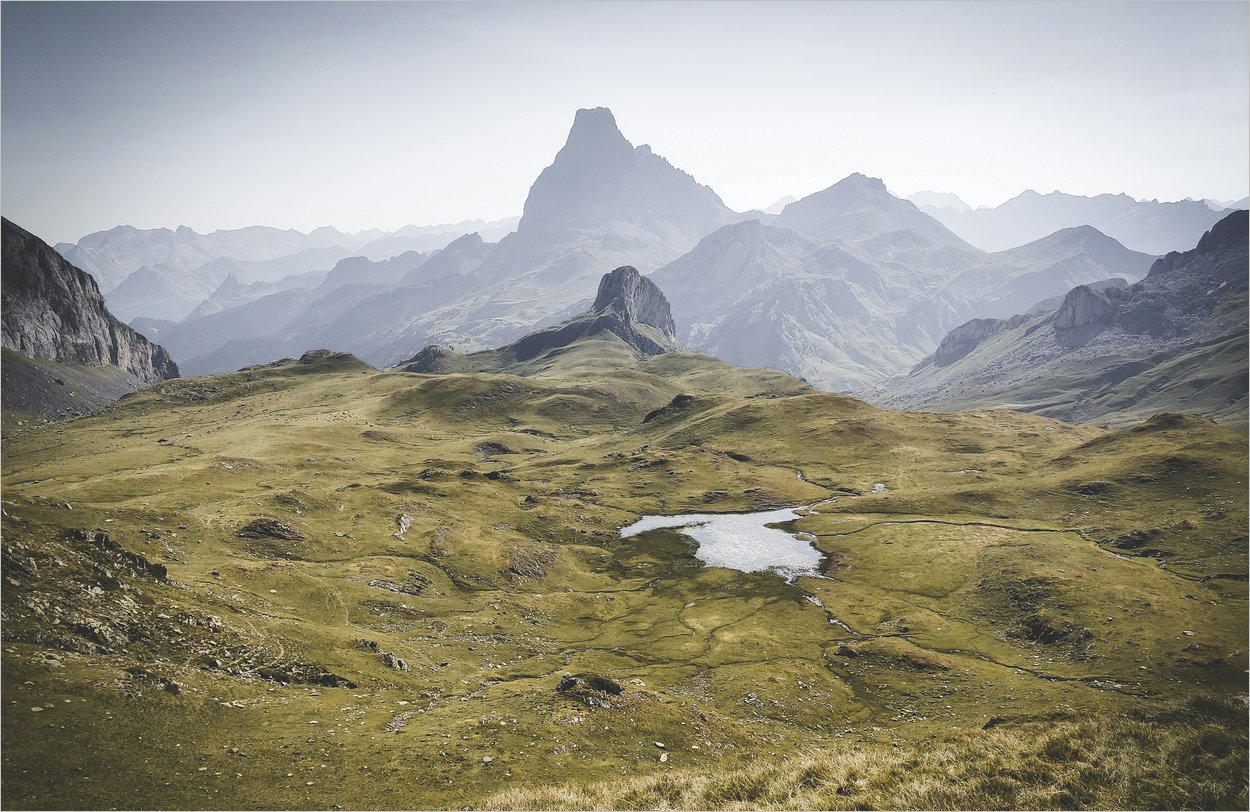
Transport in the area – The 524 Pau–Laruns–Gourette line lets you reach Laruns from Pau. To get to Artouste-Fabrèges or the Col du Pourtalet, also check the seasonal bus lines in the Ossau Valley.
The best cities for car-free vacations in France
If you like to alternate between museums, old neighborhoods, food, excursions, and strolls without spending your whole stay in transit, some French cities are excellent bases for planning car-free vacations in France.
Thanks to regional trains, buses, trams, and organized excursions, you can easily multiply your discoveries while keeping a comfortable, easy-to-reach home base.
Whether you are dreaming of a cultural stay, a food-focused getaway, or a few days exploring several cities without driving, these destinations make it possible to travel in a much smoother and more relaxing way.
What you will find in this section:
11. Visiting Paris without a car
Even if Paris can feel a little overwhelming at first, it's probably one of the easiest cities in Europe to visit without a car. Between the metro, RER, buses, suburban trains, and the many train stations, almost everything is accessible by public transport.
Whether you're coming for a cultural weekend, a longer vacation, or a few days of exploring, the capital makes it easy to string together museums, historic neighborhoods, monuments, and day trips without ever needing to drive.
What to do in Paris without a car?
You can wander through the little streets of Montmartre, explore the Marais, admire the major museums, enjoy the banks of the Seine, or get some height on panoramic terraces like the one at Galeries Lafayette.
Exploring the surrounding area without a car
One of Paris's great advantages is how easy it is to take multiple day trips:
- Versailles and its château;
- Giverny and Monet's gardens;
- Provins, a beautiful medieval town;
- Vaux-le-Vicomte;
- And of course Disneyland Paris, which is very easy to reach by RER.
So Paris also works very well as a base for discovering part of the Île-de-France region without a car.
Why choose Paris? For a car-free cultural vacation with very easy access to museums, monuments, and day trips around the capital.
- Ideal length of stay: 3 days to a week or more, depending on your pace.
- Ease of access without a car: excellent, with one of the most extensive public transport networks in Europe.

Transport – The network is managed by RATP. The metro, RER, tram, buses, and trains make it very easy to get around Paris and the surrounding region.
In terms of access, the major Paris train stations connect to all of France, and the airports are served by public transport: Roissy CDG via the RER B, Orly via metro line 14.
12. Visiting Bordeaux without a car
Between its elegant facades, lively quays, great restaurants, and world-famous vineyards, Bordeaux is a perfect destination for a car-free vacation that combines culture, food, and easy day trips.
The city is very easy to explore on foot or by tram. You can stroll along the banks of the Garonne, admire the famous water mirror, enjoy the many parks, or take in a view from above at the Pey-Berland Tower, which offers a beautiful panorama over Bordeaux's rooftops.
And of course, it is impossible to talk about Bordeaux without mentioning the vineyards!
Exploring the surrounding area without a car
The city makes an excellent base for discovering several emblematic sites in the region:
- Saint-Émilion, accessible by train and then bus via Libourne;
- The Bordeaux vineyards and their tastings;
- The Arcachon Bay, easily reached by train.
The Cité du Vin is a must-see in Bordeaux itself, but you can also book an organized tour from Bordeaux, for a half day or a full day, with tastings and transportation included.
Why choose Bordeaux? To combine an elegant city break, food, vineyards, and varied day trips without driving.
- Ideal length of stay: 3 to 5 days.
- Ease of access without a car: excellent, thanks to the tram, regional trains, and many organized tours.

Transportation in Bordeaux – The TBM network makes it easy to get around the whole metropolitan area by tram and bus. Lines 1 and 48 also serve Mérignac Airport.
13. Visit Strasbourg and Colmar without a car
Between half-timbered houses, canals, flower-filled villages, and hearty food, Strasbourg and Colmar are among the best destinations in France for a car-free vacation. Everything fits together smoothly: regional trains, villages reachable by bus, organized excursions… and a real sense of escape, especially in autumn and during the Christmas market season.
Each city has its own personality. Strasbourg draws visitors with its immense Gothic cathedral, its canals lined with half-timbered houses, and the Petite France district, a former tanners' quarter that has become one of the most photogenic parts of the city. Colmar, which is more compact, immediately wins you over with its colorful facades, cobbled lanes, and an atmosphere that feels almost magical.
Exploring Alsace without a car
From Strasbourg or Colmar, it's very easy to discover part of Alsace:
- The Alsace Wine Route, accessible thanks to regional trains and the Kut'zig shuttle;
- Eguisheim, one of the most beautiful villages in France;
- Baden-Baden, a lovely German spa town about 1h15 from Strasbourg;
- Or Europa Park, which is easily accessible from Strasbourg.
Everything works particularly well without a car thanks to the very dense regional rail network.
Why choose Strasbourg and Colmar? To combine historic cities, Alsatian villages, food, and easy excursions without driving.
- Ideal length of stay: 4 to 7 days to enjoy both cities and explore Alsace.
- Ease of access without a car: excellent, with many regional trains, buses, and organized excursions.

Transport – Strasbourg International Airport is connected to the train station by a shuttle train in just a few minutes. Urban transport is managed by the CTS. Colmar is easy to reach by TER regional train from Strasbourg (about 30 minutes), then the Trace network allows you to get around the urban area.
14. Visiting Avignon or Arles without a car in Provence
Between hilltop villages, Roman heritage, lavender fields, vineyards, and the landscapes of the Camargue, Provence is one of the best regions to explore without a car… as long as you choose a good base.
And in this regard, Avignon and Arles work particularly well. Linked by train in about twenty minutes, these two cities make it easy to discover a large part of the region thanks to regional trains, buses, and organized excursions.
Two very different atmospheres
In Avignon, the atmosphere is lively and elegant, with the Palais des Papes, bustling little streets, café terraces, and the panorama from the Rocher des Doms. In summer, the Avignon Festival completely transforms the city.
Arles has a more rugged, distinctly Mediterranean feel. Roman arenas, ancient theater, sun-drenched alleys, Camargue culture… the city has a strong personality, reinforced by the famous Rencontres de la photographie.
Exploring Provence without a car
From Avignon or Arles, several excursions are easy to organize:
- Les Baux-de-Provence and the Alpilles;
- Saint-Rémy-de-Provence;
- Orange and its ancient theater;
- Châteauneuf-du-Pape and the vineyards;
- The Camargue and Saintes-Maries-de-la-Mer;
- And also Tarascon and its castle.
The region is particularly well-suited to a car-free vacation that combines culture, gastronomy, villages, and Provençal landscapes.
Why choose Avignon or Arles? To explore Provence without a car, between heritage, villages, vineyards, and Mediterranean landscapes.
- Ideal length of stay: 4 days to one week.
- Ease of access without a car: very good, thanks to regional trains, buses, and the many available excursions.

Transportation - The regional network Zou ! makes it easy to travel between Provençal towns and villages. In Avignon, urban transport is managed by Orizo, and in Arles by Envia.
15. Visiting Lyon without a car
Between the food, historical heritage, lively neighborhoods, and views over the city's rooftops, Lyon is an ideal destination for a car-free vacation. You can easily explore everything on foot or by public transport, with very different atmospheres from one neighborhood to the next.
You can go from the medieval feel of Vieux Lyon to the slopes of Croix-Rousse, climb up to Fourvière to admire the view, or simply enjoy the banks of the Rhône and the Saône.
And above all… it's hard to talk about Lyon without mentioning its food scene! Traditional bouchons, gourmet food halls, pastry shops, creative restaurants: the city is a delight for anyone who loves good cuisine.
What to do in Lyon without a car?
Among the must-sees:
- The Basilica of Fourvière and the Roman theaters;
- The famous traboules of Vieux Lyon;
- Place Bellecour and the riverbanks;
- The Croix-Rousse district;
- The Mur des Canuts and the city's many museums.
Thanks to the transport network, it's very easy to plan a full itinerary without ever feeling the need for a car.
Why choose Lyon? For an urban, car-free vacation that combines food, heritage, culture, and walks.
- Ideal length of stay: 3 to 7 days.
- Ease of access without a car: excellent, thanks to the metro, tramway, funiculars, and very well-connected train stations.

Transportation – The TCL network makes it easy to get around thanks to the metro, tramway, buses, and funiculars.
Lyon is also very well connected to the rest of France via the Part-Dieu and Perrache train stations. Saint-Exupéry Airport is linked to the city center by the Rhônexpress.
Where to go on a family vacation without a car?
Traveling with children without a car can seem complicated… but some French destinations are surprisingly well suited to it. Walkable city centers, easy-to-use transportation, family-friendly activities, gentle strolls, excursions without complicated logistics: there are real options for getting away peacefully without driving.
Whether you are looking for a fun weekend, a few days in the countryside, or a vacation that combines heritage with activities for children, these destinations let you enjoy your stay without piling on stressful journeys.
What you'll find in this section:
16. Visiting Nantes without a car
With its giant machines, strolls along the Loire, green spaces and laid-back vibe, Nantes is an excellent destination for a car-free family vacation. The city is pleasant to explore, public transportation is easy to use, and you'll have no trouble finding things to do for both kids and adults over several days.
The city center is still a manageable size, with a lively atmosphere that rarely feels overwhelming. You can easily alternate between cultural visits, food breaks and quieter moments in the city's many parks.
What to do in Nantes without a car?
- The famous Machines of the Isle of Nantes, a surprising artistic world inspired by Jules Verne with huge mechanical creatures, including a giant elephant that actually moves;
- The Château des Ducs de Bretagne (Castle of the Dukes of Brittany);
- Passage Pommeraye;
- The Jardin des Plantes (Botanical Garden);
- And the colorful village of Trentemoult, a former fishing village accessible by Navibus, a river shuttle that crosses the Loire.
And if you stay a little longer, Nantes is also a good base for easily reaching the Atlantic coast by train.
Why choose Nantes? For a car-free family vacation combining fun activities, culture, nature and very simple transportation.
- Ideal length of stay: 3 days to one week.
- Ease of access without a car: excellent, thanks to the tram, buses and river shuttles.
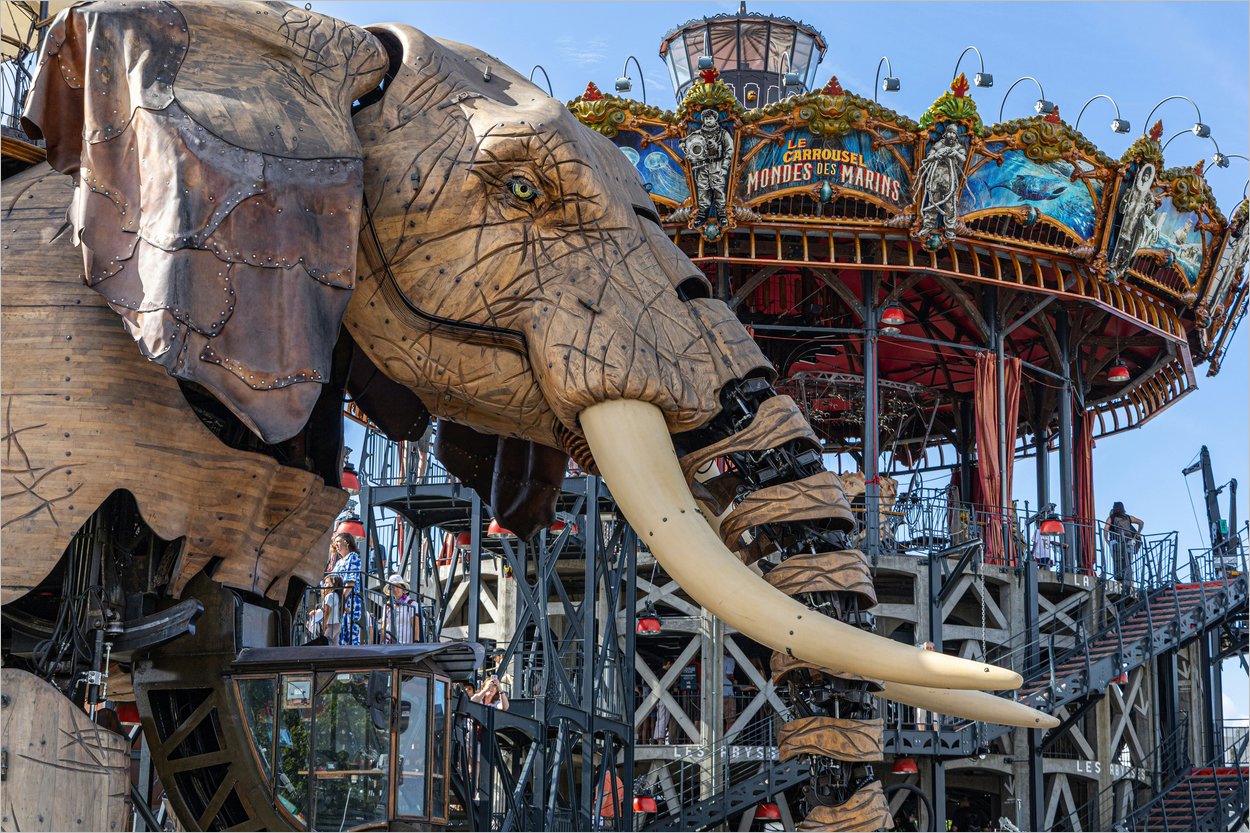
Transportation in Nantes - The Naolib network makes it easy to get around thanks to trams, buses, Chronobus and river shuttles. A shuttle also connects the airport to the city center.
From Nantes, it is also easy to reach the Atlantic coast by train, especially La Baule or Le Croisic.
17. Visiting Annecy without a car
Between the turquoise lake, the mountains, the charming old town and the many outdoor activities, Annecy is a perfect destination for a car-free family vacation. Everything is set up so you can alternate strolls, relaxing breaks and nature outings without relying on a car.
The historic center is very easy to explore on foot, with its canals, colorful facades, ice-cream shops and lively little streets. And as soon as you venture a bit beyond the center, the scenery quickly becomes spectacular.
What can you do around Annecy without a car?
From Annecy, several excursions are accessible thanks to shuttles and regional buses:
- Le Semnoz, perfect for a day in nature with views of the Alps;
- La Clusaz and Le Grand-Bornand;
- Hikes to Parmelan or lac de Peyre (Lake Peyre);
- Cruises on Lake Annecy, ideal with children.
Annecy also works very well for a more relaxed vacation, simply paced by strolls along the lake, markets and breaks on café terraces.
Why choose Annecy? For a car-free nature vacation with a mix of lake, mountains, easy strolls and family-friendly activities.
- Ideal length of stay: 3 to 7 days.
- Ease of access without a car: good, especially in season thanks to the many shuttles to the mountains and nearby villages.

Transportation in Annecy – Buses, shuttles and intercity connections are managed by Sibra. The shuttles in particular make it possible to reach La Clusaz, Le Grand-Bornand or certain hiking areas depending on the season.
The SNCF train station is a few minutes' walk from the town center and the lake.
Where to go for a short stay without a car (2 to 4 days)?
All the destinations in this article can be visited without a car, but some are better suited to a full week of vacation than to a simple getaway. Conversely, some work particularly well for a long weekend or a few days away. Easy to reach by train, pleasant to explore on foot and with plenty to keep you busy for 2 to 4 days, they let you get away without complicated logistics.
So here are a few ideas to prioritize if you are mainly looking for a long weekend, a relaxing break or a short getaway without driving.
- Carcassonne
- Sète
- Toulon
- Aix-en-Provence
- Dijon
- Troyes
- Roscoff and the island of Batz
- Thonon-les-Bains
18. Visiting Carcassonne without a car
With its impressive ramparts, cobbled streets, and vast medieval citadel, Carcassonne is a perfect destination for a car-free family weekend. You can easily explore everything on foot, in an atmosphere that appeals both to children and to history lovers.
The city really gives you the feeling of stepping into a fairy-tale setting. Between the fortified towers, the narrow passageways, and the views over the rooftops of the southwest, you're immersed straight away.
What can you do in Carcassonne without a car?
- The Château Comtal and the ramparts;
- The Basilica of Saint-Nazaire;
- The Bastide Saint-Louis, on the other side of the Aude River;
- The School Museum, often popular with children;
- And strolls along the Canal du Midi.
If you stay several days, you can also easily explore the surrounding area:
- Lac de la Cavayère, accessible by bus;
- Characterful villages such as Lagrasse;
- Or even a cruise on the Canal du Midi.
You can even rent a boat that does not require a license to discover the canal from a different perspective.
Why choose Carcassonne? For a car-free stay that combines a medieval citadel, family activities, heritage, and a complete change of scene.
- Ideal length of stay: 2 to 4 days.
- Ease of access without a car: good, with a very walkable center and several possible excursions by bus.

Transportation in Carcassonne – The RTCA network serves the city and several sites around Carcassonne. The SNCF train station is located about a 15-minute walk from the medieval citadel.
19. Visiting Sète without a car
Between canals, fishing ports, long beaches and a Mediterranean feel, Sète is an ideal destination for a short stay without a car. The town has a distinctive charm, somewhere between a little Venice of the south, maritime traditions and a relaxed pace of life.
People come here as much to wander as to slow down: strolling along the quays, eating seafood on a terrace, admiring the boats or simply enjoying the sun facing the Mediterranean.
What can you do in Sète without a car?
- Mont Saint-Clair and its panoramic view of the sea and the Thau lagoon;
- The Notre-Dame-de-la-Salette chapel and its frescoes;
- The Saint-Louis lighthouse;
- The Espace Georges Brassens;
- The Cimetière Marin, where Paul Valéry is buried.
Sète is also famous for its food: shellfish, fish, tielles (local savory pies)… it's hard to leave without having eaten well.
And if you enjoy wide open spaces, long beaches stretch along the coast that you can reach on foot or by bus, perfect for a nature break even outside peak season.
Why choose Sète? For a car-free Mediterranean getaway combining sea, food, strolls and a port atmosphere.
- Ideal length of stay: 2 to 4 days.
- Ease of access without a car: good, with a pleasant town to walk around and a convenient bus network.

Getting around in Sète – The town is easy to explore on foot, but the Agglopôle Mobilité network also lets you reach the beaches, the hills and the more outlying neighborhoods. The SNCF train station is close to the town center.
20. Visiting Toulon without a car
Often less touristy than Nice or Marseille, Toulon is still an excellent destination for a few days without a car. Between the sea, hills, Provençal markets, and harbor atmosphere, the city lets you enjoy the south of France in a more relaxed setting.
You can easily alternate between seaside strolls, cultural visits, and short trips around the harbor without ever needing to drive.
What can you do in Toulon without a car?
- The Mont Faron cable car, with its spectacular view over the harbor;
- The Mourillon beaches;
- The French National Navy Museum;
- The Landing Memorial;
- And strolls around the port and in the old town.
One of Toulon's main advantages is also its passenger ferry network, which is a very pleasant way to explore the surrounding area without a car:
- Saint-Mandrier;
- The Toulon harbor;
- And certain beaches and coastal neighborhoods.
Why choose Toulon? For a car-free Mediterranean getaway combining the sea, viewpoints, strolls, and Provençal atmosphere.
- Ideal length of stay: 2 to 4 days.
- Ease of access without a car: good, thanks to buses, boat-buses, and a very central train station.

Transportation in Toulon – The Réseau Mistral network serves the whole urban area with buses and boat-buses. A shuttle also connects Toulon-Hyères airport to the city center. The SNCF train station is located right in the center.
21. Visiting Aix-en-Provence without a car
With its elegant facades, shaded squares, Provençal markets, and refined atmosphere, Aix-en-Provence is a perfect destination for a car-free weekend. Everything invites you to slow down: sunny terraces, the narrow lanes of the Vieil Aix, fountains, art galleries, and local specialties.
You can explore the city very easily on foot, from the Cours Mirabeau to Cézanne's studio, the Hôtel de Caumont, and the Vasarely Foundation. And of course, it is hard to leave without tasting the famous calissons!
Exploring Provence around Aix
Aix is also an excellent base for discovering Provençal landscapes without driving:
- The Valensole Plateau and its lavender fields;
- The villages of the Luberon such as Gordes or Roussillon;
- The Montagne Sainte-Victoire;
- Or the vineyards around Aix.
To make planning easier, several excursions departing from Aix let you discover the region without worrying about transportation:
Why choose Aix-en-Provence? For a car-free Provençal stay that combines art de vivre, heritage, markets, and easy excursions.
- Ideal length of stay: 2 to 4 days.
- Ease of access without a car: good, with a compact center and many organized excursions.

Transportation in Aix-en-Provence - The La Métropole Mobilité network serves Aix and the surrounding area. The city has a central train station as well as a TGV station, which is linked to the center by a shuttle bus.
22. Visiting Dijon without a car
When you think of Dijon, mustard immediately comes to mind… but the capital of Burgundy deserves much more than just a foodie stop. With its half-timbered houses, mansions, medieval alleys, and glazed tile roofs, Dijon is an excellent destination for a car-free weekend.
The city is easy to explore on foot thanks to the famous Owl Trail, a route that connects the main landmarks and historic neighborhoods. You can also climb to the top of the Philippe le Bon Tower for a lovely view over the rooftops of Burgundy.
Culturally, the Fine Arts Museum, housed in the Palace of the Dukes, is really worth a visit, as is the Museum of Burgundian Life. And if you enjoy gastronomy, you can of course visit the famous Fallot mustard factory.
Exploring Burgundy without a car
Dijon is also an excellent base for discovering the Burgundy vineyards without driving. In less than 30 minutes, you can reach Beaune by train or bus, to explore its cellars, its streets, and the famous Hospices.
If you prefer to avoid any logistics, there are also organized wine tours departing from Dijon, with tastings in the vineyards.
Why choose Dijon? For a gourmet and cultural city break that is easy to organize without a car, with some great possible getaways into the vineyards.
- Ideal length of stay: 2 to 3 days.
- Ease of access without a car: excellent, with a central train station and a compact historic center.

Transportation in Dijon – The SNCF train station is about a ten-minute walk from the city center. Trams and buses are operated by Divia.
23. Visiting Troyes without a car
Troyes may not have as many major tourist attractions as some big French cities, but it's full of charm for a car-free weekend. With its cobbled streets, colorful half-timbered houses, and peaceful atmosphere, you quickly find yourself enjoying a slower pace.
The famous Bouchon de Champagne district, whose outline looks like a cork when seen from above, concentrates much of the city's historical heritage. There you can discover lovely medieval facades, secluded courtyards, impressive churches, and plenty of small restaurants.
Troyes works especially well for a slow-paced stay: wandering around, taking your time, discovering a few good spots, and enjoying a human-scale city without the stress of traffic.
If you are planning your stay, I've also shared a detailed guide to visiting Troyes in 2 days.
Why choose Troyes? For an exotic and relaxing weekend in a very pretty medieval town that's easily accessible by train.
- Ideal duration: 2 days.
- Ease of access without a car: very good, with a train station close to the historic center.

Transportation in Troyes - The city center is easy to explore on foot. Public transportation is provided by TCAT. The SNCF train station drops you right in the heart of the city.
24. Visiting Roscoff and the island of Batz without a car
If you dream of peace and quiet, sea air, and unspoiled Breton landscapes, Roscoff is an excellent idea for a car-free getaway. This small privateer town in Finistère has a soothing atmosphere, perfect if you want to slow the pace for a few days.
People come here as much for its granite streets and seafront as for its gardens and boat trips to the island of Batz, which you can reach in just a few minutes. Once there, the island can be explored entirely on foot or by bike, in an atmosphere that feels almost outside of time.
In Roscoff itself, do not miss the exotic and botanical garden, strolls along the seafront, or food breaks centered on Breton specialties and seafood.
Exploring the surrounding area without a car
From the port, passenger boats make it easy to get to the island of Batz. Once there, a loop trail lets you explore the island with its beaches, lighthouse, small hamlets, and wild landscapes (route here).
Roscoff is especially well suited to a relaxing car-free stay, with a genuine feeling of getting away from it all.
Why choose Roscoff? For a peaceful Breton break combining sea, hiking, and an island accessible without a car.
- Ideal length of stay: 2 to 3 days, or longer for a thalassotherapy stay.
- Ease of access without a car: good, with train + TER to Roscoff, then easy walking once you are there.

Transportation in Roscoff – The nearest station is Morlaix, then a bus gets you to Roscoff in about 35 minutes.
25. Visit Thonon-les-Bains without a car
Between lake and mountains, Thonon-les-Bains is an ideal destination to slow down for a few days without a car. Set on the shores of Lake Geneva, the town combines a spa atmosphere, waterfront strolls, and easy excursions to Switzerland or nearby villages.
You can easily alternate between strolls around the harbor, wellness breaks, cruises on the lake, and more nature-focused outings. The town center is simple to explore on foot, while the funicular quickly links the upper town with the quays.
Exploring the surroundings without a car
From Thonon, several very easy getaways are possible:
- Lausanne, accessible by boat thanks to the connections on Lake Geneva;
- Évian-les-Bains, a few minutes away by train, with its thermal baths and the opportunity to visit the Évian factory;
- Yvoire, a lovely medieval village on the lakeshore, reachable by bus in 30 minutes via line J.
It is a destination that works particularly well for a relaxing stay, offering a real change of scenery without needing to drive.
Why choose Thonon-les-Bains? For a peaceful stay between lake, mountains, and spa atmosphere, with several easy excursions around Lake Geneva.
- Ideal length of stay: 2 to 4 days.
- Ease of access without a car: good, with a central train station, buses, funicular, and lake crossings.

Transportation in Thonon-les-Bains – Buses, the funicular, and boats make it easy to get around the town and the lake. The SNCF train station is about a fifteen-minute walk from the shores of Lake Geneva.
Traveler's memo for taking a vacation in France without a car
You're planning a car-free trip and still have a few doubts? Here is a summary of the questions that come up most often when organizing a vacation in France without driving.
Traveling without a car is, above all, another way of discovering France—slower, gentler, often more attentive to what (and who) is around us. Whether you enjoy spontaneous weekends, carefully planned stays, or you simply do not have a driver's license, I hope this selection has shown you how possible—and even pleasant—it is to visit France without a car.
This list is by no means exhaustive. I could also have mentioned Reims, Amiens, Chartres, the lovely Val Cenis resort in Savoie, among a thousand destinations visited without a car. Feel free to share your own favorites!


