

Chinatown is London's historic Chinese neighborhood. Located between Leicester Square and Soho around Gerrard Street, it packs restaurants, grocery stores, and Asian shops into just a few streets, giving it a unique atmosphere in the heart of the West End. Easy to explore on foot in 1 to 2 hours, it offers one of the most immersive walks in central London.
In this guide, I’ll cover London’s Chinatown so you know what to do in Chinatown, how to get there easily, where to eat, which specialties to try, and how to fit the neighborhood into your travel plans. You will also find some historical background, practical tips based on my own visits, and ideas for enjoying the neighborhood, both by day and at night.
- Chinatown is located between Leicester Square and Soho, around Gerrard Street, and is very easy to visit on foot in 1 to 2 hours.
- Go at the end of the day or at night to see the lanterns and neon lights at their best.
- To eat, see where Asian diners are eating and choose a few specialist spots rather than overly touristy menus.
- During Chinese New Year, arrive early and be prepared for the crowds: the decorations and festivities are worth it.
London Chinatown at a glance
| Location | West End, between Leicester Square and Soho |
|---|---|
| Main street | Gerrard Street |
| How long to spend | 1 to 2 hours |
| Best time | Late afternoon and evening |
| Tube stations | Leicester Square or Piccadilly Circus |
| Highlights | The arches, the red lanterns, the Asian grocery stores and the neighborhood's restaurants |
| Entry | Free |
| Busiest period | Chinese New Year (January or February depending on the year) |
What to see in London’s Chinatown
Chinatown is a compact neighborhood packed with things to see, where you can combine a stroll with checking out shops, taking photos, and soaking up the neighborhood’s Asian influences in just a few streets.
Chinatown’s atmosphere
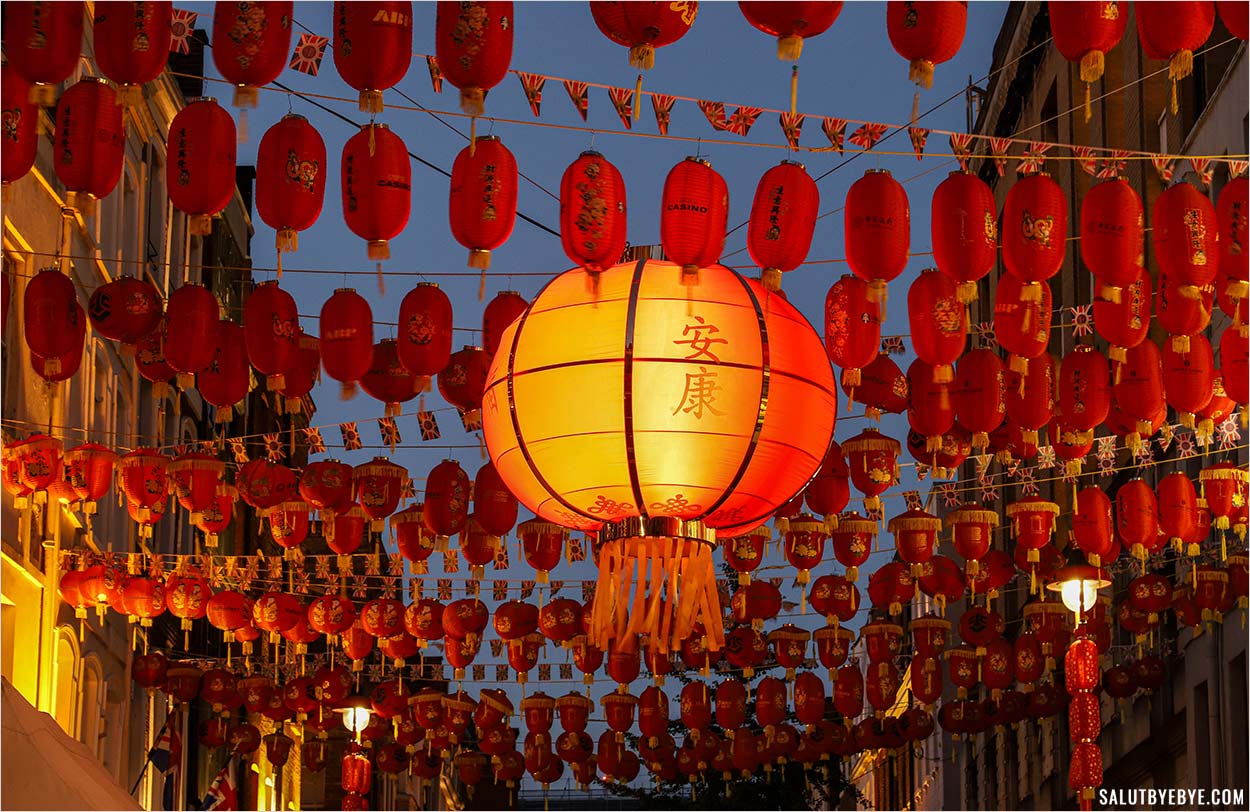
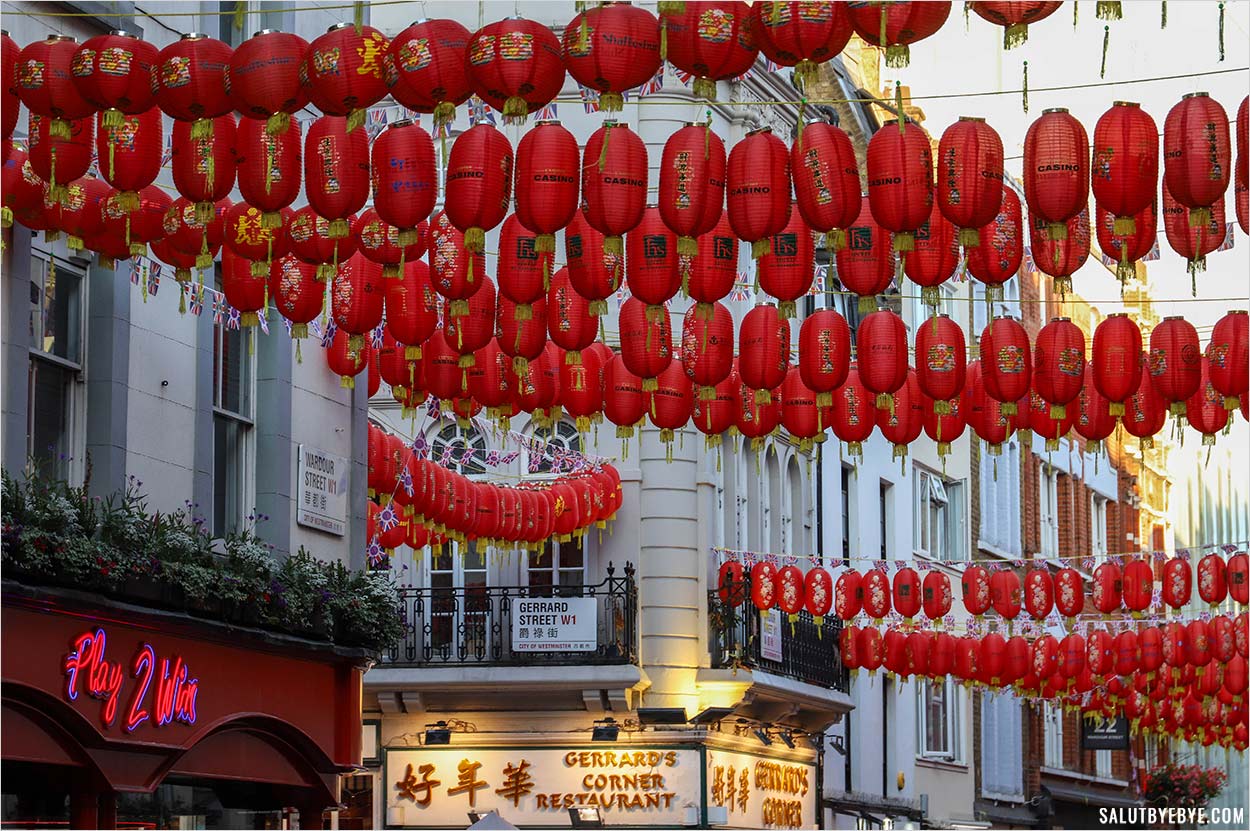
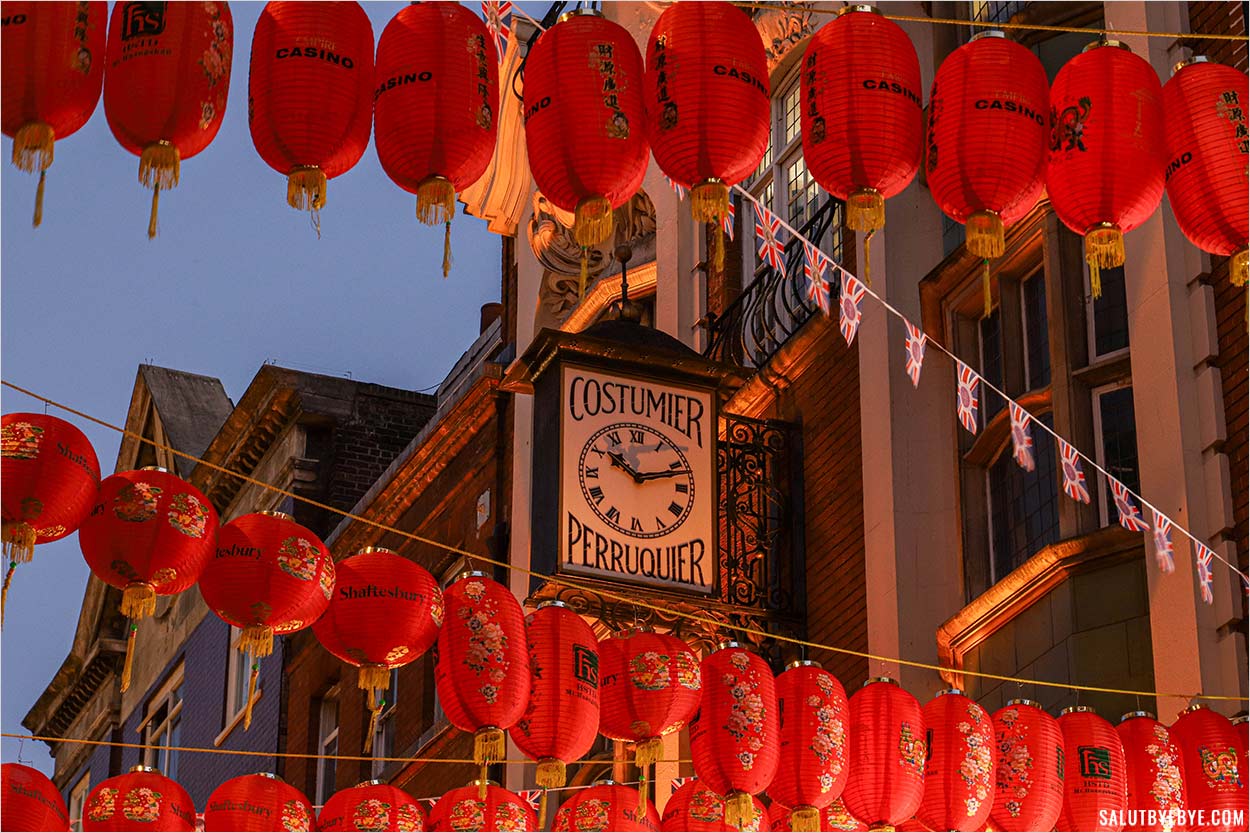
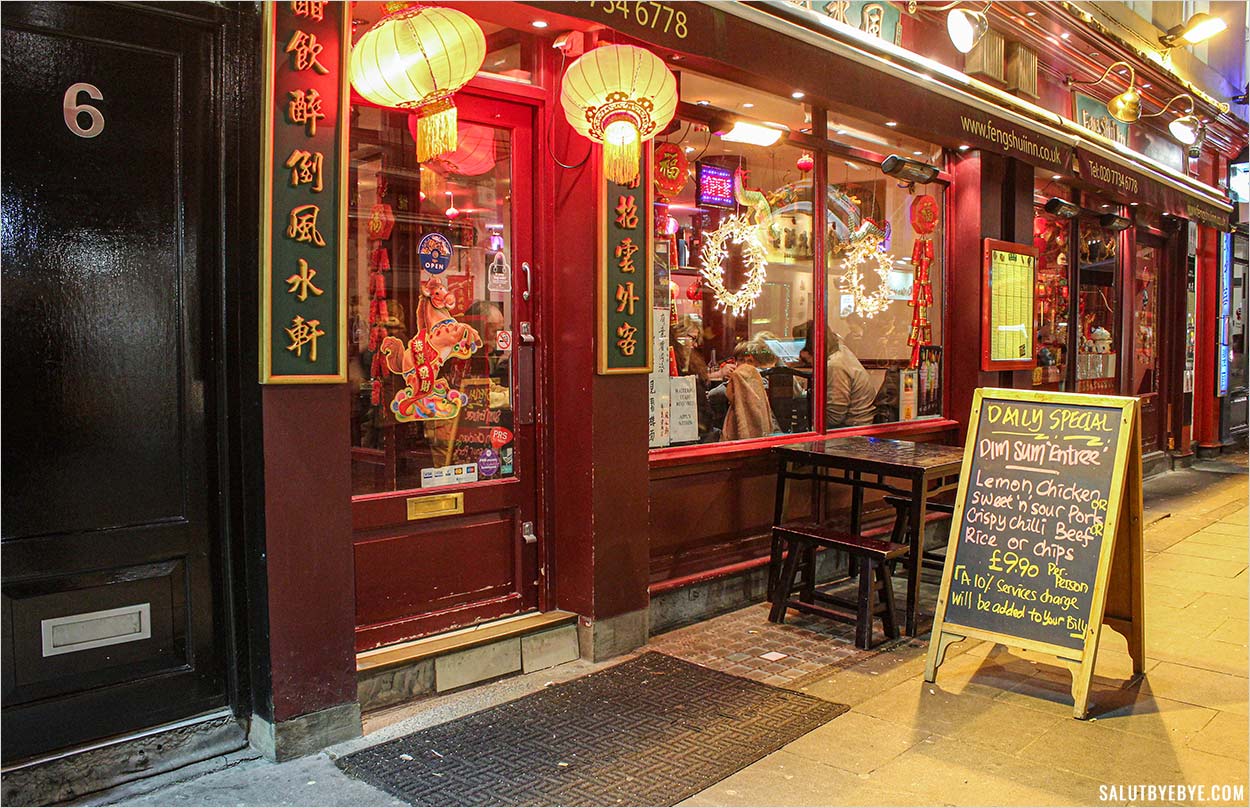
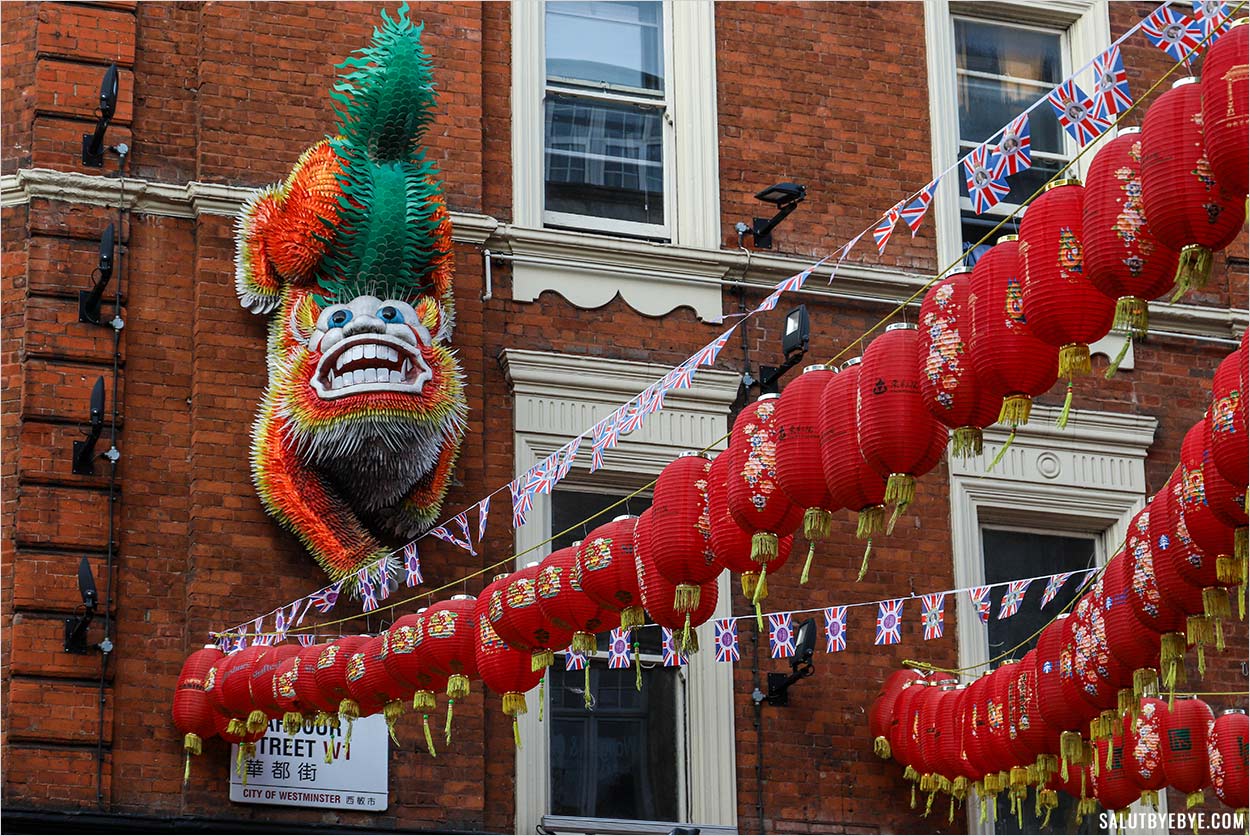
As the photos show, it can feel as though you’ve stepped out of central London for a few moments to immerse yourself in a new culture. Signs are written in Chinese characters, sometimes accompanied by smaller English translations. At the entrance to the restaurants, paper lanterns and strings of lights create a warm atmosphere, especially in the evening. During Chinese New Year, the neighborhood is literally covered with red lanterns and colorful decorations, with dragons, lion dances, and huge crowds.
You’ll often hear Cantonese and Mandarin alongside English in the street, especially when regulars are chatting among themselves. It is this mix of tourists, Londoners, and members of the Asian community that gives the neighborhood its cosmopolitan and lively atmosphere.
The arches at the entrance to Chinatown
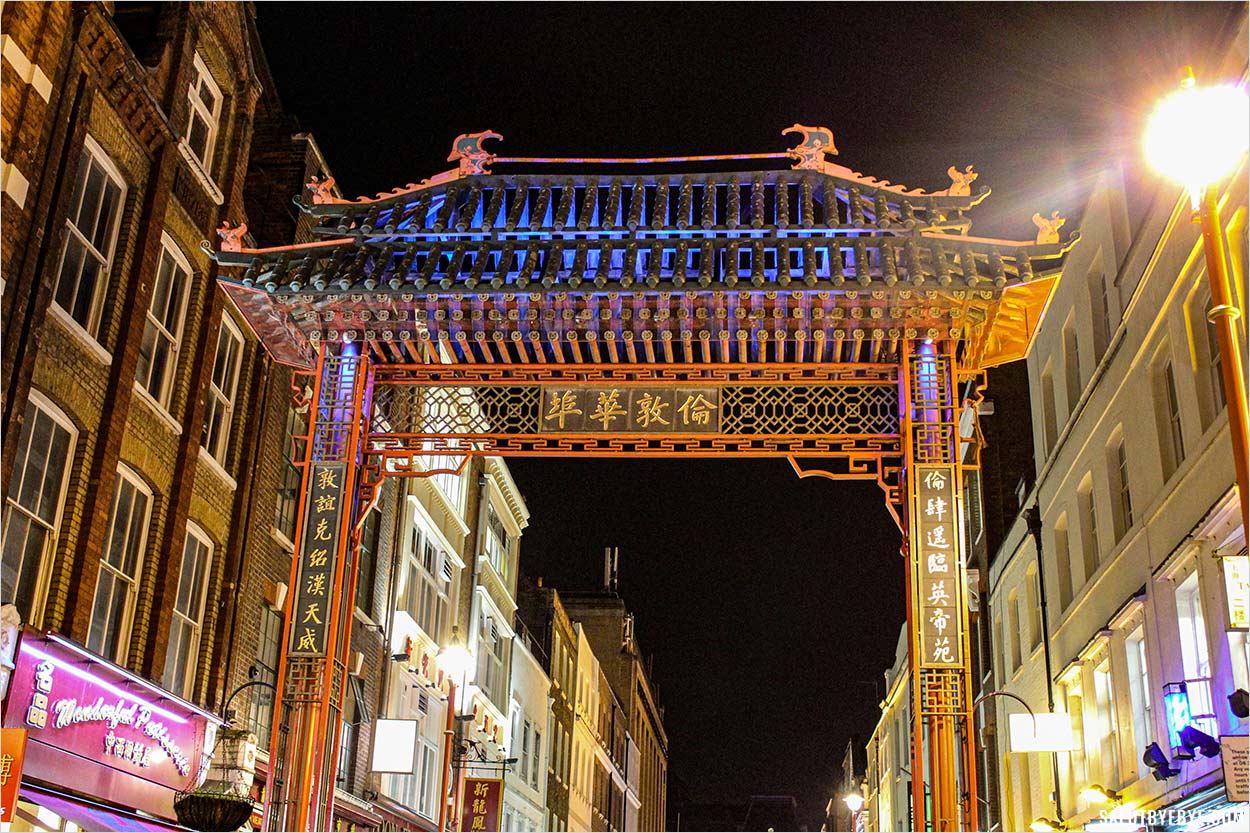
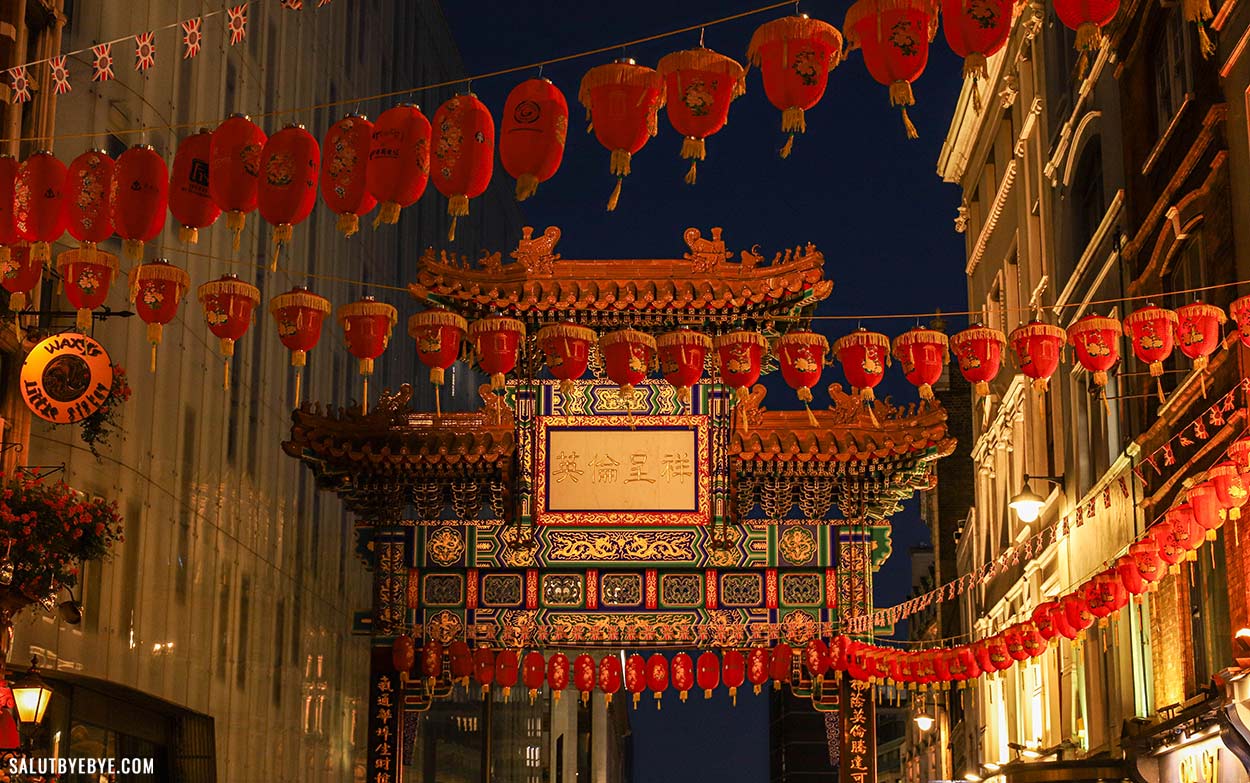
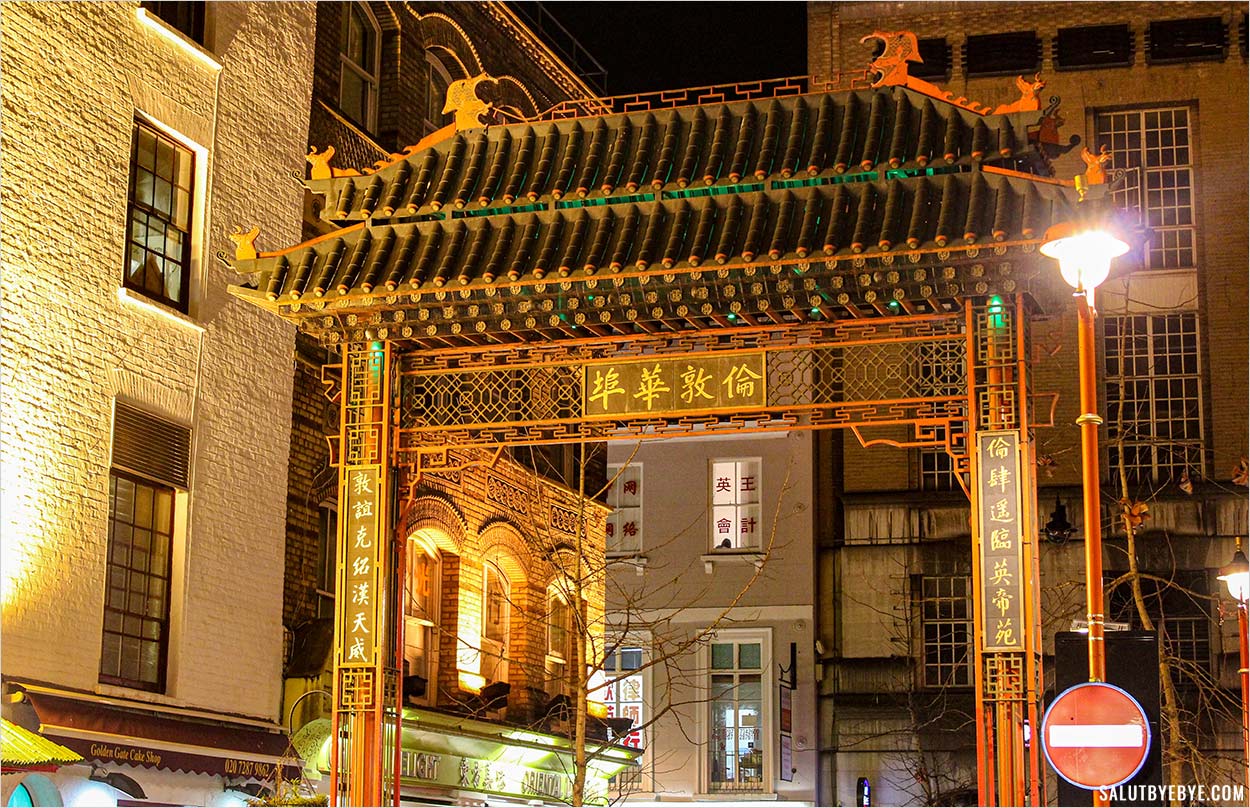
The entrance to Chinatown is now marked by several large arches inspired by traditional Chinese architecture, some of which were built with the expertise of artisans from Shanghai. These gateways symbolically mark the boundary of the neighborhood, although the neighborhood extends beyond these decorative gateways, with Asian restaurants and shops continuing into the surrounding streets.
Asian shops and grocery stores
Chinatown is home to a wide range of shops and businesses, all easy to explore on foot. The streets, for example, are home to several businesses specializing in traditional and alternative medicine: acupuncture, foot reflexology, traditional massage, Chinese herbal medicine. Many storefronts display boxes of plants, cupping jars, diagrams of acupuncture points. If you are curious, you can step inside to ask questions, although you may need a little patience if there’s a language barrier.
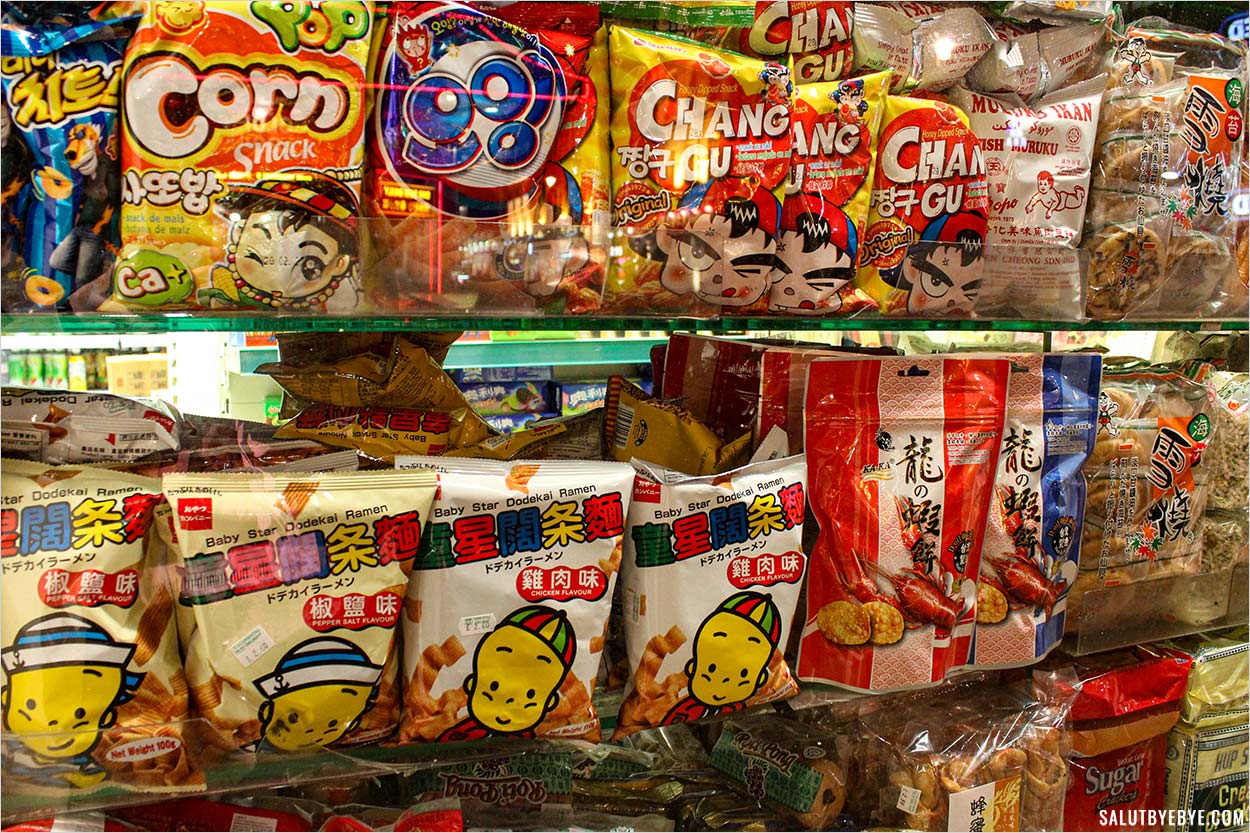
You will also find Asian supermarkets and grocery stores in Chinatown, many of which also stock Japanese, Korean, Thai, or Vietnamese products. Loon Fung and New Loon Moon are among the best-known stores for sauces, noodles, broths, snacks, teas, Asian cookware, as well as fruits and vegetables that are hard to find elsewhere in London. Just outside Chinatown, in Soho, the Korean grocery store Oseyo Soho is also a good option if you enjoy Korean food or K-pop culture.
When to visit London's Chinatown?
Chinatown feels especially vibrant at certain times of day and year, particularly if you enjoy busy street scenes.
The Lunar New Year (often called Chinese New Year) is the biggest event of the year in Chinatown, with parades, performances, food stalls, and big crowds gathering throughout the West End. The dates vary from year to year but generally fall between late January and mid-February. If you’re in London at that time, it is a good idea to arrive in the neighborhood early to get a good spot, and expect very crowded streets.
Outside of this major celebration, Chinatown is also worth visiting in the evening, when the red lanterns are lit and the restaurants' neon signs are reflected on the pavement. On weekends, the nightlife in the surrounding areas (Soho, Leicester Square) keeps the neighborhood lively, with a mix of families, groups of friends, theatergoers, and night owls.
Finally, if you enjoy urban photography, Chinatown is great for detail shots: signs, pastry shop windows, fresh produce stalls, reflections in restaurant windows, steam escaping from the kitchen doors. If you head a little away from Gerrard Street to explore the side streets, you will also find quieter angles for photographing the arches and colorful facades.
Where to eat in London's Chinatown?
Chinatown offers a wide variety of Asian restaurants, from local favorites to more tourist-oriented spots; it’s better to pick a few specialist restaurants rather than choosing at random.
Specialties to try in London's Chinatown
If you are planning to eat in Chinatown, it is a great chance to try a range of Asian specialties that are easy to find in the neighborhood. The restaurants, bakeries, and tea rooms offer a wide range, from classic Chinese dishes to more modern specialties from other Asian countries.
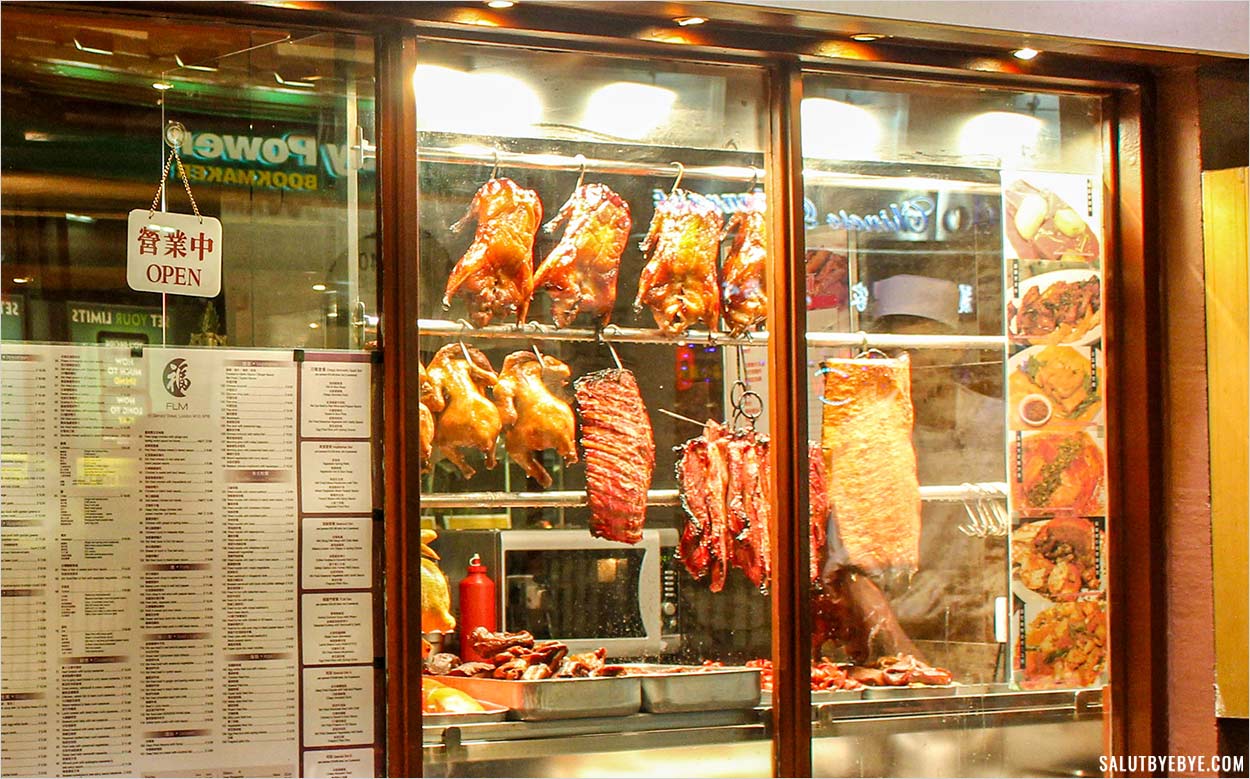
- Peking duck: one of the most iconic specialties of Chinese cuisine, often displayed in the windows of Chinatown restaurants.
- Dim sum: small bites served steamed or fried, perfect if you want to try several flavors in the same meal.
- Bao: soft steamed buns, usually filled with meat, vegetables, or sweet fillings.
- Bubble tea: this drink from Taiwan, made with tea and tapioca pearls, is one of the most popular drinks here.
- Mooncakes: traditional cakes eaten during the Mid-Autumn Festival, which you can find in certain bakeries and specialty grocery stores.
- Egg tarts: small custard tarts with Portuguese and Cantonese influences, perfect for something sweet.
- Hot pot: a communal Chinese hot pot where everyone cooks their ingredients in a shared broth in the center of the table.
How to choose a restaurant in Chinatown?
To eat well in Chinatown, the key is to look for a few simple clues rather than relying only on menus translated into several languages.
In general, I would recommend looking at where Asian diners are eating, a rule of thumb that works for most cuisines. Restaurants popular with Asian families and groups, with a quick turnover of tables, are often a good sign.
Also take the time to look at the menus posted outside: some restaurants offer generic menus clearly aimed at tourists, with all-you-can-eat deals or menus trying to cover too many different dishes. Others focus on a few specialties or a specific type of cuisine (hot pot, dim sum, Cantonese, Sichuan), which can be a better sign of specialization.
The best restaurants in Chinatown
Chinatown has an impressive selection of Asian restaurants. Some even display lacquered meats, roast ducks, and other cuts hanging right in the window, so you can immediately see what’s on offer.
Here are a few places worth considering if you want to explore different Asian cuisines in and around Chinatown, bearing in mind that restaurants change over time.
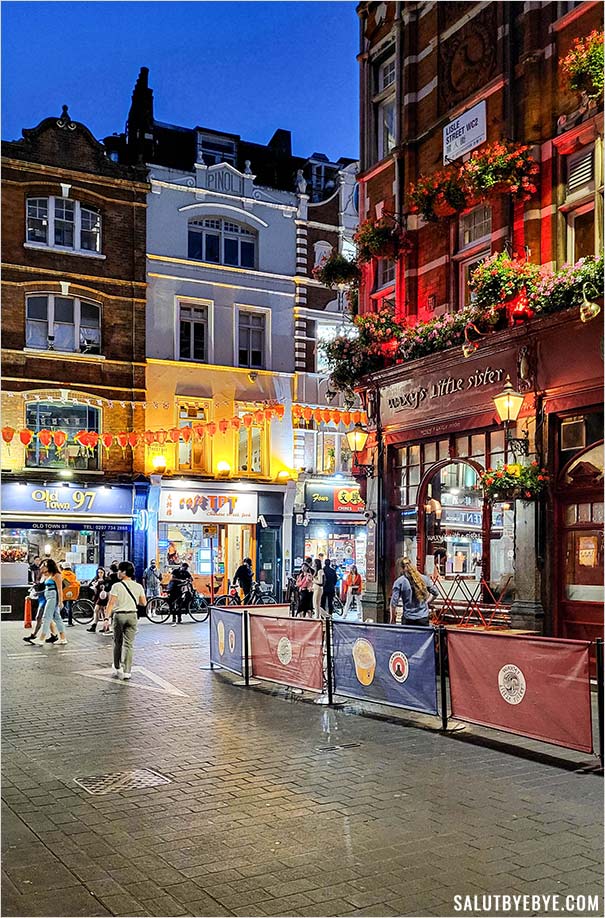
- Chinese cuisine: Bun House, on Lisle Street, serves soft steamed buns, usually filled with meat, vegetables, or sweet fillings, as well as Chinese dumplings; it is a pleasant spot for a quick meal or a snack. Haidilao Hot Pot, on Coventry Street, specializes in Chinese fondue (hot pot), a sociable, interactive meal where you cook your own ingredients in a boiling broth.
- Japanese dishes: Misato, on Wardour Street, offers a straightforward menu with teriyaki, tempura, donburi, curry udon noodles, and bento boxes, in a very simple and often lively setting. Tokyo Diner, on Shaftesbury Avenue, one of London’s main theater streets, is another Japanese option, with bento boxes, curries, sashimi, and sushi, just a few minutes' walk from the Chinatown arches.
- Vietnamese restaurant: Viet Food, on Wardour Street, offers a vegetarian menu as well as bento boxes, Vietnamese classics such as pho, and Vietnamese "tapas" to share. Pho & Bun, on Newport Place, focuses on pho soups and buns, as its name suggests, making it a good place for simple, tasty Vietnamese food.
- Cocktail bar and dim sum: the Opium Cocktail Bar (often shortened to "Opium"), located on Gerrard Street, is an unusual spot styled like an old traditional Chinese medicine shop. Drinks are served in apothecary-style bottles, the atmosphere is dim, and you can enjoy dim sum (small dishes served in individual portions) accompanied by cocktails or Chinese teas. It is a pleasant place better suited to the daytime or early evening if you are looking for somewhere with distinctive character.
If you want to pick up something to take home or see how certain specialties are made, stop by Lo's Noodle Factory on Dansey Place. It is a Chinese noodle maker that supplies Hakkasan Mayfair, a Michelin-starred restaurant in London. It is not necessarily a place where you will linger for long, but it is an interesting stop for food lovers.
For a more refined Asian experience, you could also try Yauatcha Soho, on Broadwick Street, just outside the streets strictly considered part of Chinatown but still an easy walk away. The restaurant is known for its dim sum and pastries, with a more upscale feel than most of the places on Gerrard Street.
The many restaurants in the area offer an easy way to explore Asian cuisines through food, whether by eating in or opting for takeaway. Personally, I do not find every restaurant "incredibly memorable" simply because it is located in Chinatown. As in any very touristy neighborhood, some places feel more authentic than others, and it helps to have a few places in mind before you go.
Visiting Chinatown in London: practical information
Chinatown is easy to explore on foot, without reservations or tickets, and fits easily into a West End itinerary.
Where is Chinatown in London and how do you get there?
Chinatown is located between Leicester Square and Soho, around Gerrard Street, and is just a few minutes' walk from several central Underground stations.
More specifically, London's Chinatown is right next to Leicester Square, on the Underground's Northern line and Piccadilly line. It's one of the most central areas in the city, which makes it a convenient area to include in a central London itinerary. Once you leave the station, the Chinatown arches are only a few minutes' walk away.
You can also walk to Chinatown from Piccadilly Circus, which is served by the Piccadilly and Bakerloo lines. The walk between Piccadilly Circus and Gerrard Street is short, and it takes you along Shaftesbury Avenue, one of London's main theater streets, before stepping into Chinatown's lively streets.
Gerrard Street is the main street in Chinatown, with several key streets branching off around it, such as Wardour Street, Lisle Street, Newport Place and Newport Court. The area is quite compact, and it's very hard to get lost.
Access and safety in London's Chinatown:
- Chinatown is free to visit and open at all times.
- Shops and restaurants generally open in the late morning and stay open into the evening, with longer hours on weekends.
- Chinatown is very busy but overall safe; as in any tourist district, just keep an eye on your belongings.
- Sidewalks can be narrow and crowded, especially during Chinese New Year and busy periods; if you're traveling with a stroller, allow a bit more time.
Is Chinatown better by day or at night?
You can visit Chinatown both during the day and in the evening, but the neighborhood feels livelier and more photogenic once night has fallen.
During the day, you can see the details of the facades more clearly, do your shopping in the Asian supermarkets, and browse restaurants or tea rooms at a more relaxed pace. It's also a good time for certain services such as reflexology salons or herbalist shops, which are sometimes quieter than in the evening.
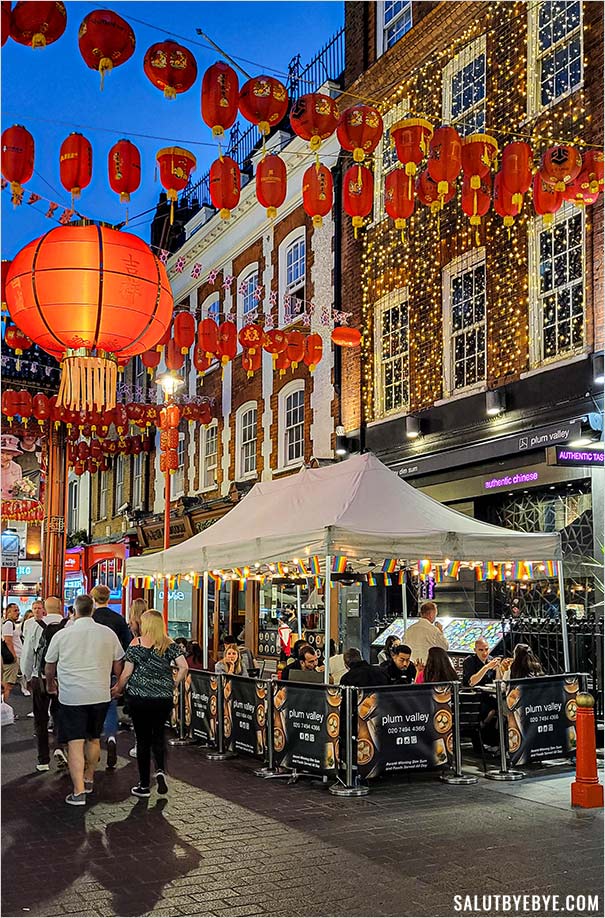
At nightfall, Chinatown’s atmosphere changes: the red lanterns light up, the restaurant neon signs stand out more, and the streets get busier around the entrances. For me, this is when the sense of having stepped somewhere completely different is the clearest, especially if you arrive from the unmistakably West End feel of Leicester Square, with its movie theatres and XXL Burger King. The contrast is striking, in the best way, and really gives you the feeling of stepping into another culture in just a few steps.
If you only have time to go once, I’d recommend going in the late afternoon or evening, and having a meal there or at least a dessert, a bubble tea or something to take away.
What to see around Chinatown?
One of Chinatown’s biggest advantages is its location right in the heart of the West End. Within a few minutes’ walk, you can reach several of London's best-known neighborhoods and attractions without needing to take the Tube again.
As you leave Chinatown, you immediately reach Leicester Square, famous for its cinemas and premieres. Just a stone's throw away you'll also find Soho, one of London's liveliest areas, known for its restaurants, pubs, and nightlife. If you continue your walk, you'll easily reach Piccadilly Circus, with its iconic illuminated billboards, then Covent Garden, known for its covered market, street performers, and many shops.
Chinatown fits easily into a full day of sightseeing in central London. You can stop there for lunch, dinner, or simply stop by for the atmosphere before a musical on Shaftesbury Avenue or an evening out in Soho.
If you're looking for a hotel nearby, the areas of Soho, Leicester Square, and Covent Garden make excellent bases for exploring London on foot. Accommodation there is often more expensive than in other parts of the capital, but the central location cuts down on travel time.
A brief history of London's Chinatown
London's Chinatown grew out of maritime and trade links between Britain and China, before the community shifted west to the area around Gerrard Street.
The origins of London's Chinatown go back to a period when European powers were establishing trading companies to finance overseas trade and expeditions. Among them, the British East India Company, founded in the 17th century, played a major role in trade with Asia. It helped popularize tea in India, take control of Hong Kong and Singapore, and expand maritime trade routes to the Far East.
As part of this trade network, the Company had established a trading post in China, where tea was exchanged for silver. To support this trading network, it began employing thousands of Chinese sailors on its ships, which sailed between Asia and Europe. Since the company headquarters were in the East End, in the eastern suburbs of London, many of these sailors stayed in the area between voyages. They set up shops, restaurants, and social spaces there, which became the nucleus of the Chinese community in London.
During the Second World War, this East End neighborhood was heavily bombed and devastated. At the same time, maritime activity declined and British employment policies favored British workers on ships, at the expense of Chinese workers. The community gradually relocated, adapted, and sought new places to live and work.
Gerrard Street, in the West End, was already known at the time for its restaurants offering inventive cuisine, different from traditional British food. When the first Asian restaurateurs set up there, they found an audience eager to try new flavors. This success encouraged other Chinese entrepreneurs to open their own businesses on the street and in the surrounding area. Gradually, the area took on a distinctly Asian identity, until the neighborhood was officially recognized as Chinatown in 1984.
The traveler's memo for Chinatown in London
Here are the answers to the most frequently asked questions about visiting London's Chinatown, to help you plan your visit.
Chinatown isn't the largest Chinatown in Europe, but it offers a vibrant pocket of Asian culture right in the heart of London. Within a few streets, the West End gives way to an atmosphere filled with red lanterns, specialist grocery stores, and restaurants from all across Asia.
Whether you come for a meal, an evening stroll, or a visit during Lunar New Year, the neighborhood adds a lively, food-focused stop to a London itinerary.
I hope this guide helps you make the most of London's Chinatown and find the places that suit your plans best. You can also find plenty of tips and ideas for things to see and do in London on the blog.


