

If you are hesitating between Bruges and Ghent in Belgium, you are actually comparing two nearby Flemish cities that are easy to visit yet quite different in terms of atmosphere.
Bruges captivates with its canals, its very cohesive historic center, and its calmer feel, while Ghent combines a very dense medieval heritage with vibrant city life, especially lively in the evening.
Visiting Bruges or Ghent works very well for a weekend in Belgium, or as part of a longer trip if you like to take your time. I spent several days in each of them, and here I am offering you a clear comparison to help you choose between Bruges and Ghent according to your preferences, your pace, and your travel style.
- Choose Bruges if you are looking for a very photogenic, compact city that is particularly pleasant for a romantic stay.
- Choose Ghent if you prefer a livelier city, with more bars, restaurants, and a student atmosphere.
- Plan 1 to 2 days to visit each city, or 3 to 4 days in total if you want to combine both in the same trip.
- Book your accommodation early, especially in Bruges, where the best locations get snapped up quickly in high season.
- Use the train between Brussels, Ghent, and Bruges, as it is the easiest way to link the two cities without stress.
- If you are really unsure, Ghent is often the best choice for a livelier first visit, and Bruges for a more contemplative stay.
- Bruges and Ghent: two medieval cities, but not the same impression once you are there
- Which city is livelier? Ghent often has the edge
- Bruges has the advantage when it comes to romantic canals
- Visiting Bruges or Ghent for art and culture
- Bruges and Ghent: two connected histories, but two different paths
- How to get to Bruges or Ghent and how much time to plan
- What to book to visit Bruges or Ghent depending on your travel style
- Key points to remember about Bruges or Ghent
- The Traveler's Memo for visiting Bruges or Ghent
Bruges and Ghent: two medieval cities, but not the same impression once you are there
Both destinations have remarkable historic heritage, but they do not give you quite the same feeling when you visit. Ghent felt more continuous to me in its urban fabric, while Bruges alternates more between heritage districts, canals, and more contemporary areas.
In Ghent, a dense historic center around the castle, the quays, and the churches
Ghent has a medieval castle right in the center, the Gravensteen Castle (Castle of the Counts of Flanders), as well as a belfry that is open to the public. Around it, the façades of Graslei and Korenlei immediately set the tone, with their rows of historic houses along the banks of the Lys.
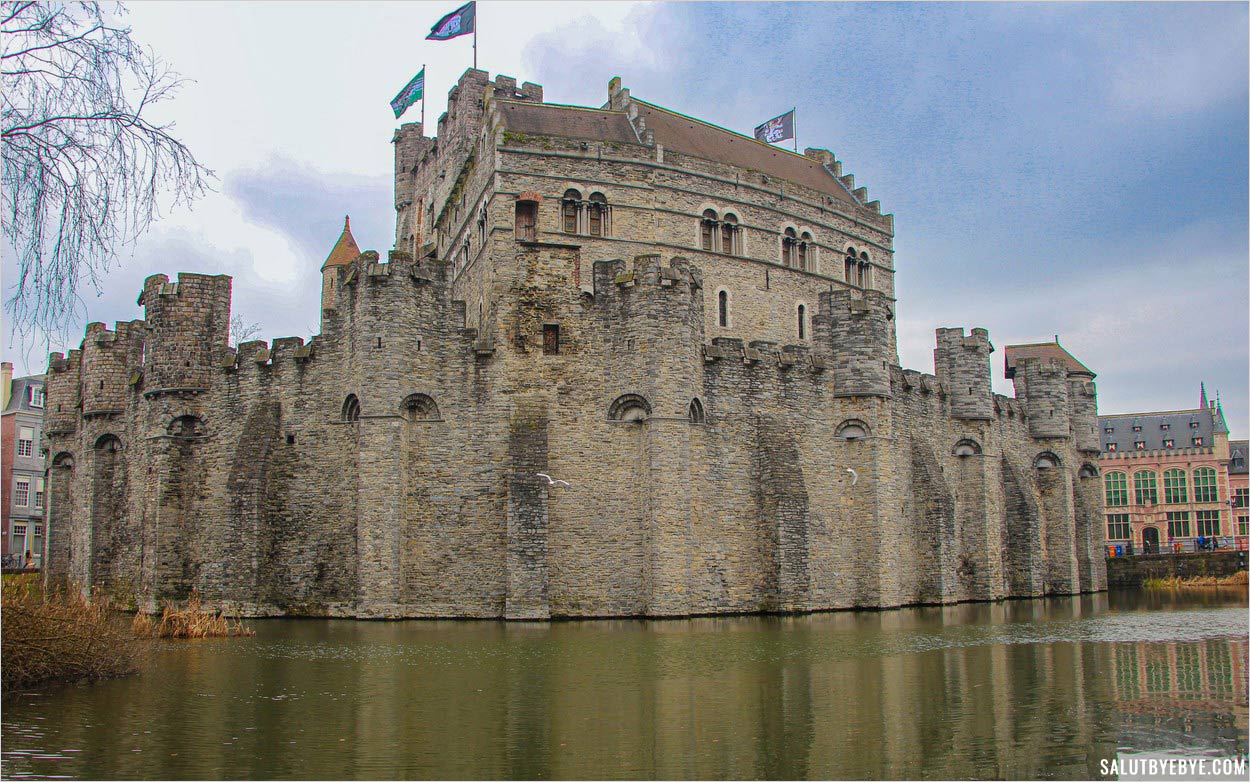
You can then stroll toward Vrijdagmarkt, a large paved square that still feels very lively, and then reach an especially rich religious heritage. Saint Bavo's Cathedral is really worth a visit for the Van Eyck brothers' altarpiece, the Adoration of the Mystic Lamb, which many visitors come to see as much for this specific painting as for the cathedral itself.
In Bruges, the main square and the canals structure the whole walk
In Bruges, the core of the visit is easier to grasp at first glance. The Grote Markt, surrounded by pretty façades, brings together the Gothic town hall and the belfry, which offers an unobstructed panorama of the region.

Religious heritage is also very present, with the Basilica of the Holy Blood, Saint Salvator's Cathedral, and the Church of Our Lady. But what stands out most is the way the canals cut through the historic center and showcase the façades, bridges, and small squares.
The beguinages add an extra historical depth
Bruges and Ghent both have listed beguinages, which adds a very interesting heritage dimension to a visit. These complexes once housed communities of devout women, without religious vows, and they have preserved a very distinctive atmosphere.
Ghent still has three of them, including the Small Beguinage listed as a UNESCO World Heritage Site, while Bruges has a beguinage that is also listed. I particularly liked the one in Bruges at golden hour, when the flowers soften the façades even more.

Which city is livelier? Ghent often has the edge
If you enjoy feeling a city come alive in the evening, Ghent is generally the better choice. Bruges is still pleasant, but it gets quieter once the day-trippers leave and the main landmarks close.
Ghent has a real student vibe and a more active nightlife
Because it's a university town, Ghent has a more dynamic pace, with plenty of bars, clubs, and restaurants. I actually met a young Belgian woman on the train who told me she had chosen to settle in Ghent after studying in Bruges, and she summed up the difference between the two cities very well: Bruges is often considered prettier, Ghent livelier.
In the evening, you feel it in the streets, along the quays, and on the squares around the historic center. You see more people outside, and this buzz is part of what makes the trip interesting if you like cities that don't shut down too early.
Bruges is quieter, especially after day-trippers leave
In Bruges, I found the atmosphere calmer, almost hushed at times. That can be a real advantage if you are looking for a relaxing stay, but it's also what can give the impression of a city that empties out more quickly at the end of the day.

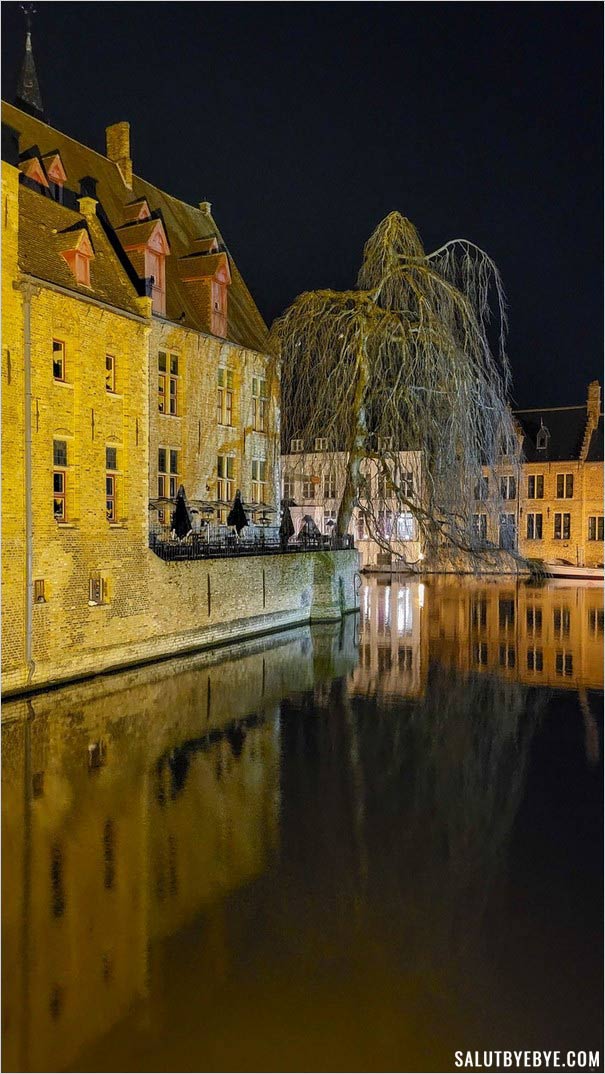
Of course, there are still places to go out, such as Le Trappiste, the Duvelorium, De Garre, or 2be (The Beerwall). But overall, Ghent keeps more energy in the evening, especially if you like having dinner late or grabbing a drink after a long day of sightseeing.
In both cities, you can eat very well without any difficulty
You will easily find ways to try Belgian specialties in both destinations. Waterzooi, Flemish stew, waffles, mussels and fries, and shrimp croquettes are all quite easy to find, with a generally good standard in the restaurants in the center.
Bruges has the advantage when it comes to romantic canals
If you are looking for a city where you can stroll, take photos, walk along the water, and move from viewpoint to viewpoint, Bruges clearly has the edge. The canals structure the city in a very legible way and often give you the feeling of moving through a very coherent setting.
The canals, bridges, and swans set the tone for the visit
In Bruges, you get lost in the cobbled streets before suddenly emerging at a very photogenic viewpoint, between small bridges and calm water. The boat tour also lets you see the city from another angle, even if the experience is quite classic and sometimes a bit crowded at peak times.
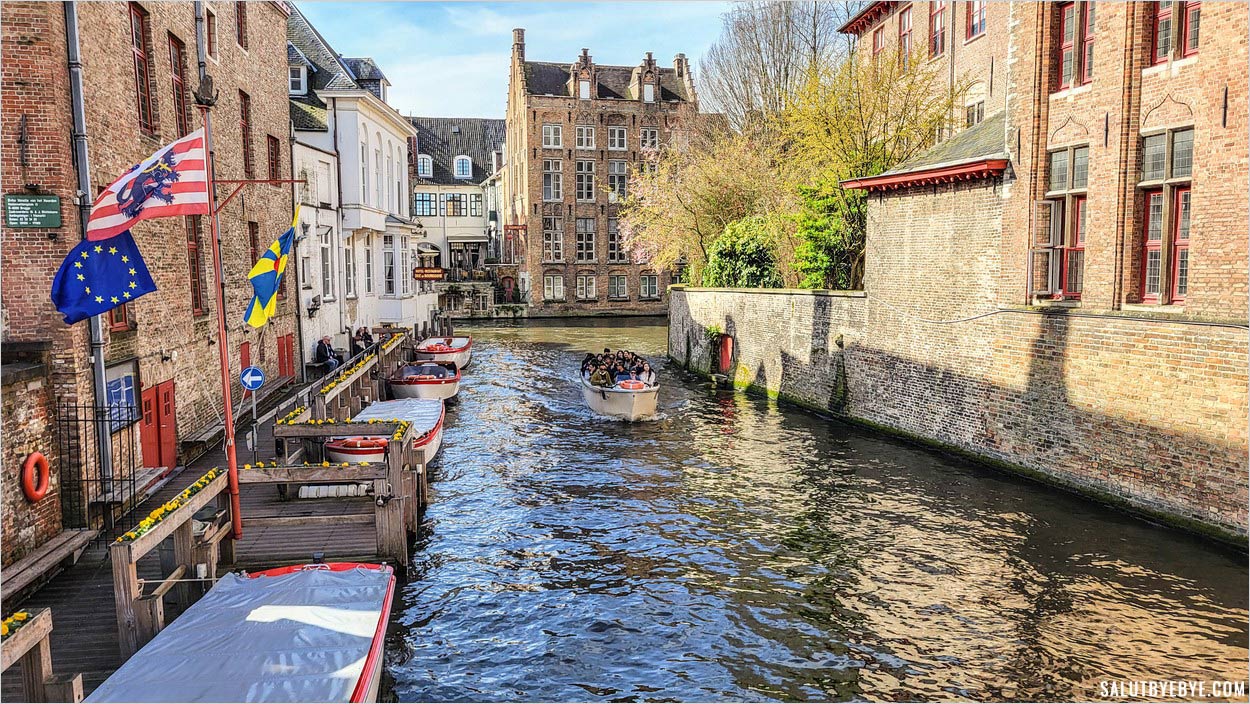
I find that Bruges is the stronger of the two for a trip as a couple, or simply for a trip where you want to slow down a bit. Ghent is still very beautiful along the Lys, but Bruges has this continuity of views that works particularly well on foot.
Ghent also offers lovely reflections along the Lys
In Ghent, the Graslei and Korenlei quays are great for photos, especially at dusk. The reflections on the water, the concentration of historic facades, and the evening light create a very pleasant effect, even if the overall result is slightly less "postcard-like" than Bruges.

When I compare the two, I still give the romantic edge to Bruges. It's the city that felt the most obvious choice to me if you are looking for a gentle getaway, with a real focus on strolling.
Visiting Bruges or Ghent for art and culture
Visiting Bruges or Ghent is not just about pretty façades and canals. If you enjoy museums and cultural visits, both cities can easily fill a packed itinerary.
In Ghent, several museums allow you to go beyond the historic center
Ghent offers a very diverse range of museums, from the Museum of Industry, housed in a former cotton mill, to the Stadsmuseum, dedicated to the history of the city. The Huis van Alijn, focused on everyday life in the 20th century, also works very well if you are traveling as a family.
The GUM, centered on science, and the Museum of Fine Arts round out a strong cultural offering.
So you can very easily move from a heritage walk to a more themed visit, without feeling like you are always doing the same thing.
In Bruges, the museums are more varied than you might think
Bruges offers a rather surprising range, from the beer museum to the fries museum, chocolate or torture, not to mention the possibility of visiting the courtroom of an 18th-century courthouse.
If you want to pick the most interesting visits, I would mainly suggest focusing on these.
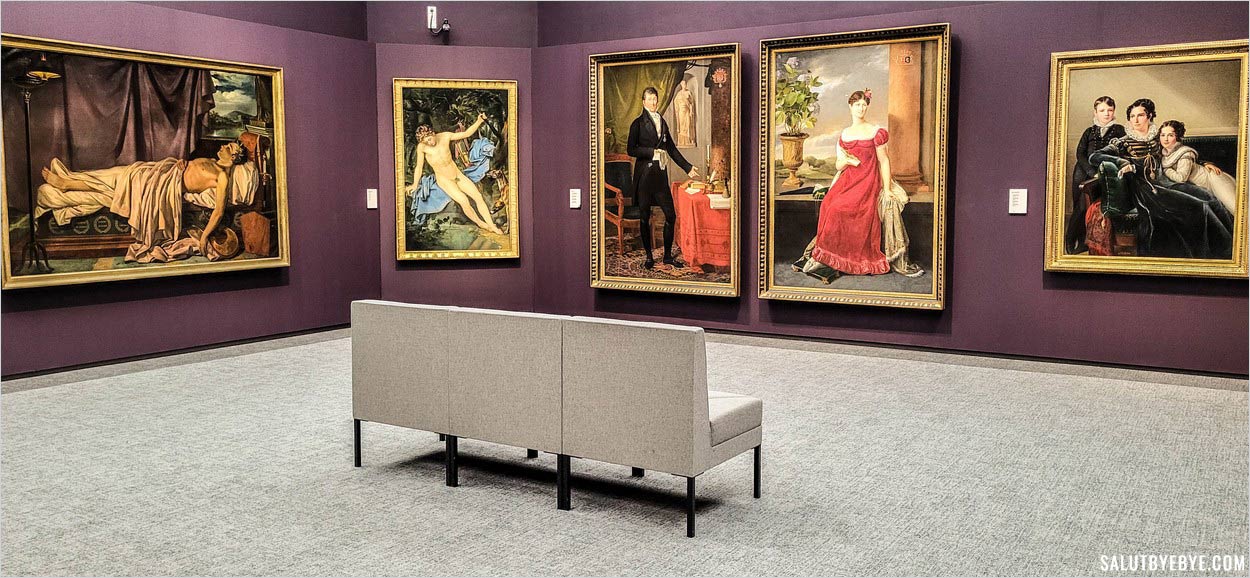
- The Groeningemuseum, which showcases Belgian fine arts and the Flemish Primitives.
- The Gruuthusemuseum, which traces the history of Bruges in a 15th-century palace that has been carefully restored and furnished.
- The Historium, which offers a very modern look at medieval Bruges with a virtual reality experience.
- St. John's Hospital, for its Memling paintings and the former adjoining pharmacy.

You should have no trouble finding enough to fill a day of culture, and even more if you like alternating between museums and urban walks.
Bruges and Ghent: two connected histories, but two different paths
Understanding the history of the two cities helps you better interpret what you see today. Bruges and Ghent have both experienced periods of growth, slowdown, and then heritage revival.
Bruges developed thanks to its access to the sea
Bruges was born after a tidal wave in the 12th century, which pushed the sea inland and made it possible to develop port activity. The city then took on a major role in Europe thanks to trade, which also fueled its artistic development.
Its decline began when the arm of the sea silted up after the 15th century and the port lost importance to Antwerp. The revival came later, with the creation of the port of Bruges-Zeebrugge, which today handles container ships, roll-on/roll-off vessels, a Belgian navy base, and cruise ships.
The canal leading to the North Sea, the Baudouin Canal, is still visible from the belfry, along with the wind turbines lining it.

Ghent was built around its abbeys and then its textile industry
Ghent's urban history goes back even further, with abbeys founded as early as the 7th century, followed by a motte-and-bailey fort that was turned into a castle in the Middle Ages. The city really took off thanks to the wool cloth industry, made possible by the presence of the Lys and the Scheldt.
Like Bruges, it went through a tougher period starting in the 14th century before regaining prosperity, again largely thanks to the textile industry. The creation of the university in 1930, the first Flemish-language university in Belgium, also reinforced its role as a major cultural and student city.

I find that this history explains Ghent's current atmosphere quite well, more dynamic and dense, while also shedding light on the strong heritage identity of both cities.
How to get to Bruges or Ghent and how much time to plan
Bruges and Ghent are both very easy to reach, which is one of the great strengths of this Belgian duo. You can easily visit Bruges and Ghent on the same trip without making logistics complicated.
The train is usually the simplest option
If you are arriving from abroad, the easiest route is often to travel to Brussels first, then take a direct train to Ghent or Bruges. The two cities are on the same line: from Brussels-Midi, allow around 30 minutes to Ghent and 50 minutes to 1 hour to Bruges.
In 2026, the most convenient option is still to book Belgian train tickets on the SNCB/NMBS website. If you are traveling during rush hour, on a weekend, or in high season, it is better to check times in advance so you can keep comfortable departure options.
Still hesitating? There are excursions that combine Bruges and Ghent
If you are short on time or do not want to organize the journeys yourself, there are also day trips from Brussels that let you discover Bruges and Ghent on the same day with a guide.
It is a fairly practical solution for a first introduction to Belgian Flanders, especially if you want to see the main monuments without having to deal with train connections, timetables, or on-site logistics. Most tours include transportation by coach, a guided tour of the historic centers, and free time in each city.
I particularly spotted this Bruges + Ghent excursion from Brussels, which goes along the canals and the beguinage in Bruges, then past the Castle of the Counts of Flanders, the Graslei quays, and Saint Bavo's Cathedral in Ghent.
You can also take a look at this other Bruges and Ghent excursion from Brussels, which also includes a guided tour of both cities with free time and the option of a boat trip on the canals.
It is still a full-on day, with about 10 to 11 hours of visiting in total, but it is an appealing option if you cannot manage to choose between Bruges and Ghent and want to compare the two cities in a short time before coming back one day for a longer stay.
Once there, you can easily get around on foot, sometimes with a bike
Bruges and Ghent both offer a good public transport network and city centers that are easy to get around. That said, the real comfort when visiting mainly comes from walking, as the main areas to see are quite compact.
If you enjoy longer days of sightseeing or want to link several neighborhoods in the same day, a bike can be a good addition. I found it particularly pleasant in Ghent, where you really feel the scale of a proper city, whereas in Bruges walking is often more than enough.
For accommodation, booking early really makes a difference
Both cities offer a wide range of hotels, with good value for money if you book in advance. Prices have increased noticeably since the post-pandemic period, especially during weekends, holidays, and the busiest travel seasons.
| When to choose? | Recommended city | Why | Traveler profile |
|---|---|---|---|
| For a first visit that is very easy to organize | Bruges | The center is compact, easy to understand, and the main sights follow on from one another effortlessly. | Traveler who wants to maximize walking and limit transportation. |
| For a livelier evening atmosphere | Ghent | The university, bars, and restaurants give the city more energy. | Traveler who enjoys going out after sightseeing. |
| For a photography-focused and romantic stay | Bruges | The canals, bridges, and viewpoints are more immediately evocative. | Couple, fan of walks or photography. |
| For a more varied cultural weekend | Ghent | The museums, castle, and historic districts offer a denser program. | Curious traveler who likes to alternate heritage and local life. |
I would recommend checking out the best-rated hotels in Ghent and the best-rated hotels in Bruges, especially if you are traveling in high season.
Personally, I had a very good stay at Hotel Harmony in Ghent and at Duke's Academie in Bruges, two places I found well located for exploring the city on foot.
Plan for a long weekend or combine both cities
Visiting Bruges and Ghent over 3 or 4 days works very well if you like to take your time. If you are short on time, you can also stay in one of the cities and devote a day to the other, since they are only 25 to 30 minutes apart by train.
What to book to visit Bruges or Ghent depending on your travel style
Depending on how much time you have and how you like to travel, some activities are better suited than others for visiting Bruges or Ghent. In Bruges, canal walks and more contemplative visits quickly take center stage, while Ghent is ideal for cultural discoveries, urban cruises, and livelier experiences.
Here are the activities that seem most interesting to me for enjoying both cities without wasting time on planning.
| What you're mainly looking for... | Bruges | Ghent |
|---|---|---|
| A simple first discovery | Guided walking tour of Bruges | Guided tour of Ghent and chocolate tasting |
| A romantic activity | Boat ride on the canals | Cruise on the Lys |
| A cultural visit | Historium Bruges ticket | Entry to the Castle of the Counts of Flanders |
| Seeing both cities without stress | Bruges + Ghent day trip from Brussels | |
If you are still hesitating about choosing Bruges or Ghent, these activities also help you better understand each city's personality. Bruges is especially well suited to strolls and romantic visits, while Ghent is easy to discover via its quays and its lively atmosphere.
Key points to remember about Bruges or Ghent
Here are the most useful points to choose between Ghent and Bruges depending on how you travel, how much time you have, and the kind of atmosphere you are looking for once you are there.
| Decisive criterion | Bruges | Ghent | The best choice if... |
|---|---|---|---|
| Overall atmosphere | Calmer and more contemplative. | Livelier and more urban. | Choose according to how fast-paced you want things to feel. |
| Photos and walks | Canals, bridges, and very photogenic views. | Very beautiful quays but a more urban feel. | Bruges for a contemplative or romantic stay. |
| Evening atmosphere | Quieter, especially after day-trippers leave. | More animated thanks to the university and bars. | Ghent if you like to extend your evenings. |
| Culture | Very good choice, especially for museums and historic houses. | Also a very good choice, with a broader and more dynamic range. | Ghent for a more varied cultural program. |
| First visit to Belgium | Very compact center and very easy to get around. | Larger city with more neighborhoods to explore. | Bruges if you want a stay that is simple to organize. |
| Ideal length of stay | 1 to 2 days are often enough. | 2 days make it easier to explore the neighborhoods. | Combine both over a long weekend. |
| Traveling with children | Easy walks, compact center, and lots of strolls along the water. | Also a very pleasant city, with more cultural activities. | Bruges with young children, Ghent with teens or for a longer stay. |
The Traveler's Memo for visiting Bruges or Ghent
Here are the answers to the most frequent questions to help you choose between Bruges and Ghent.
For my part, I found Bruges more "instantly charming" on a first visit, whereas Ghent is a city that reveals itself more as your stay goes on. That is also why many travelers end up liking both, but not necessarily for the same reasons. If you enjoy photography, you can really have fun in both cities: the canal reflections and the beauty of the architecture promise an incredible amount of pleasure!
In the end, choosing between Bruges and Ghent mainly means choosing a travel atmosphere: Bruges and Ghent are two very pleasant cities to visit, but not for the same reasons. If you want a quieter, more romantic, and very photogenic getaway, Bruges seems to me the best choice. If you prefer a livelier, denser city where it is easier to extend your evening, Ghent often naturally stands out.
Ideally, if your schedule allows, it is still best to discover both, as they complement each other very well and give you a good overview of urban Flanders.


