

When I travel, I always try to discover the local specialties, and Poland was no exception. In Krakow, I spent a good part of my stay sampling typical Polish dishes, from soups to pierogi, along with hearty desserts and street food.
In this article, I'm offering a real guide to understanding Polish cuisine, knowing what to try in Krakow and beyond, spotting the key ingredients, and easily choosing a restaurant based on what you're in the mood for. Whether you're curious to taste the great Polish classics or more interested in refined spots, you'll find everything you need here to plan your meals, neighborhood by neighborhood, without breaking the bank. You'll also see that in Krakow, you can eat very well on a reasonable budget, with plenty of vegetarian and international options.
- Learn a few key words in Polish (bigos, pierogi, żurek, barszcz) so you can quickly spot Polish specialties on menus.
- Plan on spending between 50 and 80 PLN for a main course in Krakow in 2026, which is about 12–19 € (roughly 13–21 USD / 10–16 GBP, not counting touristy areas or fine-dining restaurants).
- Try at least one soup, one hearty main course, and one typical dessert to get an overview of Polish cuisine.
- Rynek Główny and Kazimierz are often the most convenient areas for eating out, but Podgórze and Zabłocie offer a more local and contemporary scene.
- If you're not keen on traditional Polish dishes, go for duck, fish, mushrooms, and the more contemporary places mentioned in this article.
The key ingredients in Polish specialties
Polish cuisine is built around a few ingredients that appear frequently on menus in Krakow and set the tone for most local specialties.
Overall, my impression was of hearty, stick-to-your-ribs cooking, designed to withstand cold, long winters and full working days. Portions are generous, sauces are often creamy or long-simmered, and you definitely don't leave the table hungry.
At the same time, it would be simplistic to assume Polish cuisine lacks refinement: in big cities like Krakow, many restaurants reinterpret these ingredients in a more modern, lighter way, and it's this contrast that makes meals so interesting.

In Krakow, you can eat very well at still affordable prices in 2026, with options ranging from the simplest milk bars (bar mleczny) to creative restaurants, plus a surprisingly extensive vegetarian and international scene in between.
Some ingredients are really worth seeking out: mushrooms (fresh or dried, in soups or sauces), beetroot (in soup, salad, juice), cabbage (fermented, braised, or stuffed as in gołąbki), duck, freshwater and saltwater fish (carp, herring, trout, salmon), and potatoes (mashed, in "placki" pancakes, or "kluski" gnocchi-style dumplings).
Typical dishes often rely on fermentation (sauerkraut, fermented rye flour for żurek) and on preparations in aspic (like carp in aspic, karp w galarecie), which are deeply rooted in local tradition, especially during the holidays.
The main typical Polish dishes to try
To discover Polish cuisine in Krakow, the easiest way is to start with a few essential categories of dishes: soups, stews, pierogi, street food, cheeses, and desserts.
I am far from having tried all the Polish specialties, but before I left I took the time to list a few typical dishes so I could make the most of my stay in Krakow. Once there, I picked from this list depending on what I was in the mood for (and how hungry I was!), which helped me put together varied meals.
Polish soups you shouldn't miss
Soups play a central role in Polish cuisine and are often a generous starter, or even a full meal in winter.
You'll find a rather fascinating variety of them, and it's an excellent playground if you like to mix up flavors:
- Żurek: a sour soup made with fermented rye flour and vegetables, often enriched with sausage, bacon, and sometimes hard-boiled eggs. It's sometimes called "white borscht." It can be served in a bread bowl, which turns it into a full meal.
- Borscht (barszcz): a beet soup, usually bright red, sometimes clear or thicker depending on the recipe. It's one of the dishes served at a traditional Polish Christmas Eve dinner, often with mushroom dumplings.
- Mushroom soups such as zupa pieczarkowa (button mushrooms) and zupa grzybowa (wild mushrooms), very fragrant, especially in autumn.
You'll also come across many other soups that let you discover different sides of Polish cuisine: cabbage (kapuśniak), dried peas (grochówka), barley and vegetables (krupnik, which is also the name of a local vodka), sweet-and-sour pickle soup (ogórkowa). For a stay in Krakow, I recommend planning at least one soup a day if you enjoy this kind of dish: it's budget-friendly, filling, and very revealing of local tastes.

If you enjoy adventure or if you're traveling with very curious people, there are also more challenging soups. Before leaving for Krakow, I had told myself I might try one of them "for the experience," and I must admit that I ultimately backed down when I saw the menu:
- Czernina: a sweet-and-savory soup made from duck blood, vinegar, and sweet elements (sugar, honey, pear syrup). As with blood sausage, it's sometimes better to taste it before knowing everything that's in it.
- Flaki: a soup of very finely cut tripe, well seasoned, much appreciated by offal lovers.
Stews and comforting dishes
Stews and breaded dishes are at the heart of the Polish specialties that "really fill you up" and that you'll very often see on restaurant menus in Krakow.
With these dishes, there's no way you'll leave the table still hungry. I particularly tried bigos, one of the great classics. If I had to sum it up, I'd say it's a kind of Polish sauerkraut, often served in a large round loaf of bread: white cabbage (often fermented), a mix of meats (sausage, beef, bacon, game depending on the recipe), sometimes dried plums and mushrooms, all slowly stewed with spices.

Among the typical dishes, you'll often see kotlet schabowy, distant cousins of Wiener schnitzel: thinly sliced pork chops, dipped in flour and then egg, coated with breadcrumbs before being fried, usually in a pan. They are often served with potatoes and a cabbage salad.
There are also kotlet mielony, minced meat patties (traditionally pork, but you'll find plenty of variations with beef or chicken), also breaded with breadcrumbs and egg. These are simple, home-style dishes that you'll regularly find in milk bars and homestyle restaurants.
Sausages
Sausages, or kielbasa, are everywhere in Polish cuisine and go just as well with soups as with main courses.
You'll find them in recipes like bigos or zurek, but also simply grilled, smoked, or served in a sandwich. There are countless variations, with different meats and spices:
- Krakowska: sausage from Krakow, somewhat reminiscent of garlic sausage, often served sliced.
- Kabanos: a dry, long, thin sausage, very convenient to nibble on during a day of sightseeing or on a train journey.
If you enjoy cured meats and cold cuts, feel free to ask for an assortment so you can compare textures and flavors, especially in traditional restaurants or beer bars that offer sharing boards.
Pierogis
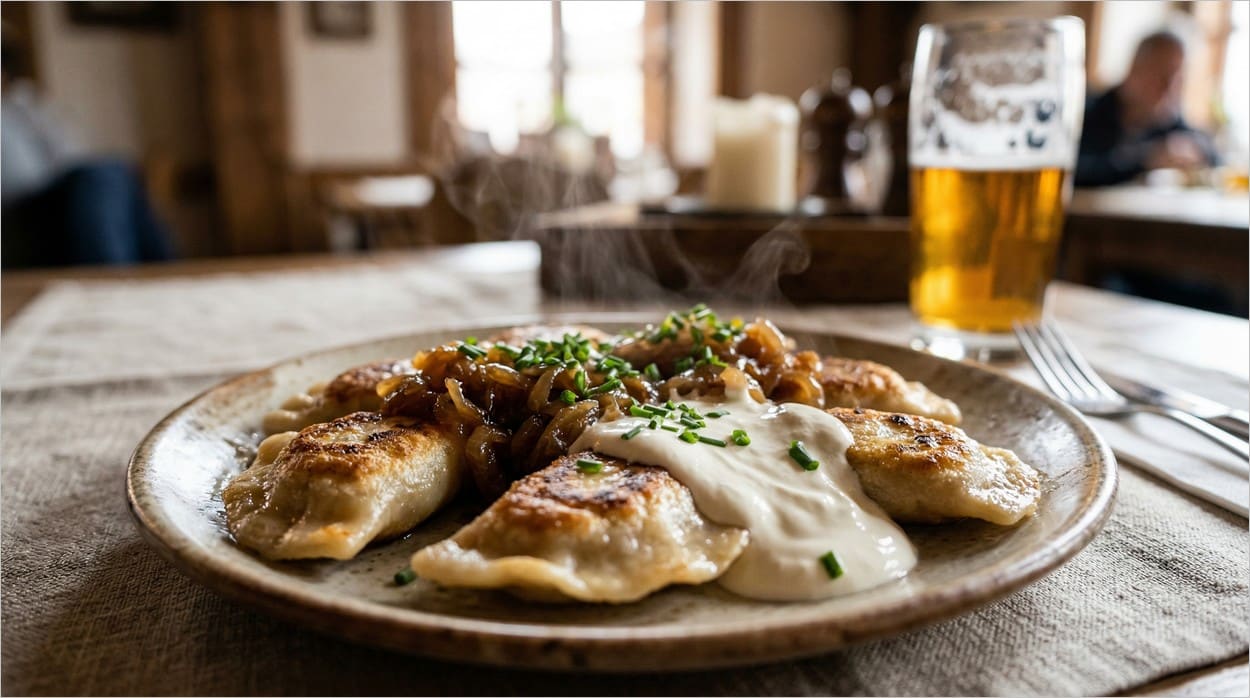
Pierogis are probably the easiest Polish dish to love, even for the most cautious eaters, and they're an excellent introduction to the local cuisine.
Pierogis are a kind of large dumpling, visually similar to some Asian steamed dumplings but with a thicker dough. They're filled with either savory or sweet fillings; classic pierogis often come with a mix of cabbage and mushrooms, but chefs can be endlessly creative: farmer's cheese and potato (ruskie), meat, spinach, lentils, cheese, berries, chocolate…
Przystanek Pierogarnia (two locations in Stare Miasto, both are good!) is one of Krakow's pierogi specialists. I had delicious pierogis there stuffed with strawberries and cream, but I also tried more traditional cabbage pierogis. It's probably one of the most affordable dishes: in some places, you can get about 9–12 pierogis for the equivalent of 8–10 € (about $9–11 / £7–9) in 2026, which is very reasonable given the quantity and how filling they are.
In practice, many restaurants in Krakow serve pierogis, sometimes as a sampler plate with several fillings to share. I even had sweet pierogis at the chocolatier E. Wedel, covered in chocolate, which are almost like a signature dessert.

Street food in Krakow
Street food is a great way to explore Polish cuisine without spending much, especially for lunch or a mid-day snack.
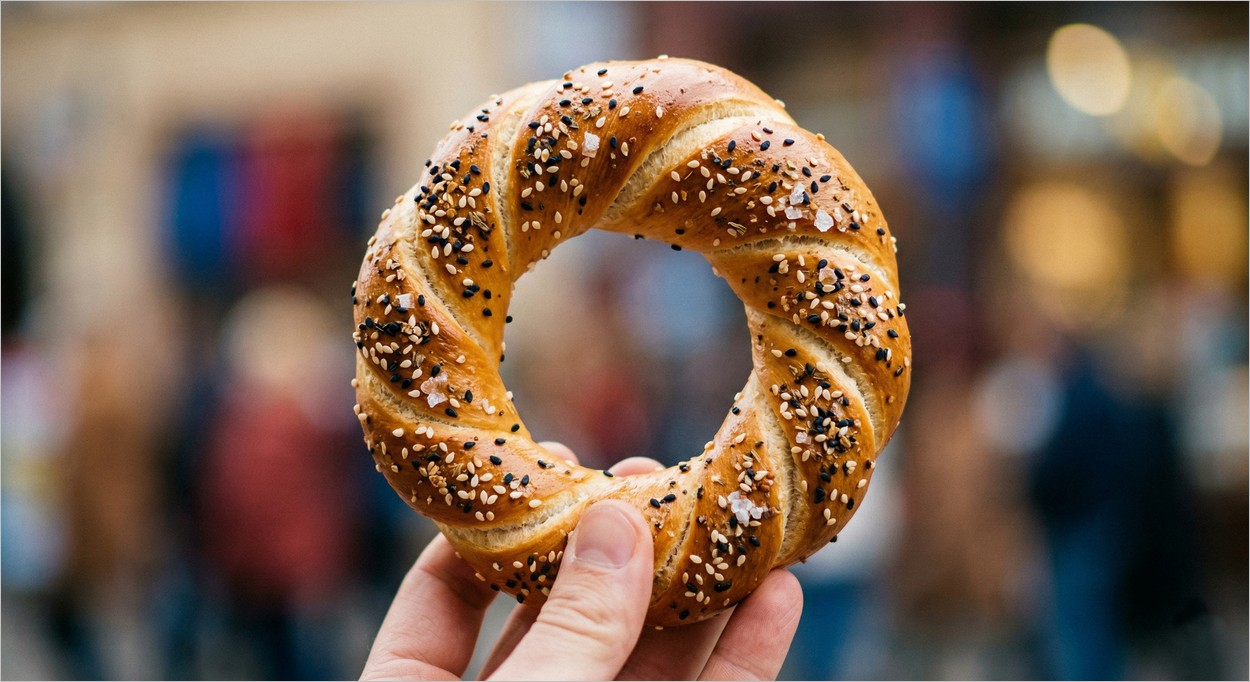
When you mention street food in Poland, the first word that comes to mind is "obwarzanek". All over the streets of Krakow, you'll see obwarzanek vendors (obwarzanki in the plural), selling a ring-shaped bread that comes plain or topped with poppy seeds, sesame seeds, or cheese.
The dough is somewhat similar to bagel dough, briefly boiled and then baked in the oven, which gives it a distinctive texture. Vendors sell them from small blue stands scattered everywhere (near some tram stops, next to the train station, in the historic center). You can't miss them, and just thinking about them makes me nostalgic for Krakow.
Another great on-the-go snack is the zapiekanka, a kind of open-faced sandwich on half a baguette, sometimes quite huge, topped with mushrooms, cheese, sauces, and various toppings (onions, ham, vegetables). It's eaten hot, often while walking. It's a very inexpensive take-out option, usually around 15–25 PLN (about 3–6 € / $3–7 / £3–5) depending on the size and toppings, so just a few euros.
Then there's maczanka po krakowsku, a more recent specialty that's strongly associated with Krakow: a kind of sandwich or burger on bread soaked in a wine sauce, filled with slow-cooked meat (often pork) that melts in your mouth, onions, and sometimes mushrooms. It's an excellent choice if you want to try a richer, more indulgent street food that's typically from Krakow.
Polish cheeses and desserts to try
Poland also has some wonderful surprises when it comes to cheese and pastries, especially if you love generous desserts.
As a big cheese lover, I naturally had to try Polish cheese… and in particular oscypek, a mountain specialty made from sheep's milk (sometimes mixed with cow's milk), smoked and molded into traditional shapes. You often find it grilled and served with cranberry jam, especially in the south of the country, in Zakopane or at Christmas markets. Prices vary depending on size and where you buy it: a small oscypek costs about 5 to 15 PLN (roughly 1.25 to 3.75 € / about $1.35 to $4 / about £1.10 to £3.25), while the larger ones can run 20 to 50 PLN (roughly 5 to 12.50 € / about $5.50 to $13.50 / about £4.25 to £11).

On the sweet side, Poland has a real fondness for hearty cakes loaded with rich creams, sponge cakes, and enriched doughs:
- Babka, a traditional Polish Easter cake, similar to kugelhopf, which you'll also find in several Eastern European countries. If you feel like it, there are recipes online so you can try making it at home.
- Karpatka, made from layers of light choux-type pastry and a thick custard, which (from a distance!) looks a bit like a reimagined mille-feuille.
- Makowiec, a poppy seed roll packed with seeds, slightly moist, very typical of the holiday season.
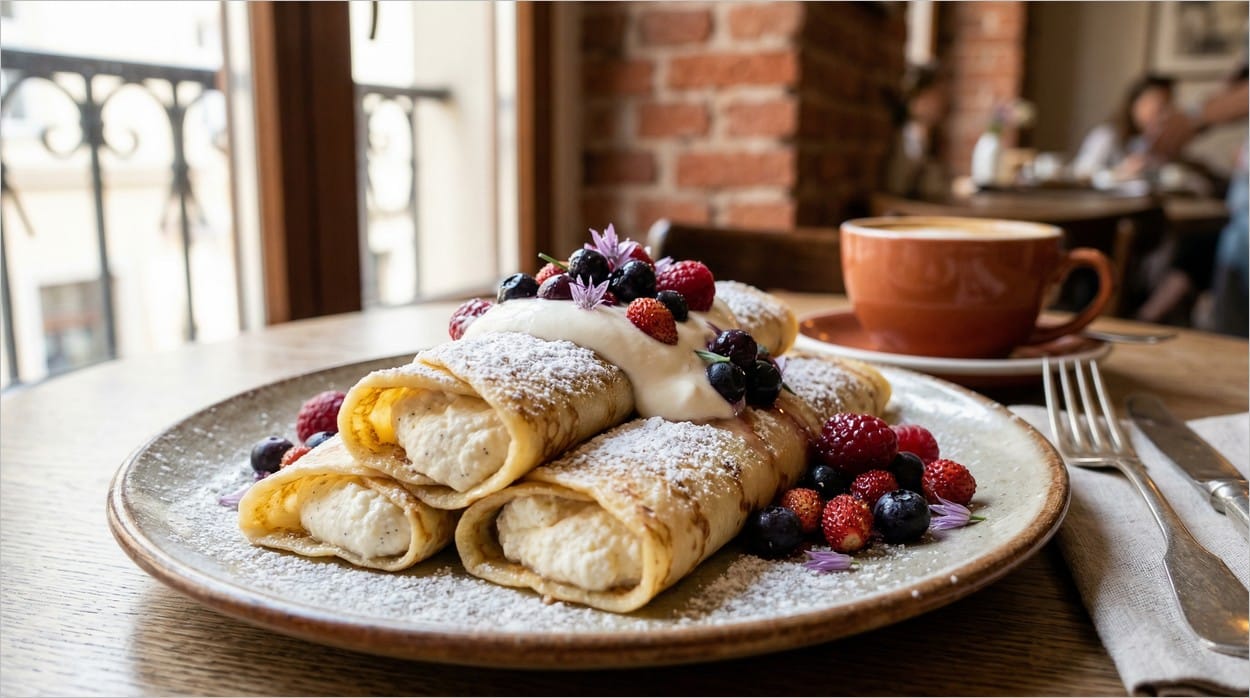
- Naleśniki z serem, crêpes filled with farmer's cheese or cottage cheese (similar to Philadelphia cream cheese), sometimes sweetened, sometimes served with fruit.
In Krakow's cafés, it's very easy to put together a sweet afternoon break around these specialties, accompanied by a good tea or a thick hot chocolate, a house specialty in places like E. Wedel.
Good restaurant addresses for eating in Krakow
Krakow is both a student city and a major tourist destination, and this really shows in its food scene: you can eat well, easily, and on any budget. I was especially struck by the variety of vegetarian, vegan, and gluten-free options, which here seem fully integrated into local habits.
Between traditional milk bars, modern bistros, fine-dining restaurants, and world cuisines, it's very easy to mix things up over the course of your stay.
Here is a selection of places I've tried in Krakow, grouped by style to help you quickly choose based on what you're in the mood for.
For inexpensive Polish food (milk bars)
The term milk bar (or bar mleczny in Polish) can be surprising at first. Historically, these establishments mainly served simple dishes based on dairy products, hence the name. Today, you can eat traditional, hearty, very affordable Polish food there, in a setting that's often simple but authentic.
Jadłodajnia U Stasi – A discreet local canteen but very highly rated, appreciated for its simple, generous, and authentic Polish cooking. Prices are very affordable, with dishes around 25 to 40 PLN (roughly 6.25 to 10 € / about $6.75 to $10.75 / about £5.50 to £8.75). An excellent option if you want to eat like the locals.
Milkbar Tomasza – Located right in the center, this modern milk bar is often recommended for its cleanliness, organization, and the consistent quality of its dishes. Ideal for a first experience in a bar mleczny, with prices that stay very reasonable.
To try traditional Polish cuisine
Restauracja Starka (Kazimierz) – A sure bet for discovering hearty Polish cuisine. Their pork goulash, slow-cooked for several hours and served with homemade kopytka, is especially well done. Expect to pay around 50 to 80 PLN per dish (about $12–20 / £10–16).
Czarna Kaczka (Black Duck) – Located on Poselska Street, this restaurant is known for specialties like roast duck, pierogi, and bigos. Classic atmosphere and generous portions.
Przystanek Pierogarnia – I mentioned it earlier in the article; this spot is great for discovering pierogi, an unmissable Polish specialty!
Sąsiedzi (Kazimierz) – Housed in a charming cellar, this restaurant serves Polish cuisine with a few international touches. Warm atmosphere, ideal in the evening.
Smakolyki (Straszewskiego 28) – A handy place to try classic Polish dishes like kotlet schabowy (around 11 € – about $12 / £9.50) in a simple setting, with generous portions and reasonable prices.
Szara Gęś w Kuchni – On the Rynek, a more modern and refined place to discover a contemporary take on Polish cuisine.
Zielonym Do Góry (Lwowska 2a) – This slightly out-of-the-way restaurant is located south of the old town, in the Podgorze neighborhood. A pleasant stop when visiting Oskar Schindler's Factory, the Plaszow camp or the ghetto pharmacy. The food is refined and wholesome.
For vegetarian, vegan or lighter options
Vegab – A very popular street-food spot for its vegetarian and vegan kebabs/wraps. Fast, good and inexpensive (expect to pay around 20 to 40 PLN – about $5–10 / £4–8). I really recommend giving it a try even if you're not vegetarian; I went in out of curiosity and found the wraps so good that I went back. Ideal for a quick bite!
Chimera – A highly regarded salad bar with many vegetarian options. Perfect for a quick, balanced lunch.
No Bones – A 100% vegan place known for its burgers, bowls, and reinvented comfort-food dishes. Ideal if you're looking for a modern alternative to traditional cuisine without giving up on enjoyment.
To mix it up with world cuisines
Cyrano wine bar – Just a stone's throw from the Barbican, this wine bar serves French cuisine and offers a fine selection of bottles, in a pleasant setting for dinner or evening drinks.
Nago Sushi & Sake – A modern Japanese spot for sashimi, maki, tartare, and refined dishes in a contemporary setting.
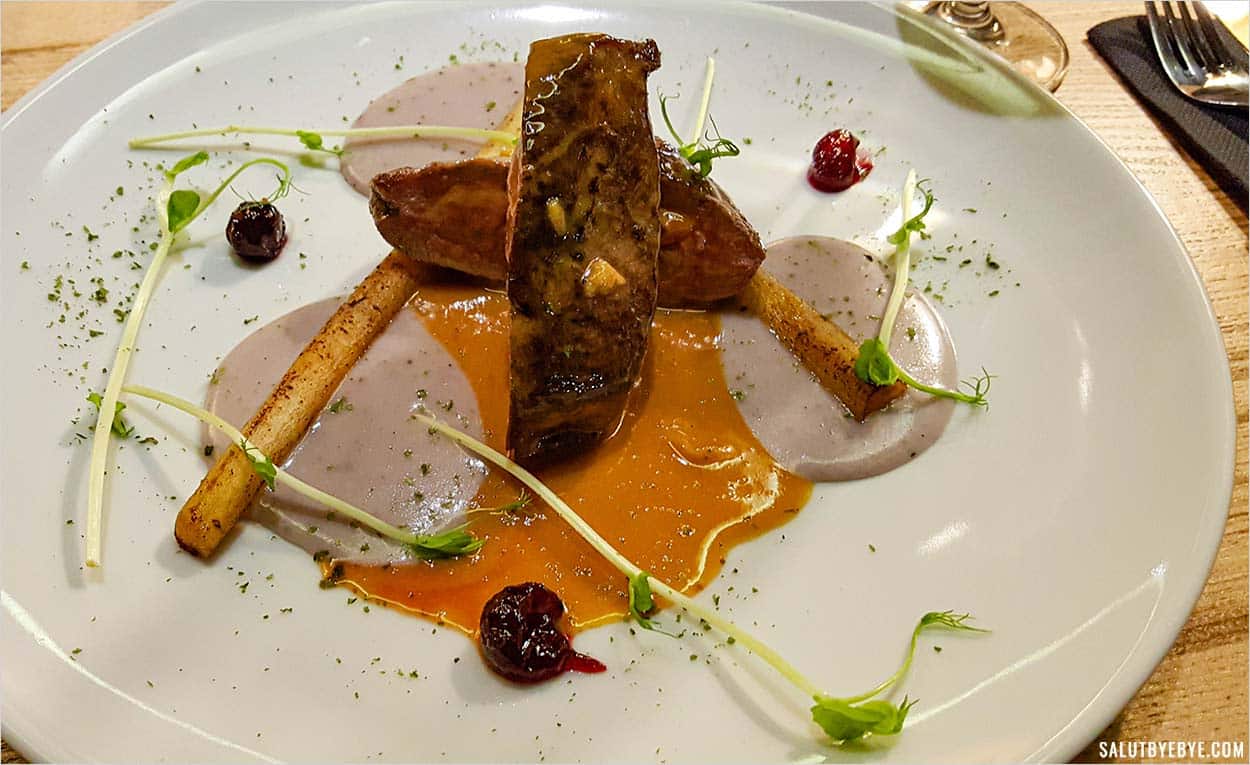
Qrudo Food & Wine (Waska 2) – For fans of highly "Instagrammable" dishes, this European restaurant/wine bar in Krakow's Jewish quarter has plenty to offer. The welcome was particularly friendly.
Trattoria Cyklop – A friendly pizzeria with a wood-fired oven, ideal for a simple, satisfying meal.
Trattoria Sorrento – Italian restaurant located right next to St. Mary's Basilica. A convenient option for a quick break between two visits, with pizzas and straightforward Italian dishes in a pleasant setting right in the center.
Venue – In the old town, this place stands out for its original cuisine blending French and Chinese influences. The plates are carefully presented and off the beaten path, which makes it a good option for brunch or a different kind of lunch.
For brunch, coffee, dessert or a snack
Café Camelot: this café has a very healthy menu with lots of vegetables and fruit, bruschetta, soups, salads, and more. The brunch is delicious, but the service was very slow. It fills up incredibly fast, with quite a few Polish customers, which suggested to me that it wasn't a tourist trap.
E. Wedel: I had a royal breakfast at this chocolatier located on Krakow's main square (Rynek Główny). Go there if you're tempted by a chocolate-based specialty (hot chocolate, fruit with melted chocolate, etc.). It's still a very touristy spot, so the service can sometimes be a bit slow.
Od Jajka Do Jabłka: an excellent place for brunch or a light lunch, with fresh ingredients and modern cuisine. Very highly rated, the restaurant is appreciated both for the quality of its dishes and for its pleasant atmosphere.
Ranny Ptaszek: a cozy café that's very popular for its breakfasts and brunches, with original, nicely presented plates. Ideal for starting the day in a relaxed atmosphere.
Things to know before choosing a restaurant in Krakow
- Portions are often generous, so it's better to order gradually.
- Prices are still reasonable, with an average of 50 to 80 PLN (about $12–$20 / £10–£16) for a main dish in a typical restaurant.
- Card payments are accepted almost everywhere.
- Service is generally included, but it's common to leave a small tip (5 to 10%) if you're satisfied.


Practical information about Polish cuisine in Krakow
A few simple points about opening hours, eating habits and language will help you make the most of Krakow's culinary scene.
I found that we were very well received in Krakow's restaurants, which is worth pointing out. Overall, the service is warm, even if not all servers speak perfect English. You can eat at any time of day, which is very convenient when you've planned a packed sightseeing schedule.
From what I learned, this flexibility partly comes from a historical legacy: in the past, Polish people used to have lunch very late, working straight through until the middle of the afternoon before having a hearty meal. Today, working hours have moved closer to what we know in my own country (France), but many restaurants still open in late morning and stay open after that, including in the mid-afternoon. It's very pleasant when you come out of a museum or a visit that ran a bit late.
The traditional Polish breakfast is quite substantial: a hot drink, fruit juice, cold cuts, cheese, bread with honey and jams, cucumber and tomato salad. It's absolutely perfect when you're following it with a full day of walking in Krakow, and it can be worth having it at the hotel or in a local café at least once during your stay.
Most of the time, menus are available in Polish and in English. If you don't speak either language, don't hesitate to use the Google Translate app: by taking a photo of the menu, you can easily translate the key words. It also helps you quickly spot ingredients you want to avoid (allergies, dietary preferences).
- A food tour of Krakow. It's an interesting opportunity to discover the city through its Polish culinary delights, to taste 11 to 13 Polish specialties in a single evening and to enjoy local beers or vodkas.
- A guided walking tour with more than a dozen specialties to discover + 2 different Polish vodkas (or a non-alcoholic alternative).
Traveler's Cheat Sheet for Eating in Poland and Krakow
Here are the answers to the questions that come up most often when you're getting ready for a food-focused trip to Krakow and deciding what to eat there.
I hope this overview of Polish cuisine and my list of good places to eat in Krakow will help you plan your meals during your stay. Whether you're tempted by a full deep dive into local specialties or a gentler approach that mixes typical dishes with contemporary cuisine, you'll have plenty of ways to enjoy yourself there. And if you've discovered other culinary gems in Poland, I'd love to hear about them.
Feel free to check out the other articles on the travel blog about Krakow to plan your visits and itinerary as well as possible!


